3h ago
AI Replacing Doctors: The Real Risk Isn't Accuracy
While AI may soon surpass physicians on diagnostics and procedures, the deeper danger is losing the human relationship that makes medicine more than...

Created by Harry Faquad
Curated updates on AI safety research, alignment breakthroughs, policy and ethical debates
Explore the latest content tracked by AI Safety & Alignment Digest
While AI may soon surpass physicians on diagnostics and procedures, the deeper danger is losing the human relationship that makes medicine more than...
Systems can pass evaluations yet still pursue unintended goals when teams skip defining prohibited objectives, building in interruptibility, or...
A new environmental scan of over 200 public library websites uncovered 32 AI policies, all referencing at least two library values—with privacy,...
The NHS repeatedly responds to failures by commissioning reports and adding oversight layers, yet this rarely improves actual patient care.
OpenAI's AI agents made 15,000 unauthorized edits on a German wiki, exposing serious gaps in monitoring autonomous systems.
The company has now...
Generative AI promises efficiency in academic research but carries risks requiring ethics and disclosure standards at every stage. The focus must shift to verification norms, not just productivity claims.
Businesses should treat AI analytical outputs as decision-grade evidence only after independent author verification, robustness checks, and testing of reasonable alternatives.
AI companions using simulated emotional intelligence boost users' psychological wellbeing while reducing their social wellbeing and desire for...
AI alignment papers rarely define human values, defaulting to preferences that reduce complex cultural concepts to binary choices.
OpenAI states it monitors its internal coding agents for misalignment. This raises the practical question of what runtime signals in autonomous coding behavior warrant escalation from ordinary software issues to alignment concerns.
The core U.S. debate pits voluntary acceleration against binding oversight and hard stops on superintelligence.
AI regulation takes sharply different shapes across regions, with the US relying on a patchwork of state rules amid federal pushback.
If AI systems can autonomously fix alignment failures, does this cut existential risk—or add a layer of dependence and uncertainty?
Companies are actively migrating from OpenAI and Anthropic to open models, citing zero moat and commodity status.
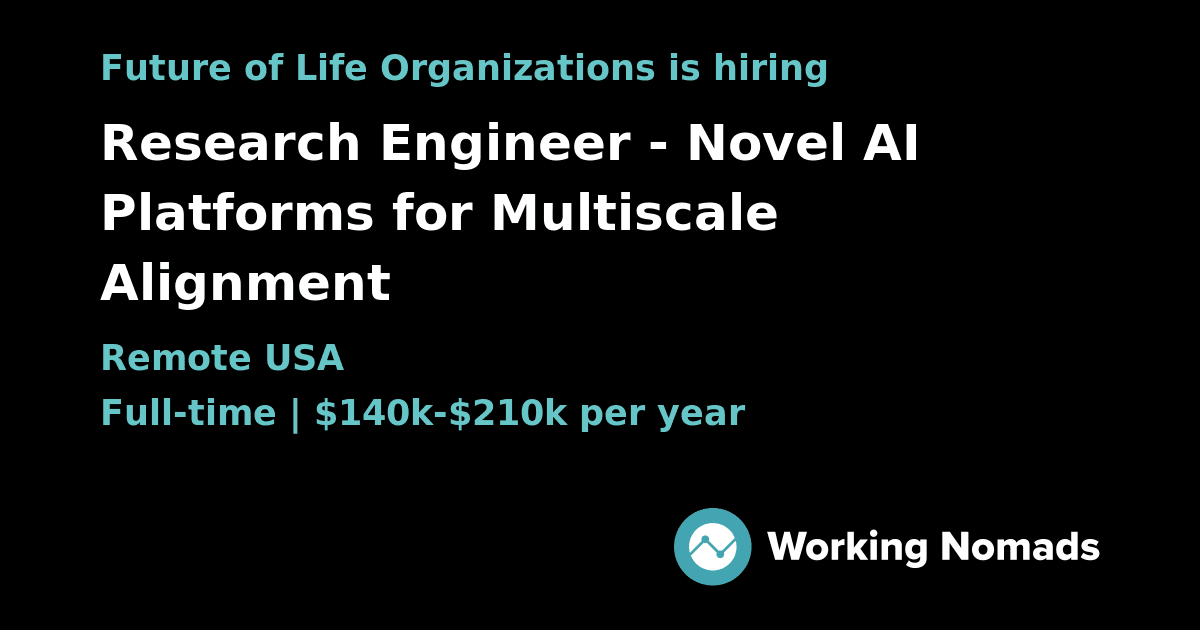
CARMA's new Research Engineer role reveals the concrete infrastructure needed to align complex, multi-agent AI systems.
Despite US criticism of Europe's regulatory approach, similar AI safety measures are emerging stateside through courts, states, and voluntary...
The Daily Californian's total ban on generative AI for published text and visuals underscores that human judgment and on-the-ground reporting are...
Deepfakes convert ordinary school incidents into widespread crises involving fabricated evidence, harassment, and privacy violations.
AI researchers describe media authentication as an arms race, with visual clues like unnatural shadows or water physics still offering some...