# AI Revolutionizes Every Stage of VFX, 3D, and Video Creation in 2026
The digital content industry in 2026 stands at a transformative crossroads, propelled by unprecedented advancements in artificial intelligence (AI). What once was viewed as a supportive augmentation has now evolved into a collaborative, autonomous partner that fundamentally redefines how visual effects (VFX), 3D modeling, and video production are conceived, executed, and delivered. This ongoing revolution is not only streamlining workflows and democratizing access but also sparking critical conversations around ethics, provenance, and industry standards. Recent breakthroughs underscore a future where AI seamlessly integrates with human creativity, enabling the creation of immersive, complex visuals at speeds and scales previously unimaginable.
---
## The New Paradigm: AI as an Autonomous and Collaborative Partner
Over the past year, the industry has seen a remarkable shift toward **deep integration of AI within production pipelines**. No longer merely tools for assistance, AI systems now serve as **autonomous agents and collaborative partners** that significantly accelerate and enhance every facet of the creative process:
- **Workflow Automation & Enhancement:**
- **Autodesk** has upgraded its software with **AI-driven automation** for tasks such as motion tracking, compositing, and procedural asset generation. Artists now focus more on storytelling and conceptual design, while AI handles technical complexities.
- **Boris FX SynthEyes 2026** introduces **advanced matchmove workflows** with **real-time GeoH previews**, making camera tracking and stabilization faster, more accurate, and more accessible.
- **AIOpost** from ANALOG DIGITAL pioneers **AI-assisted asset management and compositing**, creating end-to-end streamlined post-production pipelines that reduce manual labor and minimize errors.
- **Content Synthesis & Real-Time Effects:**
- Platforms like **Runway** have broadened their AI-powered capabilities, offering **real-time effects** and **content synthesis tools** that enable creators to produce cinematic visuals within hours—drastically reducing production timelines and costs.
- **ION** has launched **programmable AI-enabled video infrastructure** capable of **live manipulation** and **on-the-fly customization**, a critical feature for interactive media, streaming, and live broadcasts.
- **Asset Optimization & Accessibility:**
- **InstaLOD 2026** now features **AI-assisted real-time asset optimization**, allowing high-fidelity models to be efficiently prepared for multiple platforms while **speeding up rendering** and **reducing costs**.
- Technologies like **AMD’s FSR “Redstone”** continue to democratize high-end visuals, enabling **cinematic effects on consumer hardware** and empowering indie developers and small studios to produce professional-grade content.
- **Strategic Industry Moves & Investments:**
- The acquisition of **Griptape by Foundry** exemplifies efforts to **integrate AI ecosystems**, resulting in **faster, smarter workflows**.
- **Tripo AI** has expanded its **enterprise-grade AI 3D model generator**, dramatically accelerating **character creation, rigging, and motion application**—shortening pre-production timelines significantly.
- **Epic Games’** acquisition of **Meshcapade**, an AI-powered motion capture software, emphasizes the push toward **accessible, integrated motion capture solutions**, embedding AI deeply into character animation workflows.
These developments underscore a **central industry trajectory**: **AI functions as an intelligent, autonomous partner**, dramatically **speeding up production**, **enhancing creative control**, and **lowering barriers and costs** across complex pipelines.
---
## Autonomous Scene and Video Generation: Breaking Creative Barriers
One of the most revolutionary trends in 2026 is the proliferation of **agentic AI systems** capable of **autonomous environment and video creation**, dramatically reducing manual input and expanding creative horizons:
- **SceneSmith**, a pioneer in environment generation, has developed **controllable, autonomous scene generators** that can **create entire simulation-ready environments** with minimal human input. Industry voices like @Scobleizer and @NicholasEPfaff describe SceneSmith as **“an agentic system that creates entire simulation-ready environments,”** empowering smaller teams and individual creators to craft complex scenes that previously demanded large studios.
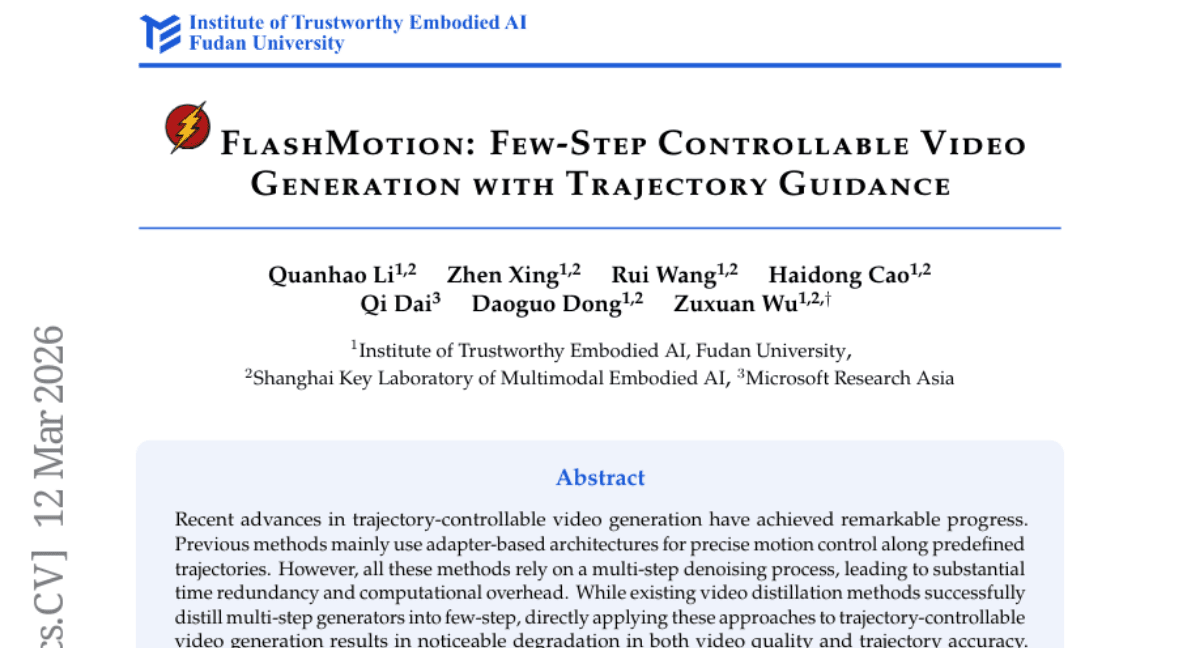
- **MultiShotMaster** introduces a **controllable multi-shot video synthesis framework** that maintains **shot coherence** and offers **granular user control**. Its ability to generate **multi-shot videos** with precise parameters exemplifies how AI can **scale content creation** while **preserving artistic intent**.
- **Prompt to Planet** allows users to input simple text prompts to generate **procedural, explorable worlds**, making **world-building** accessible even to non-technical users—marking a new era of **universal universe creation**.
- **AI-powered animation workflows** now automate **lip sync**, **character consistency**, and **rigging automation**. Tutorials such as **"Create 3D Cartoon Animation with AI | Lip Sync + Consistent Characters"** illustrate pipelines that **cut production times dramatically**.
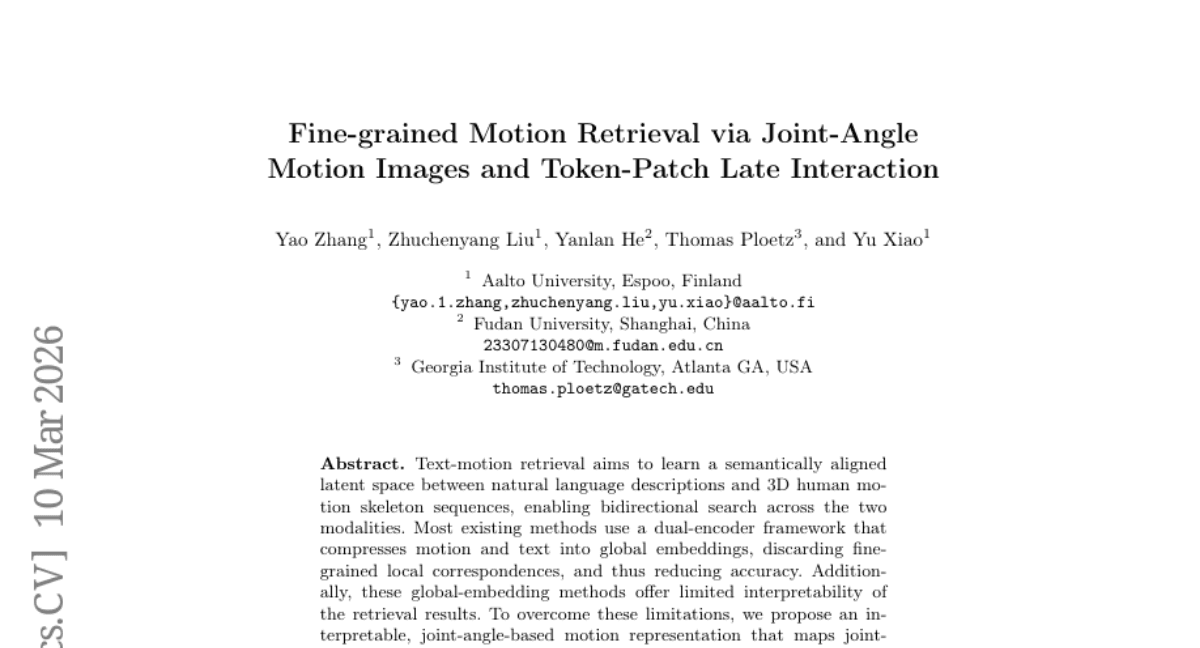
- **MotionCrafter** leverages **4D motion and geometry extraction** from videos to **reconstruct dynamic scenes**, significantly accelerating **realistic animation workflows** and reducing manual keyframing effort.
- **Multi-agent systems** like **Kling AI** coordinate scripting, voice synthesis, and visual content generation, enabling **automated end-to-end video production** from concept to final render.
- The **Async** framework has demonstrated **drastic reductions in post-production times**—processing a one-hour recording’s editing and rendering **from 20–48 hours down to minutes**—highlighting the power of **autonomous, multi-agent pipelines**.
- The research paper **“A Controllable Multi-Shot Video Generation Framework”** introduces **precise, parameter-driven multi-shot synthesis**, ensuring **shot-to-shot coherence** and **granular user control**—a significant step toward **scalable, autonomous video creation**.
These innovations **shorten production cycles**, **empower smaller teams**, and **enable the creation of complex environments and multi-shot videos** that once required extensive manual effort and large budgets.
---
## Cutting-Edge Technical Advances: Enhancing Coherence and Open-Ended Generation
Recent research breakthroughs focus on **overcoming the limitations of long-term coherence** and **enabling open-ended, scalable content generation**:
- **Rolling Sink**, developed by @_akhaliq, introduces a **novel approach** that **bridges limited-horizon training** with **open-ended testing** in autoregressive video diffusion models. This technique allows models to **maintain temporal coherence** over extended sequences, vastly improving realism and consistency in AI-generated videos.
- The **test-time training for long-context and autoregressive 3D reconstruction (tttLRM)** by @_akhaliq demonstrates **adaptive inference techniques** that **enhance robustness** in **multi-shot** and **long-form content** generation, enabling more **reliable autonomous scene synthesis**.
- **Full motion transformers**, like the model developed by @LinusEkenstam, trained in just **3 days on 128 GPUs at 10,000x faster than real time**, showcase rapid progress in **high-speed, high-fidelity motion modeling**, facilitating **near-instantaneous animation generation**.
- Incorporating **long-term coherence mechanisms** and **open-ended generation capabilities** into autoregressive models now makes **large-scale scene creation** and **multi-shot narratives** feasible at scale.
Together, these **technological advances** significantly **improve the stability, fidelity, and scalability** of AI-generated content, paving the way for **more ambitious autonomous scene and video synthesis**.
---
## Recent Industry Movements and Strategic Consolidation
The industry’s rapid evolution is further exemplified by strategic acquisitions and product updates that reinforce AI-driven pipelines:
- **Foundry’s acquisition of Griptape** marks a critical step toward **integrating AI ecosystems** into core VFX workflows, enabling **faster, smarter, and more adaptable pipelines** for both large studios and smaller entities.
- Leading software providers like **Autodesk**, **Boris FX**, and **InstaLOD** have incorporated AI features into their flagship tools, fostering **widespread adoption** across the industry.
- **Epic Games’** acquisition of **Meshcapade**, an AI-powered motion capture startup, emphasizes the push toward **accessible, integrated motion capture solutions**, further embedding AI into character animation workflows.
- **Magnific AI** and similar platforms are making **real-time upscaling, restoration, and asset management** accessible, further democratizing high-quality content production.
These moves underscore an industry consolidating around **AI-enhanced, integrated pipelines** that **accelerate production and lower entry barriers**.
---
## Practical Impact and Ethical Considerations
The cumulative effect of these technological strides is **dramatic**:
- **Smaller studios and individual creators** now have access to **high-fidelity, professional-grade tools** that once required extensive resources.
- **Production cycles** are shrinking from months to weeks or even days, enabling **faster turnaround** and **more iterative creative processes**.
- **Provenance and authenticity concerns** are gaining prominence, prompting initiatives like **YouTube’s “Building a Fully Transparent AI Video Pipeline”** to **ensure media integrity** and **counter misinformation**.
Simultaneously, industry leaders are emphasizing **ethical standards**, **transparent AI workflows**, and **clear attribution** to **balance innovation with responsibility**. As AI takes on more creative roles, questions around **ownership rights**, **IP**, and **trustworthiness** remain central to ensuring **sustainable growth**.
---
## Current Status and Future Outlook
In 2026, AI is no longer a mere tool but a **co-creator**—a **collaborative partner** that **automates, accelerates, and enhances** every stage of VFX, 3D, and video creation. Breakthroughs such as **multi-agent pipelines**, **long-term coherence models**, and **speedy motion transformers** have transformed what’s possible, making **complex, high-quality content** accessible to **smaller studios and individual creators**.
Looking ahead, the focus will likely shift toward **further refining open-ended generation**, **achieving real-time procedural content creation**, and **building more sophisticated multi-agent systems**. Meanwhile, **ethical frameworks** and **transparency standards** will be essential to **ensure AI’s role remains a positive force**—supporting creativity, trust, and societal values.
**2026 marks a pivotal moment** where AI’s integration into visual effects, 3D modeling, and video production is not just an evolution but a **revolution**—a movement toward **more inclusive, efficient, and imaginative content creation**. As the industry navigates the accompanying challenges, its success will depend on balancing **technological innovation with ethical responsibility**, ultimately shaping a future where **human ingenuity and AI** work hand in hand to craft the extraordinary.