# The Evolution of Exchange and Data Infrastructure Enabling AI-Driven and Algorithmic Crypto Trading
The landscape of cryptocurrency trading is undergoing a profound transformation, driven by advancements in data infrastructure, execution technology, and democratization tools. This evolution is fostering a more efficient, resilient, and accessible environment—empowering both institutional giants and retail traders to deploy sophisticated, automated strategies rooted in real-time data and artificial intelligence.
## Rise of AI-Ready Trading Interfaces and Execution Engines
A key driver behind this shift is the deployment of **production-grade AI agent execution tools**, which are revolutionizing how trading algorithms operate at scale. Notable among these is **Kraken’s CLI**, an **open-source, single-binary execution engine** explicitly designed to support **autonomous trading agents**. Its core features include:
- **Deep integration with Kraken’s exchange infrastructure**, ensuring high reliability, security, and performance.
- **Flexible scripting interfaces** that enable rapid development, testing, and deployment of custom algorithms.
- **Robust, scalable execution capabilities** capable of handling **continuous multi-pair trading at high volumes**.
Kraken’s CTO highlighted its significance: *“The Kraken CLI provides developers and AI agents with a reliable, scalable, and secure backbone to operate at production scale, breaking down barriers that previously limited advanced automation in crypto trading.”*
Similarly, **Injective’s toolkit** is expanding the horizon for **autonomous, high-frequency trading automation**, exemplifying the broader industry move toward scalable, AI-powered execution environments. These tools are essential for deploying strategies that require **real-time responsiveness** and **high throughput**, especially in volatile markets.
## Comprehensive Data Signals and On-Chain Analytics
Complementing execution platforms are **advanced data feeds and analytics**, which serve as the backbone for **risk-aware, AI-driven strategies**. Companies like **AltFINS** provide **crypto analytics APIs** and the **Market Cycle Protocol (MCP)**—delivering **real-time on-chain and off-chain signals** such as whale activity, large asset transfers, and market-moving indicators.
Recent innovations leverage **entropy-filtered machine learning techniques** designed to **filter noise** and develop **robust algorithms** capable of thriving amidst market chaos. For example:
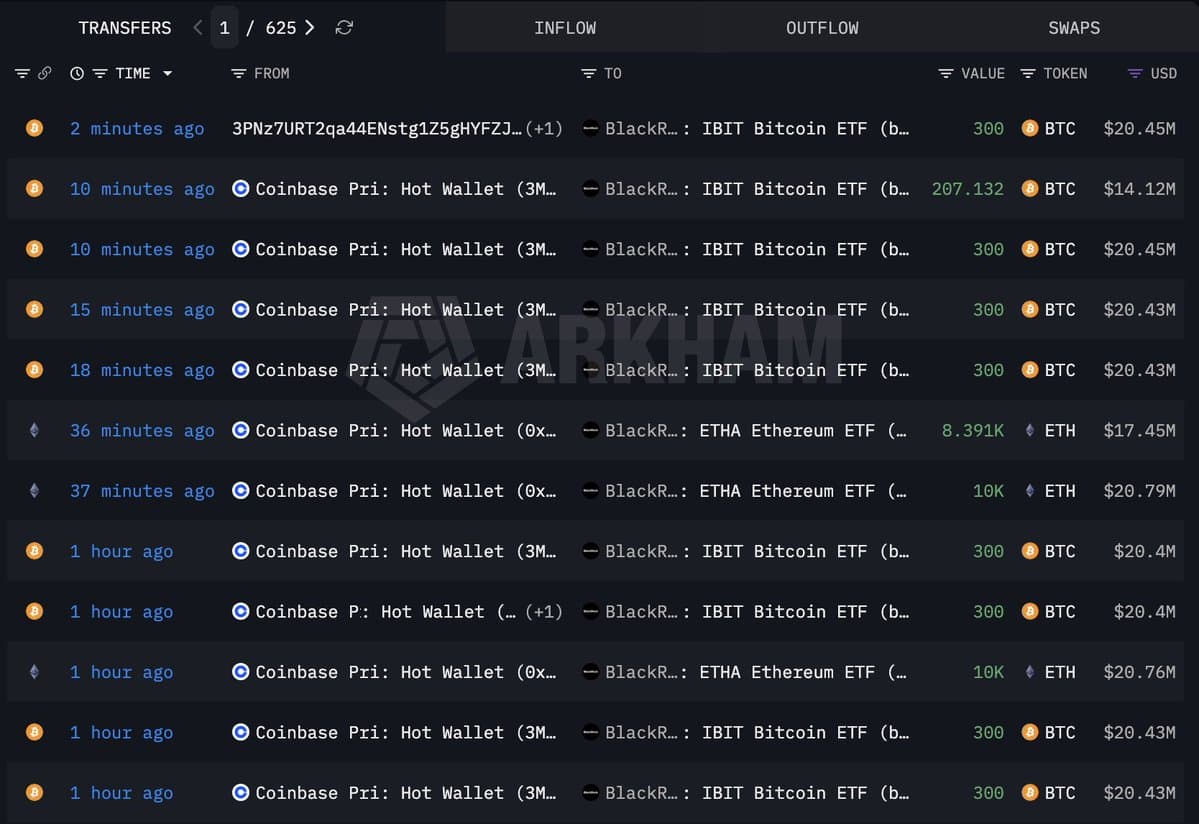
- A **$223 million Bitcoin transfer** by an unknown whale to **Galaxy Digital** has been flagged as a potential market indicator, demonstrating how **on-chain activity** can inform **timing and risk management**.
- Large transfers like **3,146 BTC** are monitored as signals of possible upcoming market shifts.
- In the memecoin space, **PEPE whales** moved **2.1 trillion tokens**, signaling potential shifts in sentiment or liquidity.
- XRP's on-chain stats reveal significant activity, hinting at strategic positioning or institutional involvement.
These signals are increasingly integrated into trading platforms, enabling **automated decision-making** based on high-fidelity, real-time data.
## Institutional Infrastructure and Market Expansion
On the institutional front, firms like **Crossover Markets** are investing heavily in **scalable, compliant derivatives platforms** supporting **high-volume, around-the-clock trading**. Major exchanges such as **CME**, **Coinbase**, and emerging derivatives venues are expanding their offerings—encompassing **futures, options, and retail derivatives**—to support **global, 24/7 markets**.
This infrastructure growth results in several benefits:
- **Faster iteration and deployment** of algorithmic and AI strategies.
- **Enhanced liquidity and risk management**.
- Support for **multi-asset, cross-time-zone operations**, reducing traditional gaps and inefficiencies.
The expansion of derivatives and high-leverage trading instrument platforms fosters **more efficient arbitrage**, **deeper markets**, and **greater resilience**, which in turn benefits all market participants by increasing transparency and stability.
## Democratization of Advanced Trading Tools
A significant democratizing trend is the proliferation of **no-code automation solutions**. Platforms like **LuxAlgo**, **MDX ALGO**, **Lumibot**, **OpenClaw**, and **Walbi** are lowering barriers to deploying sophisticated strategies, enabling **retail traders** to participate confidently in algorithmic trading.
These tools:
- Seamlessly integrate with **APIs** such as Kraken CLI and **data feeds** from AltFINS.
- Offer **pre-configured, customizable strategies** through intuitive dashboards.
- Provide **real-time signals** based on whale movements, large transfers, and market cycles.
- Support **automated execution**, reducing latency, manual effort, and emotional biases.
Furthermore, **SMC Core Lite**, a lightweight **Smart Money Concepts (SMC) indicator** by ZakAlgoTrade, exemplifies the latest in **indicator-based signals** that help traders identify institutional activity patterns with minimal complexity. This broad accessibility accelerates the adoption of **agentic trading tactics** among retail participants.
## Recent Developments and Market Signals
The ongoing influx of on-chain analytics continues to provide actionable insights:
- The **$223 million Bitcoin transfer** to Galaxy Digital remains a focal point, often interpreted as a precursor to market movements.
- Other large transfers, such as **3,146 BTC**, are monitored as potential indicators of upcoming volatility.
- In the meme-token space, whale activity involving **PEPE**—specifically moving **2.1 trillion tokens**—suggests strategic positioning.
- XRP on-chain metrics reveal substantial activity, fueling speculation about institutional involvement.
In terms of platform integration, recent milestones include:
- **MetaTrader 5 Quantum Crypto PRO v7** now featuring **AI-generated trading signals**, making advanced automation more accessible.
- **BYDFi** integrating **perpetual futures data into TradingView**, enhancing retail traders’ analytical capabilities.
- **Hyperliquid** surpassing Coinbase in oil futures trading, executing **$991 million within 24 hours**, exemplifying the rise of high-volume, high-leverage markets.
Despite these advancements, risks remain. For example, a **$50 million USDT to AAVE swap** during turbulent conditions experienced slippage and losses, illustrating that **market volatility and execution risks** are ongoing challenges. Innovations like **entropy-filtered ML algorithms** aim to enhance **risk-awareness** and **algorithm robustness**.
## Outlook: Toward a More Automated and Resilient Market
The convergence of **AI execution engines**, **rich data signals**, and **expanded derivatives infrastructure** is catalyzing a new era of **automated, data-driven trading**. This ecosystem facilitates:
- **Rapid development and refinement** of sophisticated, risk-aware strategies.
- **Increased liquidity and market depth** through continuous, high-volume trading.
- **Broader democratization** of advanced tactics via no-code platforms and exchange-native AI features.
Looking ahead, **automated, intelligent trading** is poised to become the industry standard, fostering **more efficient, transparent, and inclusive markets**. The integration of **advanced machine learning techniques**, such as **entropy-filtered algorithms**, promises **safer, more adaptive strategies** capable of navigating heightened volatility.
## Current Status and Implications
The crypto trading ecosystem is increasingly **automated, data-driven, and resilient**, thanks to a confluence of innovative tools, infrastructures, and signals. Retail traders now have access to **advanced automation** previously reserved for institutional players, while institutions continue to build scalable, compliant, and high-volume trading platforms.
This ongoing evolution is expected to:
- Accelerate **strategy iteration** and **risk management**.
- Deepen **market liquidity** and **efficiency**.
- Enhance **market transparency** and **participation**.
As the ecosystem matures, the **standardization of AI-driven automation** and **real-time data integration** will likely lead to a **more stable and inclusive trading environment**, positioning crypto markets for sustained growth and innovation.
---
*In sum*, the future of crypto trading is firmly rooted in **automated, intelligent, and data-centric systems**—empowering traders of all levels to participate confidently in a more efficient and resilient financial landscape.