# Embedding AI into Products, CX, and Sector Workflows in 2026: The Latest Developments
As 2026 progresses, the transformative influence of artificial intelligence (AI) continues to deepen, permeating industries, redefining customer experiences (CX), and embedding itself into the very fabric of sector-specific workflows. Building on earlier trends, recent breakthroughs, strategic movements, and emerging challenges paint a picture of an ecosystem that is increasingly sophisticated, regionalized, security-conscious, and innovation-driven.
## Industry-Specific AI Deployments Reach New Heights
This year has witnessed remarkable advancements in tailored AI solutions across diverse sectors:
- **Travel and Media:** Following earlier innovations, **Airbnb** has rolled out **generative AI-powered personalized search and trip planning tools**. These leverage advanced models to craft **anticipatory, highly tailored travel experiences**, elevating user engagement and simplifying planning processes. By **predicting traveler needs and preferences**, Airbnb is setting new standards in **personalized CX**, transforming how users discover and book travel.
- **Logistics:** **FedEx** remains at the forefront with **AI-driven route optimization**, **real-time inventory management**, and **predictive delivery scheduling**. CEO **Rajesh Subramaniam** emphasizes that **AI insights** are vital for **operational efficiency** and **customer satisfaction**. Their deployment of **predictive analytics** enables **dynamic responses** to fluctuating conditions, reducing delays, cutting costs, and bolstering reliability in a fiercely competitive environment.
- **Telecommunications:** Collaborations such as **Telefónica** with **Mavenir** are pioneering **self-healing, adaptive networks** empowered by **AI automation**. These networks dynamically respond to traffic fluctuations and faults, resulting in **improved reliability**, **cost savings**, and a **competitive edge** in **network management**.
- **Media and Entertainment:** The partnership between **JioHotstar** and **OpenAI** has integrated **ChatGPT-enhanced content discovery tools** tailored for regional audiences. These AI recommendation engines foster **deeper engagement** through **personalized feeds** and **context-aware suggestions**, revolutionizing content consumption and increasing viewer retention.
- **Human Resources and Finance:** AI-driven tools are central to **automating recruitment, onboarding**, and **employee engagement**, facilitating **data-driven talent management**. In finance, innovations include **real-time financial insights**, **automated compliance**, and **sustainable finance initiatives**, supporting **responsible growth** and **agility**.
- **Urban Mobility and Retail:** Companies like **Uber** operate **autonomous fleets** integrated with **AI for safety and efficiency**, while traditional petrol stations are adopting **AI-powered digital interfaces** for **inventory control** and **customer engagement**. Collaborations with firms such as **Scheidt & Bachmann** and **SOLUM** are leading to **smart, connected retail environments** that optimize energy use and enhance customer experiences.
## Hardware and Infrastructure: The Foundation of AI Expansion
The backbone of AI's rapid growth remains in robust hardware infrastructure:
- **Regional Ecosystems in India:** India is establishing itself as a regional AI hub. **OpenAI** has partnered with **Tata** to develop a **100MW data center**, fostering local startups and enterprise solutions. Additionally, **Reliance Industries** announced an **ambitious $110 billion plan** to develop **multi-gigawatt AI data centers**, aiming to cultivate a **self-sufficient regional ecosystem** that promotes **local innovation** and **global competitiveness**.
- **Memory and Chip Investments:** Responding to surging hardware demands, **Micron** committed **$200 billion** to address **memory shortages** critical for AI scalability. **Nvidia** continues expanding collaborations with **Meta** and Indian data centers, cementing its role as a key hardware provider for large-scale AI applications.
- **Device-Level Multi-Agent AI:** A breakthrough from **Samsung** involves integrating **Perplexity as an AI agent** into upcoming Galaxy smartphones, accessible via the voice command **"Hey Plex."** This **multi-agent architecture** allows AI assistants to **collaborate seamlessly**, supporting **personalized, context-aware multi-tasking** directly on devices. This approach aims to **reduce reliance on cloud processing**, **enhance privacy**, and **improve responsiveness**, paving the way for **more autonomous, multi-faceted AI ecosystems**.
- **Challengers to Hardware Monopolies:** The European startup **Taalas** secured **$169 million** to develop **AI chips** designed to **challenge Nvidia’s dominance**. Their focus on **hardware diversity**, **supply chain resilience**, and **regional innovation** aims to **foster market competition** and **accelerate technological progress**.
- **Hyperscaler Investments:** Industry reports highlight significant **asset investments** from **hyperscalers** such as **Alphabet**, **Amazon**, **Meta**, and **Microsoft** in expanding **data center capacity**. Despite these investments, **per-unit efficiency gains** often lag behind the scaling demands, underscoring the importance of **regional infrastructure** and **hardware innovation** to sustain AI growth.
## Ecosystem Expansion: Startups, Marketplaces, and Strategic Alliances
The vibrant AI startup landscape continues to flourish:
- **Enterprise Partnerships:** **OpenAI** is deepening collaborations with **Snowflake** and **Reliance**, embedding **generative AI** into **sector-specific data platforms**. These partnerships facilitate **automated decision-making**, **sector-tailored solutions**, and **scalable deployment**, accelerating enterprise adoption.
- **AI Component Marketplaces:** Platforms like **Purlin** and **Final Offer** are emerging as marketplaces for **pre-built, customizable AI modules**, lowering integration barriers and enabling organizations to **embed AI capabilities** into products and workflows **cost-effectively**.
- **Regional Startup Ecosystems:** Highlighting regional vibrancy, **Peak XV** raised **$1.3 billion**, underscoring investor confidence in India’s AI scene—particularly in **fintech**, **cross-border solutions**, and **enterprise applications**. Startups such as **Sarvam AI** are developing **local AI solutions** tailored for regional markets, emphasizing **adaptation** and **market-specific innovations**.
- **Hardware Disruption:** The emergence of **Taalas** exemplifies efforts to **disrupt Nvidia’s hardware dominance**, fostering **competition** and **hardware diversity**—key to **reducing supply chain risks** and **driving innovation**.
- **Hyperscaler Infrastructure:** Continued investments by giants like **Alphabet** and **Microsoft** highlight a strategic focus on **scaling AI processing capacity**, with regional data centers playing a vital role in **mitigating bottlenecks** and **supporting local AI ecosystems**.
## Responsible AI Governance, Security, and Workforce Reskilling
As AI becomes embedded in critical systems, **security** and **ethical governance** are more vital than ever:
- **Data Security Incidents:** Recent allegations from **Anthropic** accuse **Chinese rivals** of **mass data theft campaigns**, involving **illicit extraction of proprietary data and capabilities**. These incidents expose vulnerabilities in **supply chain security** and **data sovereignty**, underscoring the need for **robust security protocols** and **international cooperation**.
- **Healthcare AI Policy:** Governments are enacting **regulations** around **AI in healthcare**, focusing on **liability frameworks**, **reimbursement policies**, and **clinical standards**. These measures aim to **balance innovation with safety**, fostering **trustworthy deployment** of AI in sensitive sectors.
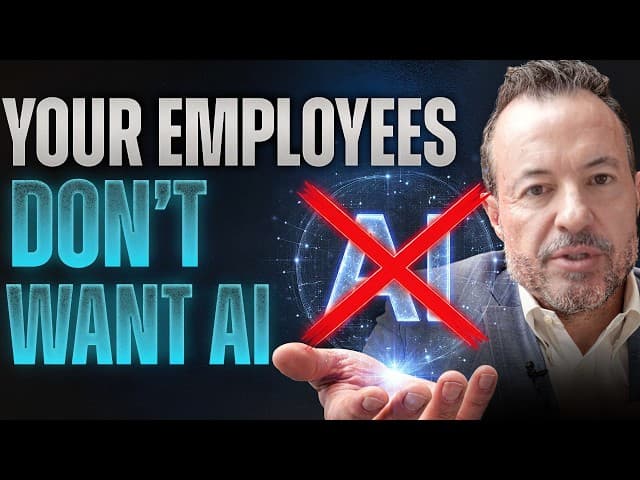
- **Workforce Reskilling and Ethical Norms:** Organizations invest heavily in **training programs** designed to prepare employees for **AI-augmented workflows**, emphasizing **trust**, **transparency**, and **ethical standards**. A recent YouTube video titled *"Why Employees Are Quietly Resisting AI"* highlights widespread **employee resistance** stemming from fears of **job displacement** and **loss of control**, emphasizing the importance of **inclusive change management**.
- **Security Ecosystem Evolution:** Strategic partnerships, such as **Proofpoint’s collaborations with various security vendors**, aim to **enhance AI security frameworks**. A notable video, *"Proofpoint Evolving Partnerships for a Secure AI World"*, showcases efforts to **advance threat detection**, **protect data integrity**, and **manage risks** associated with AI deployments—highlighting the critical need for **integrated security solutions**.
## Recent Major Events Reshaping the Landscape
Several high-profile developments underscore AI’s dynamic evolution in 2026:
- **Anthropic's Acquisition of Vercept:** To **enhance Claude’s capabilities**, Anthropic acquired **Vercept**, a company specializing in **software operation and complex task execution**. This move aims to **expand Claude’s proficiency** in **writing, running, and managing code repositories**, positioning it as a versatile tool for **enterprise automation** and **software development**.
- **Pentagon’s AI Dependence Assessment:** The U.S. Department of Defense has mandated **defense contractors** to **assess their reliance** on **Anthropic’s AI services**, amid concerns over **supply chain security** and **trustworthiness**. This scrutiny reflects a broader effort to **balance AI innovation with national security**.
- **Alphabet’s Robotics Integration:** Alphabet announced that **Intrinsic**, its robotics software arm, is now **integrated into Google** to **embed AI-driven automation** into manufacturing and logistics. This partnership aims to **accelerate industrial AI adoption**, potentially transforming **factory automation** and **global supply chains**.
- **Harbinger’s Acquisition of Phantom AI:** Focused on **autonomous vehicle perception systems**, **Harbinger** acquired **Phantom AI** to **fast-track vehicle automation solutions** and **enhance safety standards**—key steps toward **widespread autonomous mobility**.
- **U.S. Defense Contract Contingency:** The Pentagon issued a **strict ultimatum**—lifting restrictions on military AI use or risking **losing a $200 million contract**—highlighting increasing **government oversight** and **ethical scrutiny** in sensitive applications.
- **Meta’s Hardware Diversification:** Following its partnership with Nvidia, **Meta** secured a **6-gigawatt chip procurement deal with AMD**, ensuring **supply chain resilience** amidst geopolitical tensions, and reinforcing its commitment to **robust AI infrastructure**.
- **Intel and SambaNova Partnership:** Intel invested **$350 million** into **SambaNova**, aiming to develop **next-generation AI hardware architectures** outside traditional GPUs, fostering **hardware innovation** and **reducing dependence** on existing solutions.
- **Tesla’s Expanding AI Ecosystem:** Tesla is broadening its AI ambitions beyond autonomous vehicles into **comprehensive AI-enabled services**—covering **mobility**, **energy management**, and **sustainable solutions**—aiming to create **integrated AI ecosystems** across sectors.
---
## **Implications and Future Outlook**
The AI landscape of 2026 is marked by **deep integration**, **regional resilience**, and **heightened security**. Organizations are increasingly deploying **generative, autonomous, multi-agent AI systems** that enhance products, streamline workflows, and reshape user experiences. Hardware investments, regional data centers, and hardware diversity initiatives are reducing reliance on dominant players, fostering **market competition** and **technological innovation**.
Simultaneously, **security threats**, **data sovereignty issues**, and **ethical concerns** demand ongoing **governance**, **regulatory frameworks**, and **workforce reskilling**. The proliferation of **startups**, **marketplaces**, and **strategic alliances** signals a vibrant, competitive ecosystem that supports **local innovation** and **global scalability**.
Recent events, from **corporate acquisitions** to **government scrutiny**, underscore the delicate balance between **AI advancement** and **trustworthiness**. The emphasis on **security alliances** like Proofpoint's evolving partnerships and **regulatory policies** in healthcare reflects a collective effort to **embed responsible practices** into AI’s rapid expansion.
**In conclusion**, 2026 demonstrates that the future of AI hinges not only on **technological breakthroughs** but equally on **building secure**, **inclusive**, and **ethically grounded ecosystems**. Stakeholders—be they corporations, governments, or individuals—must prioritize **trust**, **security**, and **ethical standards** to harness AI’s full potential responsibly and sustainably.