The cryptocurrency market in mid-2026 continues to navigate a complex interplay of stubborn macroeconomic headwinds, evolving institutional infrastructure, and nuanced on-chain signals that collectively shape a cautious yet potentially opportunistic outlook. While persistent inflationary pressures, tepid GDP growth, escalating trade tensions, and episodic geopolitical flare-ups maintain a pronounced risk-off sentiment, emerging data points and structural shifts hint at a market inching toward stabilization and possible medium-term recovery.
---
## Macroeconomic and Geopolitical Environment: Inflation Persists Above Target, GDP Remains Sluggish, Tariffs and Tensions Fuel Risk Aversion
Core Personal Consumption Expenditures (PCE) inflation stubbornly lingers **above 4%**, well above the Federal Reserve’s 2% target, reinforcing expectations for ongoing monetary tightening throughout 2026. This elevated inflation backdrop continues to weigh heavily on risk appetite, particularly for volatile assets such as cryptocurrencies.
- **GDP growth remains uneven and sluggish**, with the latest data failing to provide the robust economic momentum necessary to embolden risk-taking.
- Trade policy frictions have intensified with the imposition of **new 10–15% tariffs on key Chinese imports**, exacerbating input cost inflation and complicating global supply chains.
- Geopolitical tensions, notably intermittent U.S.-Iran hostilities, have injected episodic shocks into crypto markets, with Bitcoin occasionally breaking below the critical **$63,000 support level** during heightened flare-ups.
These factors sustain a **pronounced risk-off environment**, driving capital inflows into traditional safe havens:
- **Gold ETFs surged approximately 51% over the past six months**, underscoring investor preference for stability amid uncertainty.
- Conversely, **Bitcoin declined nearly 43%**, reflecting its current vulnerability to macroeconomic and geopolitical headwinds.
---
## Institutional Flows and Custody Developments: Polarized Activity Amid Infrastructure Advances
Institutional engagement remains bifurcated, oscillating between deleveraging and opportunistic accumulation:
- Year-to-date, **spot Bitcoin ETFs have recorded significant net outflows**, including record daily redemptions exceeding **3,200 BTC (~$205 million)**, with BlackRock leading sales by offloading nearly **3,010 BTC (~$204 million)**.
- However, episodic inflows punctuate this trend, notably a **record $507 million net inflow on February 25, 2026**, across twelve major Bitcoin spot ETFs, indicating tactical opportunism amid volatility.
- Selective corporate accumulation persists:
- MicroStrategy completed its **100th Bitcoin purchase**, acquiring **592 BTC for $39.8 million**, reinforcing CEO Michael Saylor’s steadfast $1 million price target.
- The Winklevoss twins modestly expanded their holdings, signaling measured institutional confidence.
- Meanwhile, other corporate treasuries engaged in **three consecutive weeks of selling** to maintain liquidity buffers.
- BlackRock’s nuanced risk calibration surfaced in March, including a tactical withdrawal of **1,134 BTC and 7,553 ETH (~$289 million)** from Coinbase, reflecting portfolio adjustment rather than wholesale liquidation.
A potentially transformative institutional milestone is **Citi’s confirmed launch of direct Bitcoin custody and 24/7 settlement services in 2026**. This initiative promises:
- On-balance-sheet Bitcoin holdings with direct custody.
- Real-time settlement capabilities.
- A structural shift in institutional custody frameworks that could enhance demand dynamics and liquidity provision.
---
## On-Chain Liquidity and Whale Behavior: Signs of Capitulation and Sophisticated Accumulation Amid Tightening Supply
On-chain data presents a complex mosaic of tightening liquidity, large-holder activity, and evolving accumulation patterns:
- The **USDT stablecoin supply contraction persists**, echoing liquidity droughts last observed during Bitcoin’s 2022 lows, suggesting capitulation-driven withdrawals may be approaching an inflection point.
- Elevated whale activity includes over **$8.2 billion worth of Bitcoin deposited onto Binance at sub-$69,000 prices**, signaling potential liquidation risks and heightened near-term volatility.
- The **Bitcoin Exchange Whale Ratio spiked to levels unseen since 2021**, indicating increased sell pressure potential from large holders.
- Strategy wallets, dormant for two months, reactivated transferring **$83 million in BTC**, suggesting tactical repositioning by sophisticated investors.
- Custodial flows reflect nuanced profit-taking: BlackRock’s Coinbase withdrawal coincided with a dormant whale moving **650.76 BTC (~$43 million) to Gemini**, realizing **$25 million in profits** amid market turbulence.
- Retail capitulation remains notable: daily realized losses for short-term Bitcoin holders approach **$480 million**, and active Bitcoin addresses have shrunk roughly **30%** over recent months—a classic prelude to potential market turning points.
- Bitcoin ETFs’ mark-to-market losses ballooned to approximately **$4.5 billion**, fueling skepticism despite episodic inflow bursts.
Yet, a bullish undercurrent persists:
- The “**100 BTC club**”—wallets holding 100 or more BTC—is approaching **20,000 members**, a milestone highlighted by Santiment as a **“bullish sign”** indicative of sustained accumulation by high-net-worth investors and long-term confidence.
Adding nuance, **CoinStats recently flagged a surprising on-chain signal** suggesting a subtle shift in accumulation versus capitulation dynamics, offering a fresh lens through which to interpret market behavior amid uncertainty.
---
## Mining Sector: Heightened Losses, Approaching Capitulation, and Emerging Profitability Floors
Mining remains a critical supply-side factor influencing Bitcoin’s price dynamics:
- The **hashprice has sharply declined**, pushing numerous miners toward breakeven or losses and prompting operational shutdowns.
- Mining difficulty has adjusted downward, reflecting miner stress and raising network resilience concerns.
- Marathon Digital Holdings (MARA) reported a staggering **$1.7 billion Q4 2025 net loss**, primarily driven by **$1.5 billion in Bitcoin fair-value markdowns**, underscoring sector-wide strain.
- Emerging analysis suggests **miner capitulation may be nearing exhaustion**, potentially marking a supply bottom and paving the way for tightening.
- The identified “**miner hope zone**” near **$60,000 BTC** could serve as a profitability floor and operational anchor if prices stabilize.
- Recent price dips below **$63,000** have intensified uncertainty but may accelerate supply constraints post-capitulation.
Highlighting operational resilience, **American Bitcoin**, linked to former President Trump’s business interests, reported robust Q4 2025 results with **$7.3 million revenue** and a **net profit of $3.1 million**, exemplifying pockets of strength amid sector-wide duress.
---
## Derivatives and Options Markets: Elevated Leverage and Mixed Signals Heighten Volatility Risks
The derivatives landscape remains volatile, with nuanced and sometimes contradictory signals:
- The **Bitcoin leverage ratio surged to its highest level since November 2025**, amplifying liquidation risks during price swings.
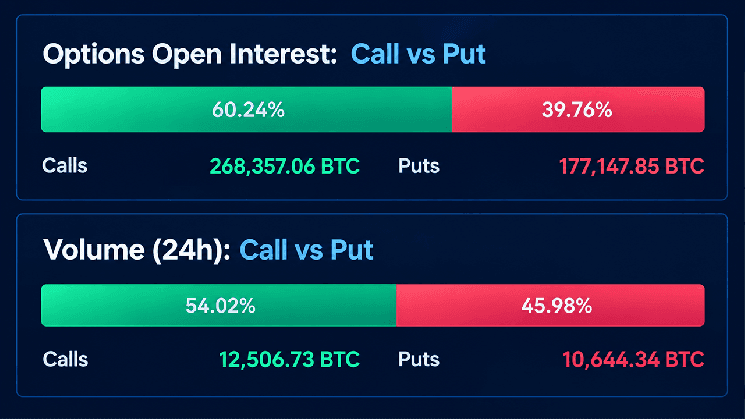
- March 2026 options data reveal sustained large-position openings by institutional players, increasing the potential for short squeezes and cascade liquidations.
- Reports from Bybit and Block Scholes highlight diverging trends: fading options volatility amidst ongoing deleveraging pressures complicate risk assessment.
- Elevated leverage underscores the necessity for vigilant risk management as abrupt price moves remain a salient threat.
---
## Technical Landscape and Probabilistic Signals: Resistance, Bearish Momentum, and Contrarian Entry Windows
Bitcoin’s technical environment remains challenging but punctuated by contrarian opportunities:
- The asset faces three critical weekly resistances near the **200-week EMA (~$68,330)**, the **$70,000 psychological level**, and a significant **fair value gap just below $64,000**, creating a technical stalemate.
- A recent breach below the 200-week EMA for the first time in over two years signals a possible structural shift toward bearish momentum.
- The fair value gap portends medium-term downside risk, with a growing acknowledgment of a potential bottom near **$45,000**, as analyzed in recent market commentary by MEXC News.
- Bayesian on-chain models and proprietary macro dashboards highlight contrarian entry points within a **3- to 6-month horizon**, emphasizing opportunistic windows amid prevailing bearish trends.
- Intermittent rebounds align with liquidity flow metrics, reflecting nuanced investor behavior and potential short-term support zones.
---
## Market Microstructure and Behavioral Shifts: Legal Developments and Changing Intraday Patterns
Market microstructure continues to adapt in response to legal challenges and evolving behavioral patterns:
- The **Jane Street lawsuit**, filed February 24, 2026, alleging market manipulation during Terra’s collapse, has effectively eliminated the characteristic **“10 PM Bitcoin dump”** intraday selling pattern, reducing coordinated sell-side pressure and intraday volatility.
- Long-term Bitcoin holders’ (LTH) cost basis analysis reveals a pivotal fulcrum near **$38,900**, with emerging profit-taking signals marking a critical psychological and technical boundary.
- Advances in Bayesian on-chain evidence interpretation enhance behavioral insights, enabling more refined market timing and risk modeling.
---
## Retail Sentiment and Market Breadth: High Engagement Amid Negative Premium and Safe-Haven Rotation
Retail participation remains elevated yet cautious:
- U.S. retail indicators—including Google searches and social media activity—hit **multi-year highs**, driven by Bitcoin’s appeal as a digital inflation hedge.
- The **Coinbase Bitcoin Premium Index** remains negative for **39 consecutive days**, currently around **-0.0405%**, reflecting episodic panic selling and risk aversion among retail traders.
- Spot Bitcoin ETFs have seen outflows for a **fourth consecutive month**, signaling sustained institutional caution despite sporadic inflow spikes.
- Capital continues to rotate strongly into traditional safe havens, especially gold ETFs, reinforcing risk-averse sentiment amid macro and geopolitical pressures.
---
## Exchange Flows and Liquidity: Persistent Outflows and Price Stalemate
- Coinglass data confirm ongoing liquidity drainage from centralized exchanges, with a **24-hour net outflow of 6,501.29 BTC**, including **4,456.68 BTC from Binance alone**.
- This aligns with broader deleveraging and accumulation narratives.
- The tension between episodic ETF inflows and on-chain supply constraints has created a **price stalemate near $70,000**, reflecting a market caught between demand signals and liquidity headwinds.
---
## Current Market Pulse and Strategic Outlook
Bitcoin’s rebound from lows near **$62,500** (N1 support) provides temporary relief but masks persistent vulnerabilities:
- Liquidity metrics, whale deposits, and retail behavior point to ongoing downside risks or prolonged sideways consolidation.
- The market is sharply bifurcated: **sophisticated whales and corporate entities accumulate** while retail investors and ETFs exhibit capitulation.
- Elevated derivatives leverage and mixed options signals heighten short-term volatility and liquidation risk.
- Technical resistance at the **200-week EMA and $70,000**, combined with fair value gaps and liquidity tightening, highlights a critical inflection zone.
- Contrarian Bayesian on-chain frameworks underscore medium-term contrarian opportunities aligned with Bitcoin’s historic four-year cycle if macro and technical conditions stabilize.
---
## Conclusion: Navigating Elevated Uncertainty with Data-Driven, Adaptive Strategies
The cryptocurrency market in 2026 remains defined by a delicate balance of persistent macroeconomic pressures, geopolitical risks, and evolving institutional infrastructure. The imminent launch of **Citi’s direct Bitcoin custody and 24/7 settlement services** represents a pivotal institutional milestone with potential to reshape custody frameworks and demand dynamics.
Despite mounting miner stress marked by MARA’s $1.7 billion Q4 markdown, signs of capitulation nearing exhaustion offer hope for supply stabilization. Meanwhile, nuanced institutional flows, sophisticated on-chain accumulation trends, and emerging technical signals provide a foundation for contrarian opportunities amid a volatile landscape.
**Key considerations for market participants include:**
- Vigilant monitoring of **Core PCE inflation, GDP growth, Federal Reserve policy, and tariff developments** to anticipate shifts in risk sentiment.
- Close tracking of **institutional flows, ETF dynamics, and custody innovations**, particularly BlackRock’s portfolio adjustments and Citi’s integration.
- Detailed analysis of **on-chain liquidity, whale behavior, and retail participation** to distinguish accumulation from capitulation phases.
- Disciplined risk management in **derivatives and options markets** amid elevated leverage and volatility.
- Ongoing assessment of **mining sector health** as a critical supply-side indicator and potential catalyst for price inflection.
- Utilization of **technical analysis and Bayesian on-chain frameworks** to identify and time contrarian entry points.
- Awareness of **legal developments and evolving market microstructure**, including the Jane Street lawsuit’s impact on intraday volatility patterns.
While episodic resilience—such as the record **$507 million ETF inflow on February 25** and **American Bitcoin’s robust earnings**—provides glimmers of optimism, the overarching macroeconomic and technical environment demands sophisticated, data-driven strategies to successfully navigate 2026’s elevated uncertainty and volatility.