# The Next Frontier of Load Balancing: Hardware-Aware, AI-Driven Architectures Powering Large-Scale AI Infrastructure in 2026
The evolution of load balancing within AI and cloud infrastructure is entering a transformative phase, driven by unprecedented demands for performance, resilience, and energy efficiency. As AI workloads become more complex, distributed, and resource-intensive, traditional heuristic algorithms are giving way to **intelligent, hardware-aware load balancers** that leverage AI insights, optical interconnects, and multi-cloud orchestration. These advancements are not only optimizing resource utilization but are fundamentally redefining how large-scale AI ecosystems are built, operated, and scaled in 2026.
---
## From Heuristic to Intelligent, Hardware-Conscious Load Balancing
Historically, load balancing relied on simple algorithms like **Round Robin**, **Least Connections**, or **IP Hashing**, effective in predictable, homogenous environments. These methods primarily operated at **Layer 4** or **Layer 7**, providing static or content-aware traffic distribution. However, the burgeoning AI landscape—with its heterogeneity, distributed hardware, and latency-sensitive applications—necessitates a **more nuanced, dynamic approach**.
**Current trends** focus on:
- **Topology-aware scheduling:** Recognizing GPU placement, network interconnects, and rack-level configurations to optimize latency and throughput.
- **Predictive workload management:** Employing AI models to forecast traffic surges, hardware failures, and network fluctuations.
- **Multi-cloud and edge orchestration:** Seamlessly routing traffic across geographically dispersed data centers, cloud providers, and edge nodes.
- **Failure resilience:** Integrating failure detection, isolation, and recovery mechanisms to prevent cascading system failures.
This shift results in **hardware-aware, AI-optimized load balancers** that dynamically orchestrate complex AI workloads, ensuring high performance, energy efficiency, and operational stability.
---
## Industry Leaders and Cutting-Edge Innovations
### NVIDIA and Nebius: Building Large-Scale AI Factories
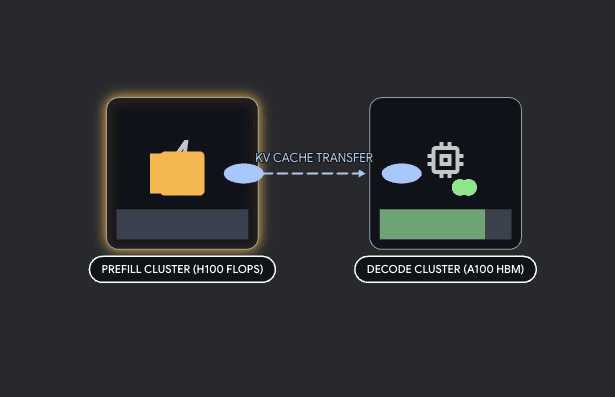
One of the most prominent examples of this paradigm shift is the **partnership between NVIDIA and Nebius**. NVIDIA’s dominance in GPU accelerators and AI infrastructure, combined with Nebius’s scalable cloud platforms, is enabling the construction of **massive AI factories** designed for **training and inference at unprecedented scales**.
These ecosystems feature **topology-aware load balancing** that:
- Handles **over 5 gigawatts of AI infrastructure**.
- Optimizes **GPU placement** and **network routing** to **minimize latency**.
- Facilitates **efficient scheduling** across heterogeneous hardware configurations.
- Ensures GPU utilization matches workload demands, reducing idle time and energy waste.
This collaboration exemplifies a future where **load balancers are integral hardware-conscious orchestrators**, critical for scaling AI infrastructure efficiently and sustainably.
### Equinix’s Distributed AI Hub: Multi-Cloud and Edge Optimization
**Equinix** has advanced this vision with its **Distributed AI Hub**, powered by **Equinix Fabric Intelligence**. Designed for **multi-cloud and edge deployment**, it offers:
- **Seamless orchestration** of AI workloads across diverse cloud providers and data centers.
- **Enhanced security and compliance**, essential for enterprise AI applications.
- **Edge processing capabilities**, reducing latency for real-time inference and decision-making.
The platform employs **sophisticated load balancing techniques** that optimize **traffic routing**, **resource scheduling**, and **data synchronization** across dispersed infrastructure, delivering **low latency, high resilience**, and **cost-effective scalability**.
### Optical Connectivity and Photonics: Reshaping Data Transfer and Load Balancing
The deployment of **coherent optical networks** and **co-packaged photonics** is transforming distributed AI infrastructure:
- Companies like **Arycs Technologies** have secured **$24 million** in funding to expand optical interconnects, enabling **low-latency, high-bandwidth** data transfer over vast distances.
- **Optical network topology** considerations are now embedded into load balancing algorithms, which factor in **inter-node capacity** and **latency metrics**.
- **Co-packaged optics**, developed through collaborations such as **Ayar Labs** and **Wiwynn**, embed photonic interconnects directly into hardware racks, offering:
- **Reduced latency and power consumption**
- **Compact physical footprints**
- **Hardware-aware load balancing** that optimizes **interconnect topology** for real-time training and inference.
This integration of photonics into hardware and network layers further enhances the ability of load balancers to **manage complex, geographically dispersed AI clusters** efficiently.
### AI-Driven Traffic Prediction and Resilience
Incorporating **AI into load balancing systems** enables **predictive traffic modeling** and **adaptive scheduling**:
- These systems analyze **real-time and historical data** to **forecast workload surges**, enabling **proactive resource reallocation**.
- They **reroute traffic** intelligently to prevent bottlenecks, maintaining **performance stability** even during peak loads.
- **Self-optimizing load balancers** continually adapt to infrastructure changes, making large-scale AI systems **more resilient**.
This capability is especially vital for **multimodal AI workloads**, which juggle video, images, and text data streams, each with unique routing and interconnect requirements.
---
## Addressing Operational Risks and Ensuring System Resilience
As infrastructure complexity escalates, so do operational risks like **cascading failures** and **system instability**. A recent influential article titled **"Our AI Infrastructure Is Approaching a Total Meltdown"** underscores these concerns:
> *"Our AI Infrastructure Is Approaching a Total Meltdown"*
> **Content:** The article highlights unprecedented stress levels — capacity limits, hardware failures, network bottlenecks — threatening system stability. It advocates for **failure-aware load balancing**, **distributed coordination**, and **resilience strategies** to prevent catastrophic outages.
**Key operational strategies** include:
- **Failure isolation mechanisms** that prevent localized issues from cascading across systems.
- **Redundancy and fault tolerance** embedded at every infrastructure layer.
- **Robust monitoring and emergency protocols** to detect and mitigate overloads swiftly.
These resilience strategies are essential as **large AI deployments**—including multimodal systems and large language models (LLMs)—expand in size and complexity.
---
## Emerging Future Directions and Strategic Innovations
Looking ahead, the landscape of load balancing will be shaped by several **key innovations**:
- **Topology-aware algorithms** that leverage insights from **optical interconnects** and **hardware topology**.
- **Predictive workload forecasting** powered by AI models, enabling **preemptive resource reallocation**.
- **Energy-aware scheduling** that considers **power consumption** and **carbon footprint**, crucial as **GW-scale data centers** emerge.
- **Standardized GPU pooling strategies** tailored for **multimodal and video AI workloads**.
- **AI-driven adaptive load balancers** capable of **real-time reconfiguration** to maintain **resilience**, **performance**, and **energy efficiency**.
### Incorporating New Considerations: AI Cloud Infrastructure Taxonomy and Power Impact
Recent analyses have introduced a **taxonomy of AI cloud infrastructure categories** (2026) that classify systems based on scale, hardware heterogeneity, and deployment models. This framework helps organizations evaluate and tailor load balancing strategies.
Concurrently, the **power and energy impact** of AI data centers is becoming a critical factor:
- **AI data centers could add over 50 GW of new power demand by 2030**, emphasizing the need for **energy-aware scheduling**.
- Strategies such as **optimized cooling**, **dynamic workload placement**, and **power capping** are now integral to infrastructure planning.
---
## Current Status and Broader Implications
The transition toward **intelligent, hardware-aware load balancing** is well underway, driven by industry leaders like NVIDIA, Nebius, and Equinix. These innovations are enabling **massive, resilient, and energy-efficient AI ecosystems** capable of handling **diverse, geographically dispersed workloads**.
The **integration of optical interconnects**, **AI-driven predictions**, and **fault-tolerant architectures** signifies a new era where **load balancing is not just about traffic distribution** but about **orchestrating entire AI ecosystems** with precision and resilience.
As AI workloads grow towards **multimodal, multi-cloud, and edge-centric paradigms**, these advanced load balancing systems will be crucial in **ensuring operational stability**, **scaling efficiency**, and **sustainable growth**.
---
## Conclusion
The landscape of **load balancing** in AI and cloud infrastructure is fundamentally transforming. The convergence of **topology-aware algorithms**, **AI-driven predictive management**, **photonic interconnects**, and **resilience strategies** is shaping systems capable of supporting **tomorrow’s AI demands** at scale.
Organizations aiming to **scale effectively and sustain operational stability** must adopt **next-generation, adaptive load balancing solutions**—integrating hardware awareness, intelligent orchestration, and energy efficiency. As infrastructure approaches its limits, these innovations will determine whether AI can reach its full transformative potential in a sustainable and resilient manner.