# Sinking Cities, Arctic Threats, and Climate Policy in Flux: Navigating a Growing Global Crisis
The convergence of accelerating climate impacts, geopolitical rivalries, and shifting international strategies is reshaping the global landscape at an unprecedented scale. From the imminent threat of submerged coastal cities to the intensifying scramble for Arctic resources and the fierce competition over critical minerals and climate technologies, the world stands at a pivotal crossroads. Recent developments highlight not only the escalating urgency of environmental threats but also the profound complexity of diplomatic, economic, and security responses unfolding worldwide.
---
## Accelerating Physical Impacts: Arctic Meltdown and Rising Seas
### **Arctic Ice Melts at an Unprecedented Pace**
New scientific data confirms that the Arctic is melting **faster than ever before**, driven in part by **dark carbon deposits**—such as soot and black carbon—that settle on ice surfaces, reducing albedo and accelerating melt rates. This **positive feedback loop** pushes the region toward **critical tipping points** with global ramifications:
- **Sea level rise contributions** from Greenland and Arctic glaciers could add **several centimeters** within the next few decades, exacerbating flooding in vulnerable coastal zones worldwide.
- **Emerging shipping routes**, especially the Northern Sea Route, are becoming navigable as ice recedes, opening new economic corridors. However, this also raises **geopolitical conflicts** and governance challenges, as nations vie for control.
- **Resource extraction opportunities**—including minerals, hydrocarbons, and rare earth elements—are becoming increasingly feasible, igniting a **resource scramble** that risks conflict amid weak international regulatory frameworks.
The Arctic’s fragile governance structures are under mounting strain, as nations—Russia, China, and Western powers—expand **military deployments** and economic interests. The increased activity raises fears of **conflict over resource rights** and **strategic dominance**, overshadowing efforts for **cooperative management**.
### **Rising Seas Threaten India’s Coastal Cities**
India’s densely populated coastal regions—home to over **100 million residents**—are experiencing **sea-level rise nearly twice the global average**. Driven by **glacier melt**, **thermal expansion**, and **pollution-induced warming**, cities such as Mumbai, Kolkata, and Chennai face escalating risks:
- **Frequent and severe flooding** now disrupt daily life, damage infrastructure, and displace marginalized communities.
- Scientific models warn that **inundation could occur within decades** unless aggressive mitigation and adaptation strategies are implemented.
While measures like **seawalls**, **early warning systems**, and **urban planning** are underway, experts warn that **without decisive global action on greenhouse gas emissions**, these urban centers risk facing irreversible damage. The **urgent need for climate finance**, **localized adaptation**, and **international support** remains critical.
### **New Shipping Routes and Resource Pressures**
As Arctic ice recedes, **new maritime routes**—notably the Northern Sea Route—are becoming navigable, promising economic benefits but also heightening **geopolitical tensions**. At the same time, the **race for Arctic resources** accelerates:
- **Strategic interests** from Russia, China, and Western nations are intensifying.
- The **resource scramble**—for hydrocarbons, minerals, and rare earths—risks environmental degradation and conflict, especially given the **weak regulatory frameworks** governing these fragile environments.
---
## Geopolitical Frictions and Strategic Competition
### **Greenland and Arctic Sovereignty**
The melting Arctic has elevated Greenland’s strategic importance, sparking disputes over **resource rights** and **military presence**:
- Russia and China are expanding **military deployments** and economic interests** in the region.
- The **“Greenland scandal”** exposed vulnerabilities in governance as increasing ice melt makes resource exploitation more feasible, fueling **geopolitical rivalries**.
### **China’s Expanding Global Role and Military Shifts**
China’s influence continues to expand across multiple fronts:
- Emphasizing **strategic autonomy**, Beijing is pushing into **climate technology manufacturing**, **critical mineral investments**, and **Arctic ambitions**.
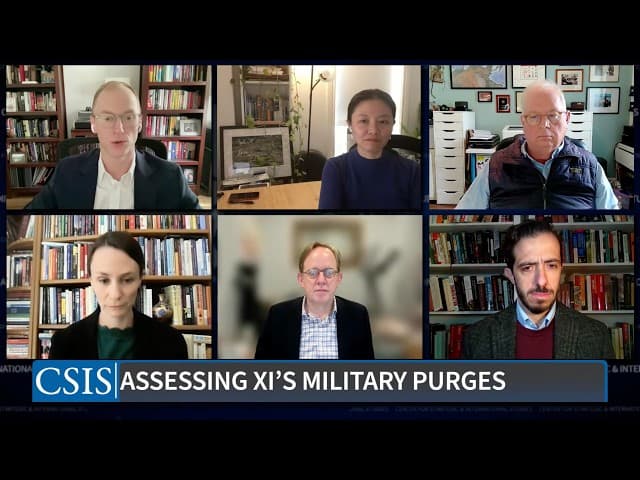
- Recent analyses, such as the report *Assessing the Scope and Impacts of Xi’s Military Purges*, indicate that **military modernization and strategic signaling** are central to Beijing’s broader geopolitical aims. This includes a focus on **modernizing the PLA** and **projecting strategic power**, especially in contested Arctic and Indo-Pacific regions, raising concerns about escalating competition over resource access and security.
### **U.S.–China Rivalry Over Critical Minerals and Climate Technologies**
The transition to renewable energy and clean technology has intensified **great power competition**:
- China **dominates critical mineral supply chains**, leading initiatives like **“Project Vault”**, aimed at diversifying sources through **domestic development** and **international partnerships** in Africa, South America, and Southeast Asia.
- Leaders such as former President Trump emphasized **“breaking China's stranglehold”**, influencing the **pace of global climate mitigation efforts**.
### **European Concerns and Response Strategies**
European nations are increasingly cautious about dependency on China:
- Germany’s **VDMA machinery lobby** warned that **"China isn't a partner, it's a competitor — and it's cheating."**
- European strategies now focus on **diversifying supply chains**, **strengthening domestic manufacturing**, and **building resilient alliances** to safeguard **technological sovereignty**.
### **NATO and Russia’s Military Posturing**
The security landscape continues to evolve:
- NATO’s **military surge** in regions like Denmark signals a response to **Russia’s assertiveness**, especially in the Arctic and Eastern Europe.
- Russian **patrols and military exercises** aim to reinforce **strategic dominance**, raising concerns over **conflict potential** over Arctic resources and broader security stability.
---
## Policy, Private Sector, and Diplomacy Responses
### **COP30 Commitments and Building Sector Initiatives**
At COP30, nations pledged to **decarbonize the building sector**, which accounts for a significant share of global emissions:
- Initiatives include **zero-emission standards** for new constructions, **retrofitting programs**, and **sustainable urban development**.
- However, **disparities persist**: countries like Australia and Brazil indicated potential delays, risking **dilution of commitments**.
### **Private Sector Innovation and Supply Chain Diversification**
Amid policy uncertainties, the private sector is increasingly pivotal:
- Companies are investing in **resilient supply chains** for critical minerals to **reduce dependency** on China.
- Significant investments are underway in **green hydrogen**, **renewable energy projects**, and **climate-resilient infrastructure**.
- Industry alliances are setting **ambitious net-zero targets**, often exceeding government commitments, demonstrating that **market-driven innovation** can accelerate **decarbonization** and **climate adaptation**.
### **Germany’s Focus on Development and Climate Security**
Germany is intensifying efforts to link **climate resilience** with **global security**:
- German Development Minister Reem Alabali-Radovan emphasized that **"international development is a key component of global security."**
- Investments focus on **climate-resilient infrastructure**, **sustainable agriculture**, and **equitable resource access** to reduce vulnerabilities and foster diplomatic cooperation.
### **Science Diplomacy and Multilateral Governance**
A key element in addressing these challenges involves **leveraging science diplomacy**:
- Initiatives like the **Frontiers Science House** promote **joint research** on **black carbon reduction**, **Arctic governance**, and **sustainable resource management**.
- Emphasizing **data sharing** and **collaborative modeling** enhances **climate predictions** and **disaster preparedness**.
- The goal is to **rebuild multilateral institutions**, fostering **trust** and **collective action**—crucial amid rising geopolitical tensions.
### **Moving Beyond Climate Diplomacy to Action**
Recent thought leadership underscores the need to **shift from mere climate diplomacy to tangible action**. As one expert notes, “The way we talk about climate change is evolving. Earlier this year at the World Economic Forum in Davos, I observed this shift—it's now about implementing solutions, scaling finance, and translating commitments into concrete projects.” This sentiment reflects a recognition that **multi-layered strategies**, combining **diplomatic engagement**, **private sector innovation**, and **community resilience**, are essential to managing the crises ahead.
---
## Recent Developments Deepening the Strategic Context
A recent scholarly article titled *Effects of Climatic Change on Diplomacy*, published via Springer Nature, emphasizes that **climate change is now a core driver of international relations**:
> "The Paris Agreement and climate summits demonstrate the profound influence of climate issues on diplomatic engagement. Climate change acts as both a security threat and a catalyst for cooperation, demanding integrated diplomatic strategies that incorporate scientific data, economic considerations, and geopolitical realities."
Adding to this, recent analyses of **Xi Jinping’s military leadership shifts** suggest a focus on **modernizing the PLA** and **projecting strategic power**, especially in contested Arctic and Indo-Pacific regions. This underscores the **geopolitical stakes** tied to climate-induced resource access and security.
Similarly, **Germany’s ongoing debates over China policy**, highlighted by figures like Merz’s recent visit to China, reflect broader tensions between **economic cooperation** and **strategic sovereignty**, which influence Europe’s ability to act decisively on climate and security issues.
Meanwhile, **U.S.–India and U.S.–Philippines cooperation** on **climate resilience** and **security in the Indo-Pacific** exemplify how climate vulnerabilities are increasingly intertwined with geopolitical stability.
---
## Current Status and Implications
The convergence of **rapid environmental change**, **geopolitical competition**, and **technological rivalry** presents a complex challenge:
- **Arctic ice melt and rising seas** threaten to displace millions, especially in coastal megacities like Mumbai and Kolkata.
- **Geopolitical tensions** over **Arctic sovereignty**, **critical mineral supplies**, and **climate technology leadership** threaten to hinder international cooperation.
- **Private sector innovations** and **diplomatic initiatives** offer pathways toward resilience, but **collective global action remains uncertain** amid strategic rivalries.
The insights from recent analyses underscore the **urgent need to integrate climate science into diplomatic frameworks**. As the climate crisis deepens, **multilateral institutions must adapt**, fostering **trust**, **transparency**, and **shared responsibility** to effectively manage **transboundary risks**.
**In sum**, the coming years will determine whether humanity can harness collective ingenuity and political will to transform these mounting crises into catalysts for **lasting change**, or whether ecological and geopolitical upheaval will accelerate, threatening global stability.
---
## Implications for the Future
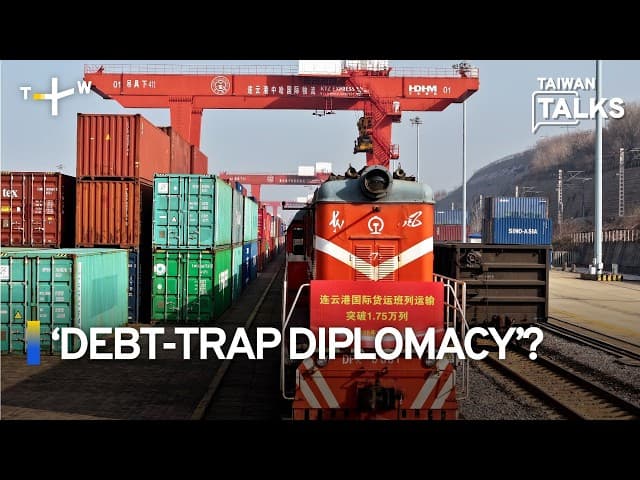
The current landscape underscores that **climate change is no longer merely an environmental issue** but a **foundational element of international security and diplomacy**. The **long-term risks of China's Belt and Road Initiative**, as analyzed in recent discussions, reveal vulnerabilities in infrastructure and geopolitical leverage that could exacerbate regional tensions. Similarly, high-profile visits like **Merz’s trip to China** illustrate Europe's strategic recalibration regarding its relationship with China amidst these complex dynamics.
Moving forward, **urgent, coordinated action** is essential—**scaling finance**, **enhancing adaptation**, and **managing strategic competition**—to **avoid undermining collective climate solutions**. The challenge lies in bridging **scientific insights** with **diplomatic resolve**, ensuring that **climate resilience** becomes a shared global priority amid an increasingly uncertain geopolitical environment.
**The path ahead demands a holistic approach—integrating environmental science, diplomacy, market innovation, and strategic stability—to safeguard a resilient, sustainable future for all.**