# Advancing Unified Tools for Quantum–Classical, Noisy, Out-of-Equilibrium Systems: New Horizons in Theory and Computation
The exploration of complex systems that intertwine quantum and classical phenomena under noisy, out-of-equilibrium conditions has entered an era marked by profound theoretical insights and innovative computational techniques. Driven by rapid developments in quantum technologies, materials science, biological physics, and nonlinear dynamics, recent breakthroughs are forging a **comprehensive, unified framework** that bridges multiple disciplines, deepens our understanding, and opens pathways to practical applications ranging from resilient quantum devices to biological information processing.
---
## Building a Unified Framework: From Control to Geometry
### Extending Control Theory to Non-Markovian and Non-Semimartingale Noise
Traditional control paradigms largely rely on assumptions of **Markovian** (memoryless) noise and **semimartingale** stochastic processes. While mathematically tractable, these assumptions often fall short of capturing the true complexity of real-world quantum and biological systems, where environmental influences exhibit **long memory**, **correlations**, and **non-trivial statistical dependencies**.
Recent advances, exemplified by the preprint **"Linear Quadratic Control with Non-Markovian and Non-Semimartingale Noise Models,"** mark a significant breakthrough by **generalizing control strategies** to accommodate such intricate noise characteristics. These developments include:
- Establishing **rigorous mathematical foundations** for controlling systems affected by **non-Markovian noise**, which retains environmental memory effects influencing system dynamics over extended periods.
- Developing **control algorithms** capable of handling **non-semimartingale processes**, broadening applicability to scenarios involving **history-dependent stochastic influences**.
- Facilitating **robust, adaptive control schemes** suitable for **quantum error correction**, **biological regulation**, and **quantum information processing**, where environmental influences are inherently complex and temporally correlated.
**Implication:** This paradigm shift enables the design of **more resilient and reliable control protocols**, critical for deploying quantum technologies in realistic, noisy environments—an essential step toward **scaling quantum devices** beyond controlled laboratory conditions.
---
## Computational Innovations: Gauge Fields and Hierarchical Dynamics
### Quantum Hierarchical Fokker–Planck Equations with Gauge Fields
A key computational advancement is the development of **U(1)-Quantum Hierarchical Fokker–Planck Equations (U(1)-QHFPE)**, detailed in *The Journal of Chemical Physics*. This framework incorporates **quantum coherence**, **environmental noise**, and **gauge potentials**, such as electromagnetic fields, into a **hierarchical structure** suited for simulating **non-equilibrium quantum transport**.
**Major features include:**
- Accurate modeling of **quantum interference**, **decoherence**, and **dissipation** under noisy, out-of-equilibrium conditions.
- Explicit inclusion of **gauge influences**, capturing phenomena like the **Aharonov–Bohm effect** which modulate quantum coherence via electromagnetic potentials.
- Applications to **quantum nanoelectronics**, **topological quantum devices**, and **quantum sensors**, where environmental and gauge effects critically determine performance.
**Impact:** These equations serve as a **bridge between abstract gauge theories** and **practical simulations**, enabling the design of **robust quantum systems** that can withstand environmental disturbances while exploiting gauge effects for functionality.
---
## Extending Stochastic Models: Quantum Fluctuations and Correlations
Classical stochastic models have long been instrumental in describing **out-of-equilibrium phenomena**. Recent efforts focus on **integrating quantum effects**, such as **fluctuations, entanglement, and correlations**, into these frameworks to better reflect the **true nature** of quantum environments.
**Notable progress includes:**
- Developing **quantum stochastic differential equations** that incorporate **energy transfer**, **decoherence**, and **entanglement dynamics**.
- Enhancing the **predictive power** for **quantum transport**, **biological processes** (like photosynthesis), and **quantum computing architectures**, where classical models are insufficient.
- Creating **comprehensive simulation tools** capable of capturing **non-equilibrium quantum phenomena** with **high fidelity**, essential for designing **robust quantum networks** and understanding **biophysical quantum effects**.
**Significance:** These models are vital for **unifying classical and quantum descriptions**, enabling **accurate control** and **prediction** in systems where **quantum effects are non-negligible**.
---
## Mathematical and Geometrical Foundations: Spectral and Structural Insights
### Open Quantum Systems as Regular Holonomic D-Modules with Mixed Hodge Structures
A groundbreaking study, **"[2512.19487] Open Quantum Systems as Regular Holonomic D-Modules: The Mixed Hodge Structure of Spectral Singularities,"** introduces an **algebraic and geometric perspective** to analyze system spectra.
**Key insights:**
- Modeling the **evolution of open quantum systems** via **D-modules**, which encode the differential equations governing quantum states in an algebraic framework.
- Revealing that **spectral singularities**—points where spectral degeneracies occur—possess a **Mixed Hodge Structure**, a rich geometric object from algebraic geometry.
- Providing **new analytical tools** for understanding **spectral stability**, **phase transitions**, and **noise robustness**, based on the **topological and geometric properties** of spectral data.
**Implication:** This approach offers **powerful methods** for **spectral classification** and **system stability analysis**, crucial for **designing noise-resilient quantum systems** and understanding **dissipative phenomena**.
---
## Incorporating Geometric Decompositions to Remove Spurious Modes
Recent techniques utilize **Covariant Helmholtz–Hodge Decompositions (CHHD)** with respect to **effective acoustic metrics**, which help **resolve unphysical or spurious modes** often encountered in continuum models of noisy or out-of-equilibrium systems.
**Advantages include:**
- Clarifying the **physical significance** of spectral components.
- **Enhancing model accuracy** by eliminating artifacts that distort the true dynamics.
- Bridging **classical continuum theories** with **modern geometric and quantum frameworks**, ensuring **physical consistency**.
**Outcome:** These decompositions reinforce the **theoretical integrity** of models, leading to **more reliable simulations** of fluids, electromagnetic fields, and acoustic phenomena under complex conditions.
---
## Interdisciplinary Applications: Quantum Information in Biological Systems
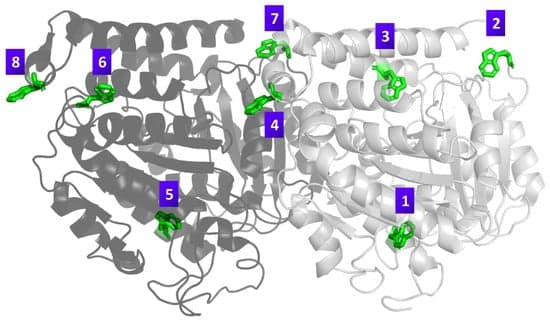
A significant recent addition to this unified landscape is the exploration of **quantum information flow in biological networks**, exemplified by the study **"Quantum Information Flow in Microtubule Tryptophan Networks"**.
**Highlights:**
- Investigates **how quantum coherence and entanglement** might play roles in **biological information processing**, specifically within **microtubule structures** comprising tryptophan residues.
- Demonstrates that **noisy, non-equilibrium quantum models** can provide insights into **biological functions**, such as **signal transduction** and **energy transfer**.
- Suggests that **biological systems** may **harness quantum effects** despite environmental noise, opening avenues for **bio-inspired quantum technologies**.
**Significance:** This interdisciplinary work underscores the **universality** and **applicability** of the **unified quantum-classical, noisy, out-of-equilibrium framework**, extending its reach into **biology** and **biophysics**.
---
## Current Status and Future Outlook
The convergence of **control theory**, **advanced computational models**, and **geometric algebraic analysis** is revolutionizing our capacity to **model, simulate, and control** complex quantum–classical systems operating under **noisy** and **non-equilibrium** conditions.
Recent developments such as:
- **Non-Markovian control schemes** capable of handling **memory effects**,
- **Gauge-inclusive quantum transport simulations**,
- **Quantum extensions of stochastic models**,
- **Spectral analysis via D-modules and Hodge structures**,
- **Geometric decompositions to ensure physical fidelity**, and
- **Quantum biological models**,
collectively **provide a robust toolkit** that is **interdisciplinary at its core**.
**Implications**:
- **Quantum technology deployment** will become more **resilient** and **scalable**.
- **Understanding complex biological processes** may unlock **novel bio-inspired quantum devices**.
- **Theoretical foundations** will guide **experimental design** and **application development** across physics, chemistry, biology, and engineering.
As these tools mature, they promise to **transform our approach** to **complex, noisy systems**, fostering **innovations** that will shape the future of **quantum science and technology**.