# The 2026 Autonomous Coding Era: Stripe’s Minions, Memory Innovations, and the Evolving Landscape of AI-Driven Development
The year 2026 marks a watershed moment in software engineering—a seismic shift from traditional, human-centric coding to an era dominated by **autonomous AI-powered development systems**. Spearheading this transformation are industry giants like **Stripe**, whose **Minions** autonomous agents now process **over 1,300 pull requests weekly**, effectively **redefining how software is conceived, built, and governed**. This rapid evolution reflects advancements in **next-generation AI models**, novel workflows, sophisticated tooling, and a cultural pivot toward **specification-driven** and **visual collaboration**, fundamentally altering the developer landscape.
## The Main Event: Autonomous AI-Driven Development Achieves Scale and Maturity
The core of the 2026 revolution is the widespread deployment of **state-of-the-art AI models** such as **GPT-5.3**, **Gemini 3.1 Pro**, and **Claude Sonnet 4.6**. These models exhibit **deep code comprehension**, **compiler-level reasoning**, and **optimization capabilities** that vastly surpass previous generations. Their integration into **full-stack autonomous platforms** like **Microsoft AutoDev** enables **end-to-end automation**—from initial code generation and review to deployment, maintenance, and security audits.
Stripe’s Minions exemplify this shift: they **handle complex development workflows autonomously**, performing **code review**, **bug fixing**, **feature implementation**, and **refactoring** without human intervention. This has led to **dramatic reductions in project timelines and costs**, with some organizations transitioning toward **spec-driven** workflows that **minimize manual coding**. Such efficiencies are fueling a **competitive landscape** where rapid, reliable, and secure development is the norm.
The supporting **ecosystem infrastructure** has matured into a **resilient, security-conscious environment** characterized by:
- **Strategic alliances** among tech titans like **Microsoft**, **Anthropic**, and **Amazon**,
- **Integrated tooling ecosystems** that facilitate seamless workflows,
- **Advanced orchestration platforms** ensuring **scalability**, **security**, and **regulatory compliance**.
This infrastructure emphasizes **trustworthiness**, embedding **security standards** and **auditability** directly into the development pipeline.
## Evolving Developer Workflows: From Vibe Coding to Specification and Visual Design
The interaction paradigms with AI assistants have undergone radical change. **"Vibe coding"**, once a relaxed, conversational style, has become **ubiquitous**—developers, designers, and non-technical stakeholders now collaborate via **natural language prompts**, **visual sketches**, and **conceptual dialogues**. Tools like **Claude**, **Copilot**, and **Cursor** empower **rapid prototyping** and **iteration**, democratizing development and reducing reliance on deep technical expertise.
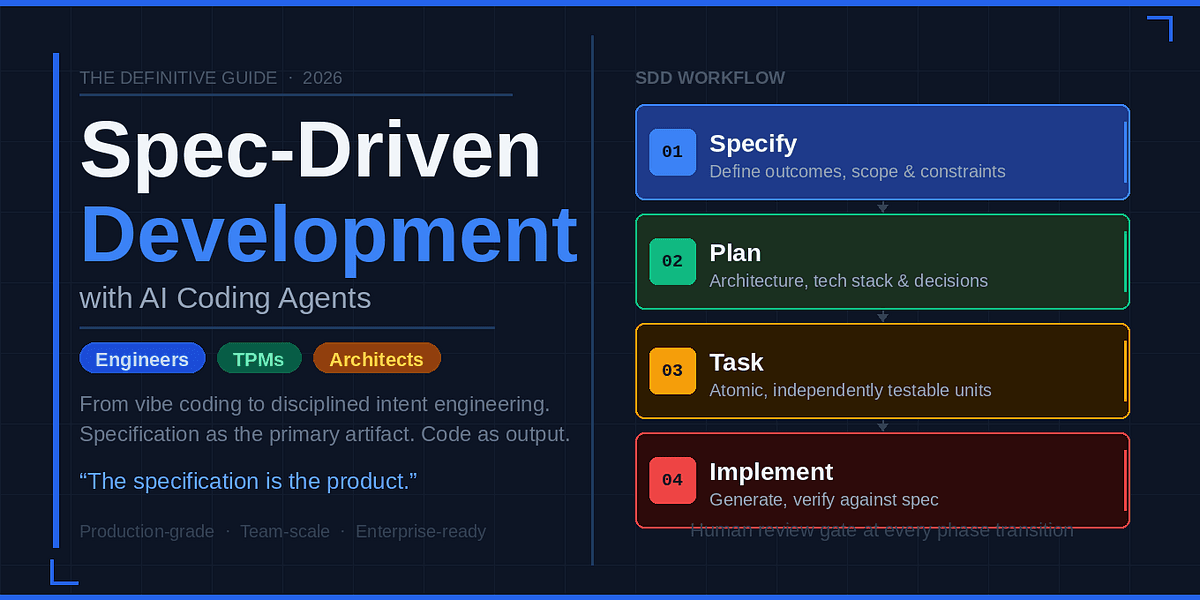
**Specification-driven workflows** are gaining prominence: **developers** now provide **formal, detailed specifications**—including **flowcharts**, **design prototypes**, or **user stories**—which AI interprets into **secure, compliant code**. This approach **builds trust**, especially in **security-sensitive** and **regulated environments**.
In UI/UX development, **design-to-code** tools are transforming workflows; for instance, **Notion’s recent experiments** leverage **Claude Code** to **convert Figma designs directly into production-ready frontend code**. A Notion design lead remarked, *“I haven’t written a single line of front-end code in three months,”* highlighting how these tools **accelerate development** and **empower non-developers**.
### Cultural and Operational Shifts
This **automation-driven evolution** lowers barriers for participation, fostering **more inclusive development teams**. Companies are **restructuring teams** to focus on **system governance**, **security oversight**, and **ethical compliance**, shifting away from routine coding tasks. The emphasis is increasingly on **trustworthiness**, **regulatory adherence**, and **ethical AI governance**.
## Tooling and Orchestration: Memory, Multi-Agent Systems, and New Capabilities
Recent technological advances include **enhanced memory integration** within AI agents. Notably, **Claude Code** now supports **auto-memory**, allowing agents to **maintain context across sessions**. As **@omarsar0** announced, *“Claude Code now supports auto-memory. This is huge!”* This innovation addresses **session loss issues** and enables **long-term project management**, making **large, complex workflows** more manageable.
**Multi-agent orchestration platforms** such as **Mato**—a **tmux-like workspace**—facilitate **coordinating numerous autonomous agents simultaneously**. These platforms support **monitoring**, **resource management**, and **workflow orchestration**, ensuring **scalable, collaborative AI coding**. Such tools are essential for **integrating multi-modal interfaces** and **multi-agent coordination**, exemplified by newer solutions like **Cursor** and **Antigravity**, which offer **flexible, project-specific interfaces**.
## Security, IP Risks, and Governance: Challenges and Industry Responses
With AI-generated code proliferating, **security incidents and licensing disputes** have surged. The **OpenClaw breach** in early 2026 exposed **prompt injection vulnerabilities** and **secrets leakage**, prompting the industry to **accelerate security measures**:
- **Sandbox environments** now isolate code execution,
- **Automated security monitoring tools** like **CanaryAI v0.2.5** and **ClawMetry** actively **detect anomalies** and **prevent exploits**,
- **Claude’s** recent **cybersecurity features** include **anomaly detection** designed to **prevent malicious exploits**.
The rise in **licensing disputes** stems from **ownership attribution** and **IP rights** over AI-generated code. As organizations grapple with these legal complexities, **robust audit and verification tools** such as **Spec Kit** are being adopted to **enhance transparency** and **trust** in AI outputs.
**Recent flaws** in Claude Code underscore these security concerns. For example, **Claude Code flaws** left the tool vulnerable to **hacking**, as highlighted in recent reports titled *"Claude Code flaws left AI tool wide open to hackers – here’s what developers need to know."* Such vulnerabilities have emphasized the critical need for **layered defenses**—including **sandboxing**, **formal verification**, and **security audits**.
## Lessons from Large-Scale Deployments and Limitations
Despite impressive advances, **large-scale projects** reveal **limitations**. For instance, **Anil Sharma** reported challenges building a **100K-line enterprise app** using AI, noting that **without formal specifications and layered architecture**, projects tend to become **error-prone** and **difficult to maintain**. **Vibe coding**, while flexible, **struggles with** **complex, long-term applications**, highlighting the importance of **formal verification** and **structured design**.
### The Role of Formal Verification
The need for **formal verification tools** has become evident. Tools like **Spec Kit** help **verify correctness**, **security**, and **compliance**, especially for **mission-critical systems**. As **scale and complexity** grow, **layered defenses** combining **formal specs**, **automated testing**, and **security audits** are essential to **maintain integrity**.
## Current Developments and Future Directions
Recent innovations focus on **auto-memory features**—such as **Claude Code’s** **persistent context layers**—which **enhance agent memory capabilities** for **long-term, complex projects**. These advancements are critical for **maintaining coherence** in **large codebases**.
Furthermore, **model selection tools** are emerging to guide organizations in choosing **appropriate AI models**, balancing **performance**, **cost**, and **security**. Platforms now evaluate models like **Claude Code**, **Cursor**, and **Antigravity** on **speed**, **accuracy**, and **security features**, aiding **strategic decision-making**.
The **market remains highly dynamic**, with companies like **FastCode** claiming **2-4x faster code generation** and **up to 55% cost savings**, fueling **competition and innovation**.
## Recommendations for Navigating the Autonomous Development Landscape
To succeed in this **autonomous era**, organizations should:
- **Implement layered security measures**: sandboxing, anomaly detection, formal verification, and ongoing security audits.
- **Invest in robust specification tooling** to improve **trustworthiness** and **predictability** of AI-generated code.
- Develop **interoperability standards** and **shared protocols** to facilitate **multi-agent workflows** and **toolchain integration**.
- **Upskill teams** in **system governance**, **ethical oversight**, and **complex decision-making** to complement automation.
## Final Thoughts: The Future of Autonomous Coding
The **2026 autonomous coding era** is shaping up as a **paradigm shift**—not just a technological evolution but a **fundamental redefinition** of **software creation**, **organizational roles**, and **security paradigms**. **Stripe’s Minions** showcase how **specification-driven, autonomous agents** can **accelerate innovation** and **reduce costs**—but only when paired with **robust security frameworks** and **trustworthy tooling**.
As innovations like **Claude Code’s** **auto-memory** and **multi-agent orchestration** mature, the **potential for productivity** and **complex project management** grows exponentially. However, **responsible oversight**, **security**, and **legal clarity** remain paramount. The successful navigation of this landscape will determine whether the **autonomous coding revolution** becomes a **trusted, inclusive, and secure** foundation for **future software development**—one where **AI and humans** collaborate seamlessly to **drive innovation at unprecedented scale**.