# How Context Engineering Powers AI-Driven Growth Teams: The Latest Developments and Strategic Implications
In the rapidly advancing landscape of artificial intelligence, **context engineering** has solidified its role as a pivotal strategic discipline that enables organizations to harness AI's full potential responsibly and effectively. Once a niche technical practice, it now underpins enterprise-scale AI initiatives, fostering trust, scalability, and measurable business value. Recent technological innovations and industry shifts underscore how deliberate design, management, and governance of AI environments—via prompts, data contexts, specifications, security, and observability—are transforming AI from an unpredictable tool into a trusted strategic partner.
## From Ad Hoc Experimentation to a Core Strategic Discipline
In the early days of AI experimentation, many organizations relied on **reactive, ad hoc adjustments**—tweaking prompts, data sources, and settings to achieve desired outputs. This approach led to inconsistent results, limited scalability, and high operational risk. Recognizing these limitations, forward-thinking teams have transitioned toward **structured, disciplined approaches** to **context engineering**. Key practices now include:
- Developing **standardized prompts and specifications (Specs)** aligned with specific business objectives
- Embedding **relevant data contexts** to improve accuracy, relevance, and safety
- Implementing **rigorous security protocols**, **observability**, and **governance controls** to ensure compliance and trust
This systemic approach fosters **consistency**, **maintainability**, and **scalability**, enabling organizations to **rapidly iterate**, **deploy enterprise-grade AI solutions**, and **manage risks** proactively.
## Platform and Tool Advances: Elevating Context Engineering Capabilities
Recent technological innovations have significantly enhanced the tools supporting **context engineering**, making it more precise, accessible, and scalable across enterprise environments.
### 1. The Rise of the Spec Kit
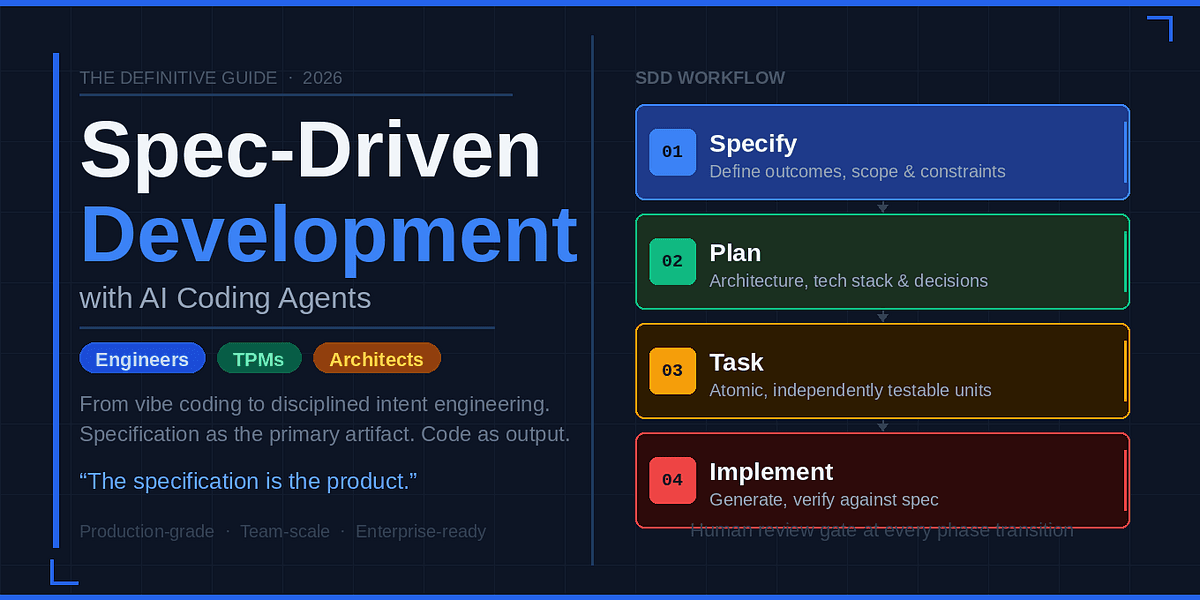
The **Spec Kit**—a collection of templates, frameworks, and best practices—has become foundational in **specification-driven development**. It allows teams to:
- **Precisely define AI tasks** to ensure alignment with strategic goals
- **Guarantee consistent outputs** across deployments
- **Reuse components** to accelerate development cycles
**Impact:**
Standardized specs reduce **misalignment**, foster **shared understanding**, and streamline **iteration**, resulting in **predictable, maintainable AI solutions**.
### 2. OpenAI’s Frontier: Autonomous, Enterprise-Grade AI Agents
OpenAI’s **Frontier** platform advances **multi-step autonomous AI applications** suited for complex enterprise workflows. It supports **multi-agent systems** that:
- Seamlessly integrate with enterprise tools like **Salesforce**, **Workday**, and others
- Handle **multi-step, nuanced tasks** autonomously
- Maintain **behavioral fidelity** through **specification-driven development** and **context management**
**Implications:**
- Enhanced **control and reliability** in autonomous workflows
- Support for **scalable operations** with **consistent context handling** across agents
### 3. GABBE: The Cognitive Engineering Platform
**GABBE** exemplifies **advanced cognitive (context) engineering**, providing **AI coding, orchestration, and lifecycle management** capabilities. It empowers organizations to:
- **Design adaptive, complex workflows**
- **Orchestrate multi-component AI systems** with integrated **security**, **observability**, and **compliance**
- **Automate AI lifecycle management** with minimal manual intervention
**Significance:**
GABBE’s architecture promotes **resilient, secure, and scalable AI ecosystems**, illustrating how **structured context design** enhances **safety, reliability**, and **strategic control**.
### 4. Expanding Developer Tooling & Empirical ROI
The ecosystem of **AI tooling** continues to grow, including:
- **Codex-based applications** and **Kiro IDE** for **prompt development** and **rapid prototyping**
- **AI app builders** such as **v0**, **Bolt.new**, and **Lovable** that facilitate **workflow orchestration** and **user engagement**
Empirical data highlights the benefits of **well-engineered contexts**:
- Over **1,100 developers and CTOs** report **significant benefits** in **scaling AI agents** for tasks like **refactoring, debugging**, and **automation**
- Companies adopting **structured prompts and specs** experience **faster iteration cycles** and **more predictable outputs**
## Recent Industry Developments: Enhancing Enterprise Integration & Orchestration
### Anthropic’s Upgraded Claude Enterprise Features
In February 2026, **Anthropic** announced a major upgrade to **Claude**, introducing **Cowork** and **plugins** optimized for **enterprise workflows**:
- **Deeper integration** with enterprise tools such as **Salesforce**, **SAP**, and **Workday**
- **Enhanced plugin system** supporting **custom workflows** and **secure data access**
- **Fortified security and compliance**, including **real-time behavior monitoring**, **role-based access controls**, and **auditability**
**Significance:**
These updates aim to **embed AI into operational workflows** more deeply, promoting **trustworthy, scalable deployment** and aligning with industry emphasis on **governance and observability**.
### Anthropic’s Remote Control for Claude Code
A notable recent innovation is **Anthropic’s Remote Control for Claude Code**, which enables **terminal operations directly from mobile devices**:
- **Remote command execution** via smartphones or tablets
- **Flexibility** for developers and practitioners to **manage AI workflows on the move**
- **Enhanced responsiveness** and **real-time control** without dependence on fixed workstations
**Implications:**
This feature advances **operational agility**, allowing **quick adjustments** and **continuous monitoring**, further integrating AI management into daily enterprise routines.
### Community Innovations: Orchestration and Multi-Agent Ecosystems
Discussions led by AI researcher **@chrisalbon** highlight ongoing challenges in **managing multiple Claude code agents**, such as **avoiding cluttered setups** like **multiple tmux terminals**. Emerging solutions include:
- **Multi-agent workspaces** like **Mato**, offering **visual management**, **concurrent control**, and **collaborative interfaces**
- Development of **orchestration frameworks** that **scale workflows** efficiently while **maintaining clarity and control**
This underscores a **growing demand** for **integrated multi-agent ecosystems** that **maximize scalability** without compromising **usability**.
## New Frontiers: Democratization and Tooling Choices
### Perplexity’s Computer: Empowering Non-Experts
**Perplexity’s Computer**, as CEO Sharon Goldman explains, is an **OpenClaw-like AI agent tool** designed for **non-expert users**. It allows:
- **Intuitive interaction** with AI agents for complex tasks
- **Simplified setup** and **workflow automation** without deep technical expertise
**Significance:**
This democratizes AI development, making **powerful agent capabilities** accessible to **wider audiences** and fostering **enterprise-wide adoption**.
### Comparing Developer Tools: Lovable vs Claude Code
A recent comprehensive review titled **"NEW! Lovable vs Claude Code? Full AI Developer Tool Review"** evaluates:
- **Lovable**, which offers **visual flow interfaces** and ease of **workflow orchestration**—ideal for **non-technical teams**
- **Claude Code**, emphasizing **fine-grained control** and **programmatic flexibility**—best suited for **technical developers**
**Implications:**
Organizations must **choose tools** aligned with their **skill levels** and **workflow complexity**, highlighting the ongoing importance of **context engineering** as a flexible, strategic discipline.
## Market Signals & Competitive Trends: Broader Industry Movements
Recent developments reveal a dynamic ecosystem:
- **Emerging alternatives to Base44**, such as **Bolt.new**, are gaining ground as **rapid AI app builders** for developers seeking fast, flexible solutions.
- **FastCode** is gaining attention for **accelerated and streamlined coding**, boasting **2-4x faster performance** than competitors like **Claude Code** and **Cursor**, with **cost reductions** of **44-55%**.
- A **report** highlights **record high conflicts in open-source licensing** as organizations struggle to **audit AI-generated code** for **IP risks**, emphasizing the need for **robust governance** and **license management**.
- The **U.S. Department of Defense** (DoD) is actively seeking **AI-enabled coding tools** for **tens of thousands of developers**, aiming for **edge deployment** and **mission-critical applications**.
- **Claude Code** now **edges out OpenAI’s Codex** in the VS Code marketplace leaderboard, indicating strong **enterprise and developer preference**.
- **Figma’s integration with Codex** exemplifies how **design tools** are embedding **AI assistance** to streamline **creative workflows**.
These signals reinforce the critical importance of **rigorous context engineering**, **governance**, and **lifecycle management** to navigate risks and scale AI solutions effectively.
## Strategic Implications: Embedding Context Engineering into Enterprise Practices
As AI systems evolve toward **multi-modal reasoning**, **autonomous decision-making**, and **deep enterprise integration**, the role of **precision, security, and transparency** in **context design** will only grow. To capitalize on AI’s transformative potential, organizations must:
- **Embed specifications, security protocols, and observability** within their **operational workflows**
- **Standardize prompt and spec development** across teams for **consistency**
- **Implement orchestration and lifecycle management frameworks** like **GABBE** to ensure **resilience and compliance**
- **Leverage democratized tools** like **Perplexity Computer** to broaden AI access beyond technical teams
This integrated approach will **accelerate innovation**, **reduce risks**, and **maximize ROI** from AI investments.
## Current Status and Outlook
Today’s landscape demonstrates that **mastery of context engineering**—through **platform innovations**, **powerful tooling**, and **robust governance practices**—is essential to enterprise AI success. Organizations that **embed these practices** will be better positioned to deliver **trustworthy, scalable, and impactful solutions**, gaining a **competitive edge**.
As AI advances toward **multi-modal reasoning** and **autonomous operation**, the capacity to **design, monitor, and govern contexts with precision** will **differentiate industry leaders**. This evolution transforms AI from an opaque black box into a **controllable, strategic asset** that fuels **long-term growth**, **innovation**, and **enterprise excellence**.
---
**In summary**, recent developments—from **platform upgrades** and **tooling advances** to **industry signals**—underscore a fundamental truth: **Effective context engineering is the backbone of AI-driven growth**. Embedding it into organizational practices today will unlock AI’s transformative potential for tomorrow.