# How Blockchain, Tokenization, and Crypto Regulation Are Reshaping Capital Markets and Financial Rails: The Latest Developments
The global financial landscape is undergoing a profound transformation driven by rapid technological innovation, evolving regulatory frameworks, and geopolitical shifts. Blockchain technology, asset tokenization, and digital currencies are not only redefining traditional capital markets but also establishing new financial rails that promise increased efficiency, inclusivity, and resilience. Recent developments highlight a maturing ecosystem poised to influence how capital is raised, invested, and transferred worldwide, with key initiatives and events shaping this dynamic environment.
## Continued Progress in CBDCs, Stablecoins, and Digital Infrastructure
Central banks and governments are transitioning from experimental pilots to full-scale deployment of digital currencies, signaling a new era in monetary and financial systems:
- The **European Central Bank (ECB)** has advanced its **digital euro project**, with plans to **select payment service providers (PSPs) by 2026**, **initiate pilot testing in 2027**, and **launch the digital euro by 2029**. This phased approach aims to **enhance settlement efficiency**, **support cross-border interoperability**, and **strengthen financial stability** across the Eurozone.
- **Hong Kong** is positioning itself as a regional leader in stablecoin regulation. **Financial Secretary Paul Chan** announced that **licenses for stablecoin issuers** will be **issued next month**, creating a **regulated environment** for stablecoin operations. The city is also developing a **digital asset platform** to facilitate **tokenized bond issuance** and **digital asset settlement**, integrating regional hubs to **advance cross-border financial infrastructure**. This initiative seeks to **embed digital bonds into mainstream markets** and establish Hong Kong as a **regional fintech and tokenization hub**.
- The **Bank of England** is upgrading its **Real-Time Gross Settlement (RTGS) system**, incorporating **tokenized settlement capabilities** through collaborations with firms like Chainlink, with a **full rollout targeted for 2026**. Similarly, pilots in **Japan** and the **European Union** are exploring **streamlined bond issuance** and **transparency enhancements**, reflecting a broad international consensus on leveraging digital currencies to modernize financial infrastructure.
- **Stablecoins** are increasingly integrated into everyday financial routines, especially in regions facing fiat currency instability or limited banking access. A recent **BVNK survey** underscores their expanding use in **paychecks**, **retail transactions**, and **remittances**, demonstrating their potential to **lower transaction costs**, **bypass traditional banking barriers**, and **drive financial inclusion**.
## Regulatory Actions, Market Signals, and Liquidity Dynamics
The regulatory landscape remains active, with enforcement actions and market shifts influencing liquidity, investor confidence, and systemic risk:
- In a significant enforcement move, **US authorities seized over $61 million USDT** linked to **cryptocurrency scams**, targeting **"kill pig" schemes**—a form of elaborate crypto fraud—highlighting ongoing efforts to **tighten AML standards** and **protect investors**.
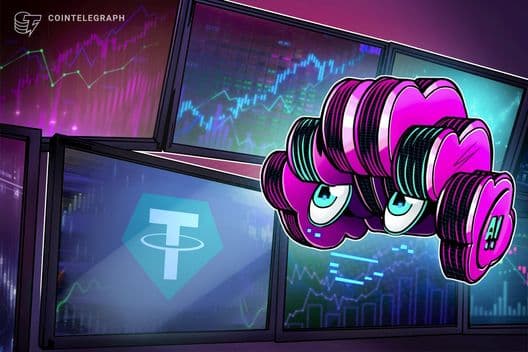
- The **USDT market capitalization** has experienced a **gradual decline of about 1% over two months**, decreasing from roughly **$1.868 trillion to $1.836 trillion**. This trend signals **cautious liquidity sentiment** and raises questions about **stablecoin liquidity** and its impact on **crypto market stability** amid increased regulatory scrutiny.
- The **stablecoin industry** faces intensified **regulatory scrutiny**, with authorities advocating for **stringent AML and compliance measures** to **mitigate systemic risks** associated with unregulated issuance and cross-border flows.
- **Geopolitical tensions** are reflected in on-chain activity; notably, the **on-chain ruble stablecoin**, backed by the **Russian Ruble**, has facilitated **around $39 billion** in **sanctions flows**—an example of how **digital assets** can serve as **economic bypass channels** amid sanctions. Investigations by firms like **Elliptic** have identified **five major crypto platforms** enabling **Russian sanctions evasion** through **wallet obfuscation** and **large-scale transfers**, complicating enforcement and underscoring the need for **enhanced compliance frameworks**.
- Conversely, **Binance** reports a **97% reduction in sanctions exposure since 2024**, indicating **improved compliance efforts** and **alignment with international standards**, though geopolitical risks persist.
## Institutional Adoption, Tokenization, and Real-World Assets
Institutional confidence and asset tokenization accelerate, unlocking new investment avenues:
- **RedotPay**, a Hong Kong-based stablecoin payments firm, is **considering an IPO valued at approximately $1 billion USD**, reflecting optimism in **stablecoin-based payments** and **mainstream acceptance**.
- **BNP Paribas** has expanded its **tokenized share classes**, pioneering **blockchain-based issuance for money market funds**. This demonstrates **growing institutional confidence** in blockchain technology, aiming to **streamline issuance processes**, **enhance transparency**, and **reduce operational costs**.
- Sovereign digital assets are gaining momentum: **The UK** has issued **digital gilts** to **accelerate settlement times**, **improve transparency**, and **expand investor access**. Similarly, **Japan** and **Europe** are actively exploring **digital bonds** to **reduce issuance costs** and **enhance market efficiency**.
- The **tokenization of real-world assets (RWA)** continues to expand rapidly. Platforms like **Elemental Royalty** now pay **dividends in Tether’s stablecoin XAUT**, increasing **liquidity** and **investment opportunities** across sectors such as **commodities**, **real estate**, and **royalties**. This facilitates **fractional ownership** and **cash flow management**, broadening access to traditionally illiquid assets.
- Innovative **governance models** are emerging, with **AI-powered governance bots** expected to **participate in protocol decisions by 2026**, promising **greater efficiency** but raising questions about **control** and **transparency**.
- **Bitwise**, a leading asset manager, recently **acquired Chorus One**, a staking infrastructure platform, to **expand staking services across 30 chains**, bolstering **decentralized network security** and **liquidity provisioning**.
## Payment Rails, Fintech, and AI Integration
The convergence of blockchain, fintech, and AI continues to reshape payment ecosystems:
- **Stripe co-founder John Collison** highlighted that **machine-to-machine (M2M) payments** will see **explosive growth**, with **USDC** emerging as a **core digital dollar** for **automated financial exchanges**. As **AI agents** evolve into **independent economic actors**, **programmable stablecoins** like **USDC** will be central to **seamless, automated transactions**.
- Fintech firms are securing **US bank charters** to **offer regulated banking services** around digital assets, aiming to **bridge traditional banking and crypto ecosystems** while **ensuring compliance** and **building trust**.
## Market Signals, Liquidity, and Geopolitical Risks
Recent market dynamics and geopolitical developments reveal both opportunities and vulnerabilities:
- Enforcement actions, such as the seizure of **over $61 million USDT**, demonstrate regulatory vigilance.
- The **decline in USDT’s market cap** by about **1%** over two months reflects **cautious liquidity sentiment**.
- **Sanctions evasion** via **on-chain channels** remains a concern, with **Elliptic** identifying major platforms facilitating such activity, emphasizing the importance of **robust compliance measures**.
- **Binance’s** improved sanctions compliance indicates progress, but ongoing geopolitical tensions continue to influence **digital asset platforms**.
## Technology, Security, and Network Resilience
Technological advancements are critical to fostering **trust** and **security** in the digital asset ecosystem:
- The **Ethereum Foundation** outlined **2026 priorities**, including **‘quantum readiness’** and **gas limit optimization** to **increase throughput** and **reduce costs**, vital for **mass adoption**.
- **EigenLayer** is introducing **restaking protocols** that allow **validator security deposits** to be **reused across multiple protocols**, creating a **multi-layered security ecosystem** that enhances **scalability** and **robustness**.
- **Vitalik Buterin** has proposed **transaction simulation techniques** to **detect and prevent wallet breaches**, emphasizing that **minimizing divergence** between **user intent** and **protocol execution** is essential for **trust**.
- Initiatives like **Meltnet** are developing **decentralized internet ecosystems** designed to **resist cyber threats** and **censorship**, ensuring **resilience** in an increasingly interconnected digital world.
## Governance, Policy, and Token Design
Effective governance and policy frameworks are evolving alongside technological innovation:
- **AI-powered governance bots** are expected to **participate actively** in **protocol decisions by 2026**, promising **greater efficiency** but raising concerns about **centralization**.
- **DeFi policy initiatives**, exemplified by **Hyperliquid’s DeFi Policy Shop**, aim to **establish balanced regulatory standards** that **foster innovation** while **preventing fragmentation**.
- Projects like **Meltnet** focus on **decentralized internet ecosystems**, underpinning **security** and **trustworthiness** in the broader digital economy.
- The **design of token economies** continues to mature, emphasizing **stakeholder incentives**, **governance participation**, and **network resilience**. Recent insights, such as the **"Token Economies & Design"** paper, highlight the importance of **governance models**, **staking mechanisms**, and **distribution frameworks** to shape **sustainable networks**.
## New Frontiers: Tokenized Equity, International Risks, and Market Evolution
Emerging use cases and geopolitical considerations are shaping the future of digital assets:
- **Backpack**, a pioneering platform, plans to **offer company equity directly to token stakers**, enabling **participants** to **earn ownership rights** through **staking tokens**. CEO **Armani Ferrant** emphasizes this as a step toward **democratizing corporate ownership** and **aligning incentives** between **companies** and **communities**.
- The **RANE Podcast** titled **"Geopolitical Uncertainty and the Bond Market"** explores how **international tensions** influence **sovereign debt** and **capital flows**. It suggests that **tokenized assets** could serve as **strategic tools** for **diplomacy** and **economic resilience**, especially as nations leverage **digital assets** to **navigate geopolitical risks**.
## Current Status and Future Outlook
Today, **blockchain, tokenization, and crypto regulation** are central to **transforming global capital markets**:
- The **digital euro** and other **CBDCs** are expected to **reshape cross-border payments**, **enhance monetary sovereignty**, and **foster financial inclusion**.
- **Regulatory clarity in the US** is poised to **accelerate institutional adoption**, while the **growth of tokenized assets** presents **new investment opportunities** and **improved liquidity**.
- **Technological innovations**—including **quantum-resistant cryptography**, **multi-protocol security layers**, and **advanced transaction simulation**—are crucial for **building trust** and **ensuring network resilience**.
- The strategic use of **on-chain systems** for **geopolitical leverage** underscores the importance of **international cooperation**, **robust compliance frameworks**, and **risk management** to **maintain financial stability**.
## Implications and Conclusions
The integration of **blockchain**, **tokenization**, and **regulatory evolution** is fundamentally reshaping **how capital markets operate**, fostering an ecosystem that is **more inclusive**, **efficient**, and **resilient**. Current developments demonstrate a landscape rich with **potential**—from sovereign digital currencies and institutional tokenization to technological breakthroughs and geopolitical uses—yet also present **complex challenges**.
**Success depends on** **collaborative governance**, **technological innovation**, and **international coordination**—aimed at **building trust**, **ensuring stability**, and **driving sustainable growth**. As these forces continue to evolve, **tokenized assets**, **regulatory clarity**, and **security advancements** will be pivotal in shaping the **next era of global capital markets**, leading to a **more inclusive and robust financial system**.
---
## Recent Key Developments at a Glance
- **Hong Kong** is preparing for **stablecoin licenses** issuance and a **digital bonds platform** in 2026 to support **tokenized debt issuance**.
- Enforcement actions, including the **seizure of over $61 million USDT**, illustrate ongoing **regulatory vigilance**.
- The **USDT market cap** has decreased by about **1%**, indicating **cautious liquidity**.
- **Binance** reports a **97% reduction** in sanctions exposure since 2024, reflecting **improved compliance efforts**.
- **Bitwise**'s acquisition of **Chorus One** expands **staking infrastructure** across **30 chains**.
- **Stripe** emphasizes the growth of **M2M payments** driven by **USDC** and **AI agents** as **automated, programmable money**.
- **Backpack** aims to **offer company equity to token stakers**, democratizing ownership.
- The **RANE Podcast** highlights **tokenized assets** as strategic tools amid **geopolitical tensions**.
These developments underscore a **transformative, regulated, and innovative ecosystem**, poised to **reshape the future of global capital markets and financial rails** with **greater inclusivity, efficiency, and resilience**.