The autonomous agent ecosystem in mid-2026 is witnessing an unprecedented inflection point, driven by massive capital inflows, strategic hyperscaler collaborations, and rapid technological maturation. Autonomous agents—once experimental AI programs—have now become essential, secure, and auditable infrastructure components powering next-generation AI applications across cloud and physical domains. This new phase of growth leverages breakthroughs in hyperscale compute sharing, specialized silicon innovation, rigorous governance frameworks, and sophisticated runtime intelligence.
---
### Hyperscale Compute and Capital: OpenAI’s $110 Billion Round and Meta’s Nvidia Infrastructure Build Redefine Capacity
The scale of investment fueling autonomous agent infrastructure has exploded, marking a new era of capacity expansion and vendor partnerships:
- **OpenAI’s landmark $110 billion funding round**, announced in June 2026, represents the largest single capital infusion in AI history. The round attracted marquee hyperscaler and technology investors, including **Amazon ($50 billion committed)**, **Nvidia**, and **SoftBank**, underscoring a shared vision to build vast AI compute fabric. This funding will accelerate OpenAI’s next-generation LLM training and inference platforms, enabling more powerful and efficient autonomous agents.
- **Meta has intensified its AI infrastructure buildout in partnership with Nvidia**, as reported by StorageNewsletter. Meta’s multi-year plan involves deploying Nvidia’s latest DGX supercomputers alongside custom storage solutions, aiming to support massive AI workloads with reduced latency and improved throughput. This move complements Meta’s ongoing **multi-billion-dollar deal to rent Google TPUs**, reflecting a dual strategy of owned and rented hyperscale compute to maximize flexibility amid fluctuating demand.
- These developments highlight a shifting hyperscale compute landscape where **capital investment and vendor ecosystem partnerships coalesce** to create a diversified, resilient compute backbone for autonomous agents. The combination of owned infrastructure and chip-sharing agreements reduces barriers to scaling while ensuring access to cutting-edge silicon.
---
### Specialized Silicon and Chip-Sharing: Expanding Ecosystem with MatX, AMD-Nutanix, and Ongoing TPU Rentals
Amidst booming demand, specialized silicon innovation and collaborative chip-sharing continue to reshape the hardware foundation of autonomous agents:
- **MatX’s $500 million Series B funding**, closing earlier this year, signals strong investor confidence in startups developing domain-specific ASICs for LLM training tailored to autonomous agent workloads. MatX’s chips focus on power efficiency and parallelism, complementing incumbent GPUs and TPUs by targeting agent-specific inference optimizations.
- The **AMD–Nutanix partnership** further integrates CPU, GPU, and hyperconverged infrastructure into turnkey AI platforms. This collaboration aims to streamline enterprise adoption by delivering pre-validated stacks optimized for autonomous agent runtimes, reducing complexity and operational friction.
- **Meta’s ongoing rental of Google TPU fleets** remains a pivotal example of hyperscaler cooperation, enabling elastic compute scaling without large upfront investments. This arrangement exemplifies a broader industry trend toward chip-sharing deals that hedge supply chain uncertainties and accelerate deployment timelines.
- Industry forecasts, such as those from TrendForce, anticipate **over $710 billion in combined hyperscale capex by the top eight cloud providers in 2026**, driving further silicon diversification, including emerging photonic accelerators and domain-specific ASICs from startups like optoML.
Together, these trends reinforce a compute ecosystem that balances specialization, flexibility, and scale—key for supporting the growing operational demands of autonomous agents.
---
### Trust, Identity, and Governance: Embedding the EU AI Act and Runtime Compliance into Agent Lifecycles
Governance and trust frameworks have evolved rapidly in response to regulatory mandates, security imperatives, and the need for transparent agent operations:
- The **EU AI Act's imminent enforcement** has become a watershed moment for runtime governance. Enterprises deploying high-risk autonomous agents in Europe must implement continuous monitoring, risk assessment, and human oversight. This has accelerated adoption of **standardized governance layers** embedded directly into agent lifecycles, ensuring real-time compliance and auditability.
- Startups like **t54 Labs** are advancing **cryptographic provenance and tamper-proof identity frameworks**, providing unforgeable audit trails and enabling secure inter-enterprise collaboration. These identities act as the foundation for trust, ensuring agents’ actions are attributable and verifiable.
- **Runtime “toll gates” and dynamic policy enforcement**, exemplified by Anthropic’s integration of **Vercept.ai** into Claude, enable agents to adapt their behavior in real-time to evolving regulatory and security requirements, mitigating unauthorized actions and reducing compliance risks.
- The emergence of **certified artifact marketplaces** has bolstered supply chain security. For example, Anthropic’s “Claude Code” update, which patched prompt injection vulnerabilities revealed by the OpenClaw incident, demonstrates how marketplace curation, remote control, and scheduled task management improve runtime integrity.
- Privacy-preserving techniques such as **Adaptive Text Anonymization via Prompt Optimization** balance transparency with data protection, increasingly integrated into compliance workflows.
- Operator safety tools like **Firefox 148’s AI Kill Switch** have gained adoption as essential runtime safeguards, allowing rapid termination of anomalous or unsafe agents—critical as fleets scale.
In sum, trust and identity have moved from static checkpoints to **dynamic, enforced runtime layers** tightly coupled with regulatory frameworks, particularly the EU AI Act, ensuring autonomous agents operate safely and transparently.
---
### Observability, Scheduling, and Anomaly Detection: AI-Driven Runtime Intelligence for Agent Fleets
Operating large fleets of autonomous agents demands intelligent observability and scheduling systems capable of preempting failures and optimizing resource utilization:
- **Meta’s GPU Cluster Monitoring (GCM)** continues as a leading open-source telemetry framework offering granular insights into workload performance, hardware health, and bottlenecks across massive GPU clusters supporting agent workloads.
- Recent research into **deep reinforcement learning (RL) for dynamic workflow scheduling** (ScienceDirect) has yielded RL-driven schedulers that adaptively orchestrate distributed workloads across fog and cloud environments. These schedulers reduce fragmentation and improve utilization by considering latency, resource constraints, and workload priorities in real time.
- Commercial telemetry solutions like **New Relic’s autonomous agent monitoring** and **Braintrust Data’s ML-powered anomaly detection** platforms provide proactive alerts, catching deviations before they escalate into outages or security incidents.
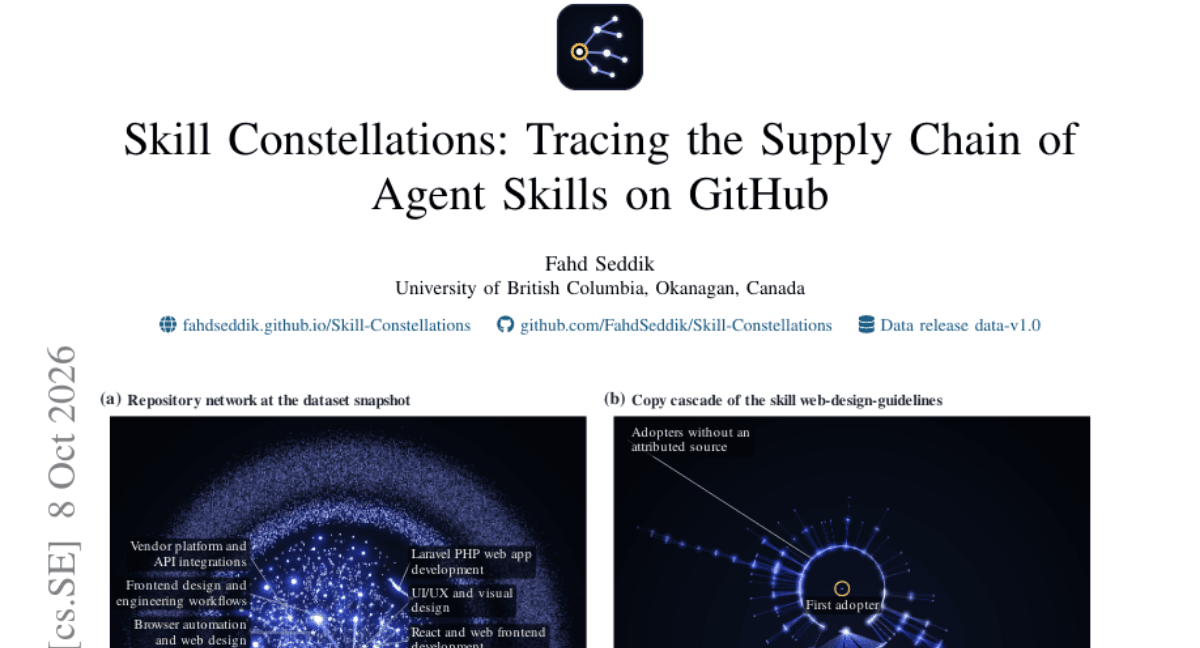
- The **integration of anomaly detection with cryptographic identity enforcement**—evident in **Palo Alto Networks’ acquisition of Koi**—strengthens runtime defenses by linking endpoint protection with real-time incident response, closing security gaps throughout the agent lifecycle.
These advances position observability and scheduling not merely as support functions but as **foundational pillars for reliable, efficient, and secure autonomous agent operations at scale**.
---
### Platform Engineering and Orchestration: Kubernetes, AI-Driven Control Loops, and AgentOps Maturity
The complexity of deploying and managing autonomous agents has driven innovation in platform engineering and orchestration paradigms:
- **Kubernetes remains the dominant orchestration engine**, expertly managing containerized agent deployments, auto-scaling, and resource allocation across distributed clusters worldwide.
- The release of **Crossplane 2.0** with AI-driven control loops automates critical platform tasks like deployment tuning, governance enforcement, and runtime safety checks. These closed-loop controls reduce operator overhead and enhance fleet reliability by dynamically adapting to changing conditions.
- The emergence of **AgentOps as a formal discipline** codifies best practices across lifecycle management, observability, compliance, and security tailored specifically for autonomous agents—mirroring DevOps but with agent-specific tooling and processes.
- Hardware-software integration initiatives, such as the **AMD-Nutanix collaboration**, deliver tightly coupled stacks optimized for autonomous agent runtimes, smoothing enterprise AI workload provisioning and management.
Together, these platform capabilities establish a **resilient, scalable foundation** for treating autonomous agents as mission-critical infrastructure.
---
### Advancing Agent Capabilities and Embodied AI: From Self-Evolving Vision-Language Agents to Robotics Governance
Autonomous agents are rapidly advancing in cognition, multi-modality, and physical embodiment, demanding new governance and safety frameworks:
- The release of **Agent0-VL**, a self-evolving vision-language agent framework, demonstrates leaps in agent cognition by integrating visual reasoning, tool use, and autonomous capability refinement. This breakthrough is crucial for enabling agents to operate effectively in complex, dynamic real-world environments.
- Research into **multi-agent cooperative and competitive dynamics** is increasing demands on orchestration platforms to support heterogeneous fleets with diverse knowledge sharing and goal alignment.
- In embodied AI, startups like **RLWRLD** have raised $26 million in Seed 2 funding to develop **robot foundation models specialized for industrial settings**, combining advanced AI with robotics control under strict safety and regulatory regimes.
- Cutting-edge research such as **“World Guidance: World Modeling in Condition Space for Action Generation”** enhances agents’ ability to simulate environments and adapt actions safely, enabling reliable physical autonomy.
- Integrated **governance frameworks now span cryptographic identity, runtime observability, robotic safety certifications, and test-time verification**, ensuring trustworthy operation of embodied agents in safety-critical domains.
These advances push autonomous agents beyond virtual assistance into **complex physical domains**, necessitating new layers of accountability and operational rigor.
---
### Emerging Security Risks and Layered Defenses: Guarding Against Supply-Chain Attacks, Prompt Injection, and Runtime Threats
As autonomous agents proliferate, adversarial threats have become more sophisticated, requiring comprehensive, layered defense strategies:
- The sobering findings of the **MIT study “AI agents are fast, loose, and out of control”** remain a clarion call about risks of uncontrolled agent behavior, insufficient disclosure, and cascading failures.
- Persistent attack vectors include side-channel exploits, prompt injection, and supply-chain compromises. Industry responses now integrate **cryptographic identity verification**, **telemetry-based anomaly detection**, and **strict runtime policy enforcement** to mitigate these risks.
- Endpoint protection platforms like **Palo Alto Networks’ Koi** combined with curated skill and artifact marketplaces have emerged as best practices to harden the agent lifecycle from development through deployment.
- Regulatory incentives, particularly from the **EU AI Act**, are driving adoption of secure-by-design and policy-enforced agent architectures, embedding security as a first-class runtime consideration.
Layered defenses anchored in identity, observability, and runtime controls have become **essential to securing the expanding autonomous agent ecosystem**.
---
### Outlook: Autonomous Agents as Trusted, Auditable Enterprise Infrastructure in a New Era of Partnerships and Governance
By mid-2026, autonomous agents have evolved from experimental AI constructs into **trusted, mission-critical pillars of enterprise AI infrastructure**. The convergence of massive capital infusions, strategic hyperscaler partnerships, specialized silicon innovation, and rigorous governance frameworks has created a secure, scalable, and auditable ecosystem.
Key takeaways include:
- The unprecedented **$110 billion OpenAI funding round** and **Meta’s Nvidia infrastructure buildout** illustrate the magnitude and strategic nature of hyperscale compute investments.
- Continued **chip-sharing deals**, startup ASIC innovation, and integrated hardware-software stacks provide flexible, high-performance compute foundations.
- **Trust, identity, and governance frameworks**—especially under the EU AI Act—ensure agents operate within strict compliance and safety boundaries.
- Advanced **observability, AI-driven scheduling, and anomaly detection** platforms deliver runtime intelligence critical for large-scale fleet management.
- Platform engineering innovations like Kubernetes orchestration and AI control loops underpin reliable deployment and operation.
- Autonomous agents now demonstrate **self-evolving cognition and embodied physical capabilities**, expanding into robotics with integrated safety governance.
- Layered security defenses guard against emerging adversarial threats, supply-chain risks, and runtime vulnerabilities.
The autonomous agent ecosystem is no longer a speculative frontier—it is a rapidly maturing, highly strategic domain where **innovation, governance, and partnership coalesce to enable a secure and auditable AI-powered future**. As enterprises and hyperscalers embrace this reality, autonomous agents will increasingly underpin critical applications across digital and physical realms worldwide.
---
### Selected New References
- *OpenAI announces $110 billion funding round with backing from Amazon, Nvidia, SoftBank*
- *Meta Builds AI Infrastructure with Nvidia* (StorageNewsletter)
- *Deep reinforcement learning with evolved actions for dynamic workflow scheduling in distributed fog computing* (ScienceDirect)
- *Agent0-VL: Exploring Self-Evolving Agent for Tool-Integrated Vision-Language Reasoning*
- *Palo Alto Networks acquisition of Koi for agentic endpoint protection*
- *AI Compliance & Product Safety | The EU's AI Act Explained* (YouTube)
---
This updated synthesis captures the accelerating breadth and depth of the autonomous agent landscape, highlighting how strategic infrastructure moves, regulatory forces, and technical innovation converge to shape a secure, auditable future for AI-powered autonomy.