# 2026 Space Industry: A Year of Unprecedented Operational Success, Innovation, and Strategic Evolution
As 2026 progresses, the space sector is firmly transitioning from pioneering experiments to a mature, large-scale operational ecosystem. The year has already been characterized by extraordinary achievements in launch cadence, spacecraft technology, human spaceflight, scientific research, and international collaboration. These developments collectively signal a new era of sustainable, commercially driven space activity, reinforced by technological innovation, strategic partnerships, and a focus on long-term resilience.
---
## SpaceX’s Operational Dominance: Reusability, Launch Cadence, and Strategic Expansion
A defining feature of 2026 has been SpaceX’s relentless pursuit of operational excellence, cementing its role as the industry leader in launch frequency and cost efficiency.
- **Falcon 9 Reusability Milestones:**
SpaceX’s Falcon 9 booster **"B1051"** has now successfully completed **33 flights**, setting a global standard for rocket reusability. This record underscores the reliability of SpaceX’s reuse strategy and exemplifies how rapid turnaround times significantly **reduce launch costs**. Elon Musk emphasized this impact, stating, *"Reusability is transforming space access. With 33 flights, our booster proves that rapid reuse is not just possible but profitable."* This achievement continues to lower barriers for small satellite operators, scientific missions, and commercial payloads.
- **High Launch Cadence & Diverse Missions:**
The first half of 2026 has seen SpaceX sustain an **impressive monthly launch schedule**, including **more than 13 Falcon 9 missions in a single month**. Notably, on February 25, SpaceX launched **Starlink satellites 17 through 26 from Vandenberg Space Force Base**, deploying 10 satellites in a single mission to bolster global broadband coverage. These frequent launches support a broad array of payloads—ranging from **Starlink broadband**, defense systems, scientific instruments, to commercial satellites—demonstrating the company's capacity to sustain an **almost continuous operational tempo**.
- **Global Coverage and Cost Reduction:**
The recent Starlink deployment from Vandenberg exemplifies SpaceX’s strategic push to **provide high-speed broadband worldwide**, especially targeting underserved and remote regions. This expansion is pivotal for **bridging digital divides** and fostering **economic growth in emerging markets**. The successful reuse of Falcon 9s, showcased in “Reuse Record” videos, continues to **drive down launch costs**, making space more accessible than ever before.
---
## Starship Maturation: Infrastructure, Technological Breakthroughs, and Mission Readiness
SpaceX’s **Starship** program is approaching operational maturity, with recent milestones laying the groundwork for future interplanetary missions.
- **Pad 2 Deluge Test & Ground Infrastructure:**
The **newly constructed Pad 2** at Starbase underwent a comprehensive **deluge test**, simulating the intense water flows necessary for **rocket heat management and landing procedures**. This critical step advances the readiness for regular Starship launches, indicating the maturation of ground support facilities essential for high-frequency interplanetary missions.
- **FAA Approvals & Flexible Launch Trajectories:**
The **FAA has approved new launch trajectories for Starship**, enabling **more flexible and safer flight paths**. These clearances are vital in expanding **launch windows** and increasing **operational frequency**, aligning with SpaceX’s vision of **frequent lunar and Mars missions**.
- **Propulsion Innovation – Raptor 4 Engines:**
Recent disclosures reveal the FAA’s approval for a **new landing approach utilizing Raptor 4 engines**, a significant technological advancement addressing previous **thrust efficiency** and **thermal management challenges**. The **Raptor 4** engines are designed to **foster faster, more economical missions**, supporting lunar support, in-space manufacturing, and Mars exploration.
- **Upcoming Flight 9 (Scheduled for May 27):**
SpaceX has scheduled **Starship Flight 9** for **May 27 at 6:00 UTC**, marking a **key step toward operational readiness**. This mission aims to **validate long-range interplanetary capabilities** and demonstrate reliability for future lunar and Martian missions, reinforcing SpaceX’s overarching goal of **human settlement beyond Earth**.
---
## Human Spaceflight: From Routine Missions to Lunar and Commercial Ambitions
Human space activities are becoming more routine, yet technical and operational challenges persist.
- **ISS Missions and Crew-12:**
Despite weather-related delays, **Crew-12** successfully launched from **Cape Canaveral** and docked with the **International Space Station (ISS)**. The mission garnered over **817 live viewers**, reflecting rising societal engagement. Observers in Pennsylvania and neighboring regions witnessed the launch, illustrating the **growing societal integration and enthusiasm** surrounding human spaceflight.
- **Medical Emergencies & Safety Protocols:**
An **emergency medical evacuation** from the ISS underscored the importance of **robust safety measures** as crewed missions expand in scope and duration. Ensuring crew safety amid increasing operational complexity remains a top priority for agencies and commercial partners.
- **Commercial Human Spaceflight Expansion:**
NASA’s collaboration with private companies continues to flourish. **Vast’s upcoming private crewed mission to the ISS in 2027** will be its **sixth private crewed flight**, supporting **space tourism**, **scientific research**, and **station maintenance**. This trend fosters a **more commercially driven human spaceflight ecosystem**, democratizing access and accelerating innovation.
- **Artemis II Lunar Mission & Schedule Risks:**
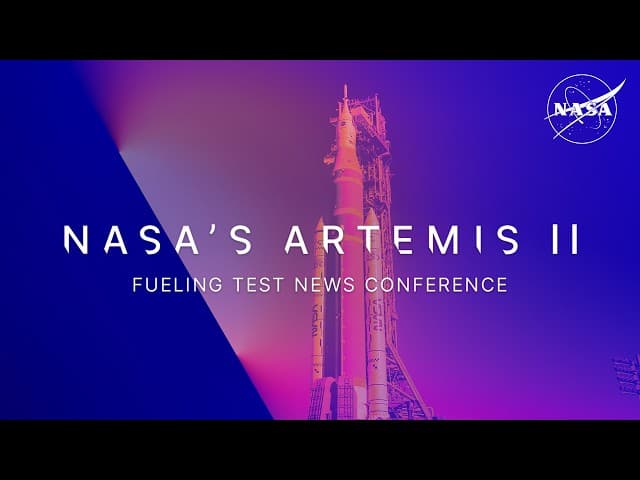
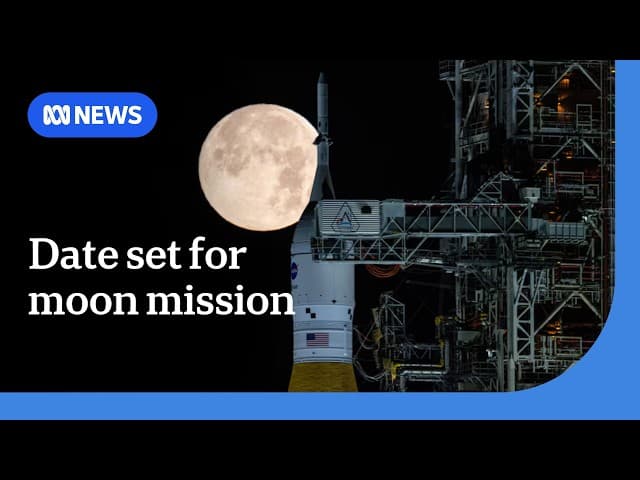
NASA’s **Artemis II** recently completed a **fueling test and wet dress rehearsal** at Kennedy Space Center. However, **new technical anomalies** have emerged, risking a schedule slip from March to **February 19**. NASA engineers are actively investigating, emphasizing the mission’s **pivotal role in lunar exploration** and **international collaboration**. The crew has been invited to participate in the **State of the Union (SOTU)** address, highlighting its **national significance**.
---
## Scientific, Environmental, and Sustainability Initiatives
The sector’s expanding scope emphasizes **scientific discovery**, **environmental stewardship**, and **sustainable operations**.
- **Cosmic and Planetary Science:**
NASA’s **Swift Observatory** extended its operational lifespan with an **orbit-boost maneuver on February 11**, enhancing its ability to detect gamma-ray bursts and cosmic phenomena. Concurrently, Mars rover and orbital observatory scientific campaigns continue to yield valuable insights into planetary geology, climate, and habitability, laying groundwork for future human exploration.
- **In-Space Manufacturing & Debris Mitigation:**
Projects like **Varda Space Industries’ W-5 reentry demonstration** are pioneering **in-space manufacturing**, potentially **reducing launch costs** and **redefining production paradigms**. Meanwhile, **OMLET (Orbital Maneuvering with Laser and Electric Thrusters)** has successfully demonstrated **active debris removal**, addressing **orbital congestion** and promoting **space sustainability**.
- **Operational Expansion & Ecological Responsibility:**
SpaceX’s **Starbase facility in South Texas** is set to **double capacity**, supporting up to **25 major missions annually**. Notably, SpaceX has secured federal approval to **develop wetlands at Starbase**, exemplifying efforts to **balance operational growth with ecological conservation**, a critical step toward **sustainable space industry expansion**.
---
## International Collaboration, Security, and Regulatory Evolution
The global landscape of space activity continues to evolve amid geopolitical tensions and cooperation.
- **Expanded Artemis Partnerships:**
The Artemis program has **broadened its international partnerships**, including **Oman and Türkiye**, fostering **shared lunar infrastructure, resource utilization, and scientific collaboration**. These alliances are essential for establishing a **sustainable lunar presence** and **joint resource management**.
- **Space Situational Awareness & Security:**
Rising concerns over **anti-satellite (ASAT)** capabilities by nations such as **Russia** and **China** persist. To counter these threats, space agencies have advanced **space situational awareness tools**, including NASA’s **“Golden Dome” network**, which enhances **monitoring and security of orbital assets** amid escalating geopolitical risks.
- **Regulatory Frameworks & Legal Evolution:**
As commercial and military activities accelerate, regulatory bodies like the FAA are **tightening licensing and safety protocols**. International negotiations aim to **refine space law frameworks** related to **orbital traffic management**, **debris mitigation**, and **jurisdiction**, striving for a **more sustainable, secure, and governed orbital environment**.
- **Why Space Matters and How to Govern It:**
A recent influential video titled *"Why Space Matters and How to Govern It"* emphasizes the importance of establishing **robust governance frameworks**. As space becomes more accessible and contested, **international cooperation and clear legal standards** are vital to ensure **peaceful, sustainable, and equitable use** of outer space resources and infrastructure.
---
## Industry & Financial Outlook: Market Implications and Investment Trends
The industry’s trajectory suggests significant financial and market transformations.
- **Potential IPO Repricing & Market Dynamics:**
As SpaceX continues to demonstrate operational excellence and technological leadership, its anticipated **initial public offering (IPO)** could **reprice the entire private space market**. Space Capital’s Chad Anderson notes that a successful IPO could **unlock new investment capital**, accelerate industry growth, and **refocus investor confidence** on space ventures.
- **Emergence of a Space-Industrial Era:**
Discussions in 2026 highlight the **emergence of a space-industrial era**, with increased investments in **space infrastructure, in-orbit manufacturing, and resource extraction**. These developments are expected to **drive new markets** and **economic opportunities**, fostering a **sustainable space economy** that integrates with terrestrial industries.
---
## Implications & Outlook: Toward a Sustainable and Expansive Space Future
2026 is proving to be a **transformational year** for space operations, characterized by **technological breakthroughs, strategic collaborations, and a deepening commitment to sustainability**. The rapid progress in reusable launch systems, the maturation of Starship, and the expanding scope of human spaceflight signal a future where **space becomes an integral part of global infrastructure** and human civilization.
While technical challenges like Artemis II’s schedule risks and geopolitical tensions persist, the sector’s resilience and innovation are clear. The discussions surrounding **governance frameworks** and **space sustainability**—exemplified by initiatives like **"Why Space Matters and How to Govern It"**—are critical to ensuring that space remains a **peaceful, accessible, and sustainable domain**.
**In summary**, 2026 marks a pivotal point where humanity’s in-space endeavors are entering an era of **long-term, scalable operations**. With continued innovation, strategic cooperation, and responsible stewardship, the space industry is poised to support **sustainable exploration, commercial enterprise, and international collaboration**—laying the foundation for humanity’s next great frontier beyond Earth.