May 18, 2026
AI Research & Impact · May 18 Daily Digest
Method Advances
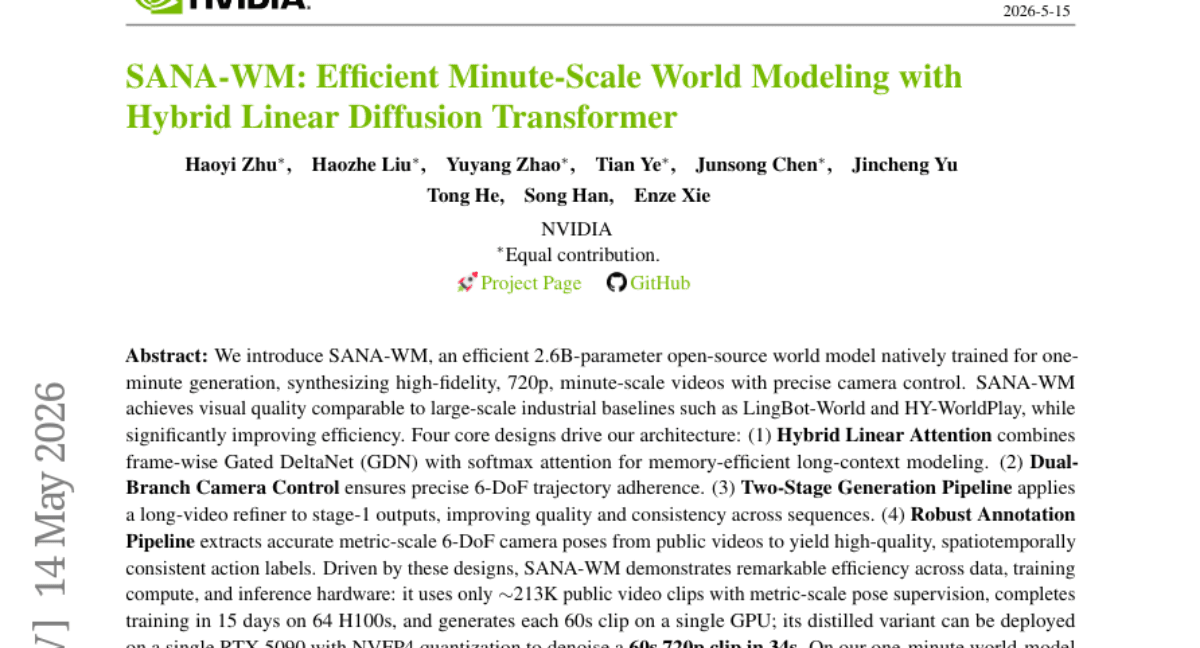
- 🔥 SANA-WM: SANA-WM introduces efficient minute-scale world modeling with a hybrid linear diffusion transformer.
- 🔥 Darwin...

Created by Bernida Iqbal
Curated peer‑reviewed papers, pre‑prints, and industry reports on AI research and real‑world breakthroughs
Explore the latest content tracked by AI Research & Impact
ML accelerator surveys rely on performance and power numbers as primary benchmarks, yet these metrics may only approximate real deployment...
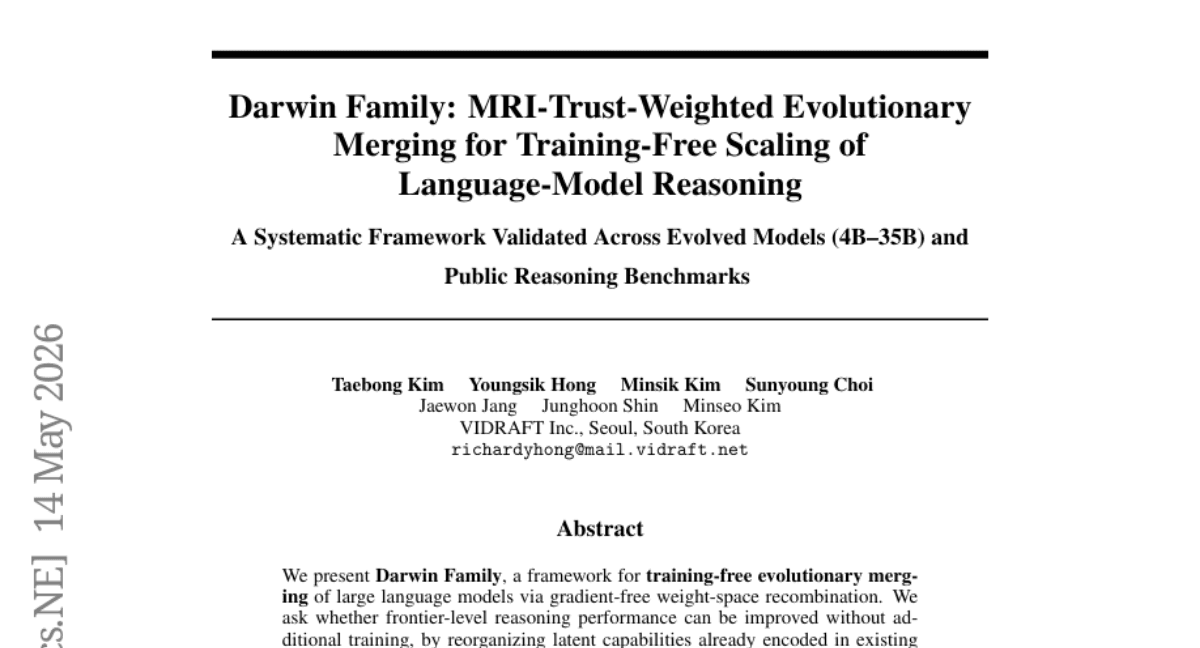
The Darwin Family introduces MRI-Trust-Weighted Evolutionary Merging for training-free scaling of language-model reasoning. This approach highlights potential cross-architecture benefits in advancing LLM capabilities.
AI models are driving early detection breakthroughs in oncology and cardiology.
TRACER replaces small router LLMs with lightweight logistic regression on text embeddings for near-zero-latency classification routing.
A new survey explores self-evolution and failure attribution in LLM multi-agent systems, yet fresh empirical work reveals a core...
Fresh 2026 papers from Google DeepMind and ByteDance push LLMs beyond scale into structured thinking and hidden risks.
NVIDIA is leveraging AI to overcome quantum computing's core barrier: error correction on fragile, noise-prone qubits.
Two fresh approaches tackle the same KV cache bottleneck in attention mechanisms.
SANA-WM delivers efficient minute-scale world modeling via its hybrid linear diffusion transformer, marking a notable architectural step for generative tasks.
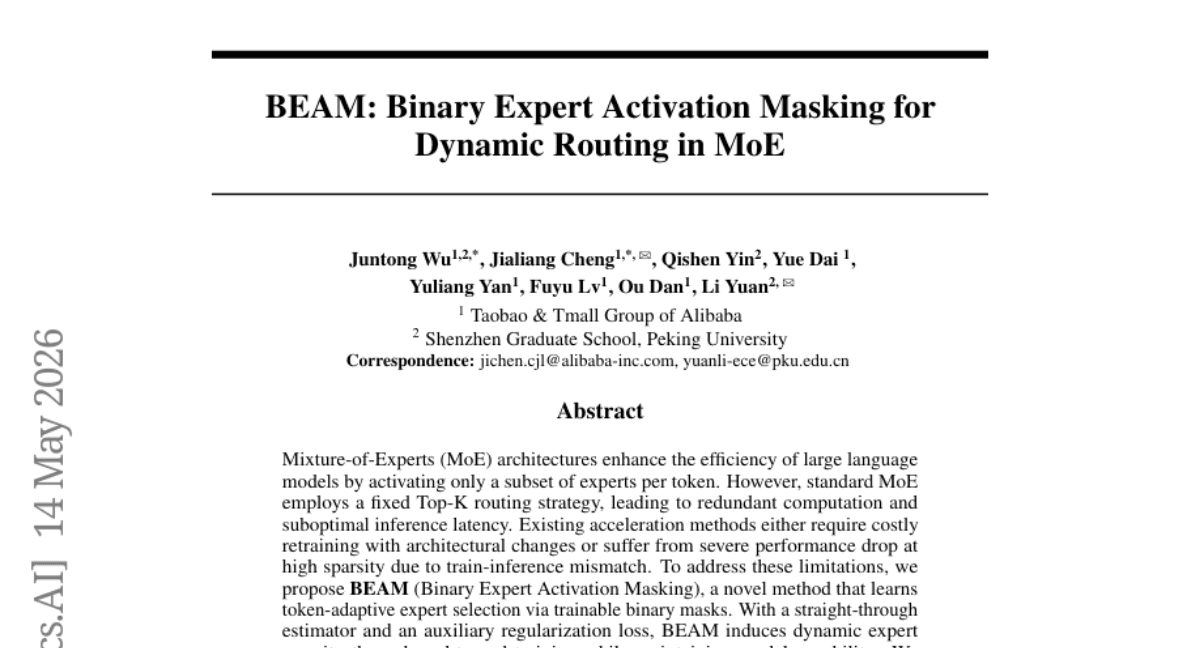
BEAM proposes binary expert activation masking to enable more efficient dynamic routing in large-scale Mixture-of-Experts models.
ViRC improves multimodal math reasoning by replacing dense visual insertion with Reason Chunking.
A comprehensive survey titled Memorization in Deep Learning examines how models retain training data and the resulting effects on generalization...
Two papers mark clear progress on low-latency, controllable video that generalizes from scant data.
The TIDE framework enables cross-architecture distillation of massive diffusion LLMs, shrinking 16B MoE and 8B teachers into a compact 0.6B student...
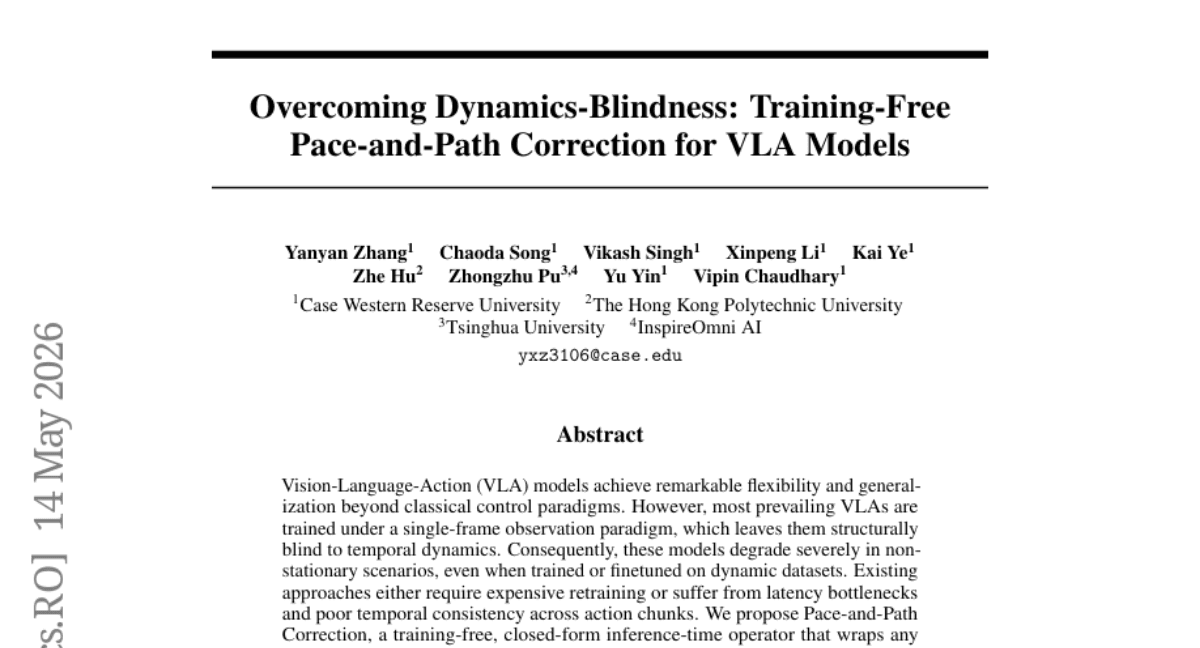
Training-free pace-and-path corrections tackle dynamics-blindness in vision-language-action robotics models, enabling better path accuracy without retraining.
CausalBench+ delivers standardized datasets, metrics, and pipelines to enable quantitative comparison of models on causal reasoning under controlled conditions.