# AI-Driven Digital Twins Power Smarter Campuses, Factories, and Cities Across Asia: A New Era of Innovation and Infrastructure
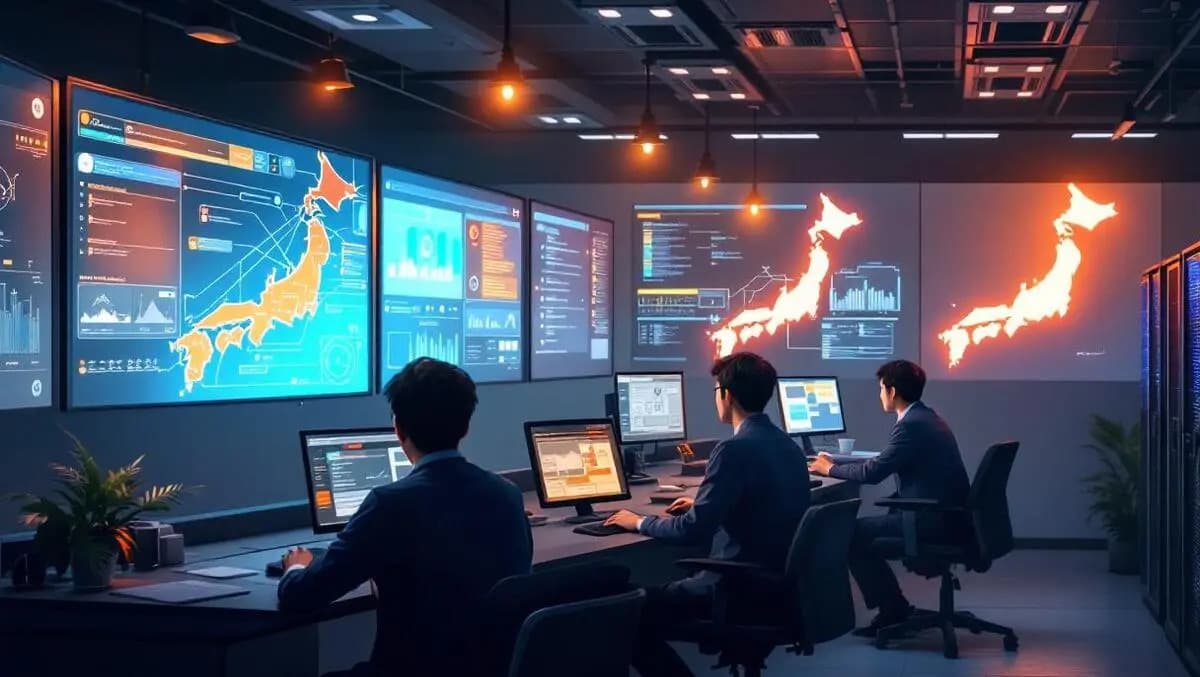
Asia continues to solidify its position as the global leader in digital transformation, harnessing **AI-powered digital twin (DT) ecosystems** to fundamentally reshape urban development, manufacturing, energy, maritime security, and beyond. These **hyper-realistic virtual replicas**, built through **real-time data streams, advanced AI analytics, and interconnected platforms**, are rapidly becoming the backbone of **smarter, more resilient, and sustainable societies**. Recent breakthroughs—marked by massive investments, strategic alliances, technological innovations, and large-scale deployments—highlight the region’s unwavering commitment to deploying digital twins as catalysts for societal progress and economic growth.
---
## From Pilot Projects to Interconnected Ecosystems: Asia’s Rapid Digital Twin Evolution
Over the past year, Asia has transitioned swiftly from **isolated pilot initiatives** to **comprehensive, interconnected digital twin ecosystems** that span multiple sectors and geographies. This evolution enables **dynamic simulation, analysis, and real-time decision-making**, empowering governments, industries, and citizens to address environmental challenges, socio-economic needs, and technological opportunities proactively.
### Major Developments and Landmark Deployments
- **Urban Resilience and Smart Cities:**
Varanasi, India, exemplifies pioneering progress with its **comprehensive 3D digital twin** developed by **Genesys International**. This virtual replica facilitates **infrastructure management, traffic flow optimization, disaster preparedness, and environmental monitoring**. Its success has established Varanasi as a **model for climate adaptation and sustainable urban planning**. Building on this, the city is now expanding its digital twin into a **national test bed** for India’s energy and utilities initiatives, aiming to enhance **power distribution, disaster response, and climate resilience**.
- **Expanding Smart City Initiatives:**
The **Asia Pacific smart cities market** was valued at approximately **USD 207 billion in 2025**, with projections forecasted to grow robustly through 2030. Major cities like **Singapore, Seoul, and Shanghai** deploy integrated digital twin platforms that enable **real-time infrastructure management, environmental monitoring, and citizen engagement**, leading to **efficiency gains, transparency, and significant cost savings**.
- **Educational Transformation:**
Universities across Asia are embedding digital twins within **STEM curricula**, employing **virtual labs, remote simulations, and immersive environments**. South Korea and Japan lead in pioneering **digital twin-based training programs** for urban planning, industrial maintenance, and environmental management—fostering a new generation of professionals prepared for a digitally-driven future.
- **Manufacturing & Industry 4.0:**
Countries like **Malaysia, Singapore, and Thailand** are deploying digital twin solutions for **real-time process monitoring, predictive maintenance, and flexible manufacturing**. Industry guides such as *“Digital Twin in Manufacturing: A Guide for Businesses”* emphasize their role in **cost reduction, operational agility, and supply chain resilience**, especially critical amidst ongoing global disruptions.
- **Chinese Industries & Smart Factories:**
Chinese manufacturers are rapidly adopting digital twins to **optimize process control, resource management, and predictive analytics**, significantly boosting efficiency and sustainability. As highlighted by **People’s Daily Online**, these initiatives reinforce China’s status as a **global manufacturing powerhouse**.
- **Energy, Utilities, and Infrastructure:**
**Vietnam** exemplifies expansion beyond initial pilots, with **utilities like SP Group operating Virtual Power Plants (VPPs)** that facilitate **grid balancing, renewable energy integration, and demand forecasting**. Additionally, **Ho Chi Minh City** announced a **USD 1 billion investment** in **digital-asset and AI data centers**, establishing regional hubs for **large-scale data processing, AI training, and digital twin deployment**. Industry experts recognize this infrastructure as vital for **real-time simulations, secure data exchange, and scalable ecosystems**—key elements in managing complex urban and industrial systems.
- **Maritime and Defense Sectors:**
Recognizing the strategic importance of maritime security, **EdgeTI** committed **$8 million** in investments and acquired assets from **Austal**, aiming to embed **digital twins within maritime defense sectors**. These high-fidelity simulations of naval vessels and operational environments enable **predictive maintenance, mission planning, and real-time decision-making**.
> _Quote from EdgeTI’s CEO:_
> "_Our acquisition of Austal assets and the $8 million investment mark a pivotal step toward embedding AI-driven digital twins into maritime defense, enabling real-time monitoring, simulation, and decision-making—crucial for maintaining regional strategic superiority._"
- **Major Infrastructure Projects:**
The **USD 1 billion digital-asset and AI data-center initiative in Ho Chi Minh City** aims to establish **regional hubs for high-performance computing**, supporting **large-scale twin deployments across sectors**. This infrastructure underpins **urban management, smart city development, and regional data sovereignty**, ensuring **ecosystem scalability and resilience**.
- **New Investment Highlight:**
A landmark recent announcement involves **Reliance Industries’ plan to invest ₹10 lakh crore (approximately USD 1.2 trillion)** over the next **7 years** to develop a **comprehensive AI and digital ecosystem in India**. This massive capital infusion seeks to create a **national digital twin infrastructure** that accelerates innovation in **manufacturing, urban planning, energy, healthcare**, and other critical sectors.
> _Quote from Reliance’s leadership:_
> "Our strategic investment underscores our commitment to building a resilient, scalable, and inclusive digital ecosystem that drives India’s future growth and global competitiveness."
This ambitious initiative is poised to **fast-track digital twin adoption and integration across India**, positioning the nation as a **regional and global hub for digital innovation**.
---
## Landmark Projects, Strategic Alliances, and Expanding Frontiers
The past months have also seen **high-profile projects and strategic alliances** that propel Asia’s digital twin landscape:
- **Chennai’s Municipal Digital Twin & Road Mapping:**
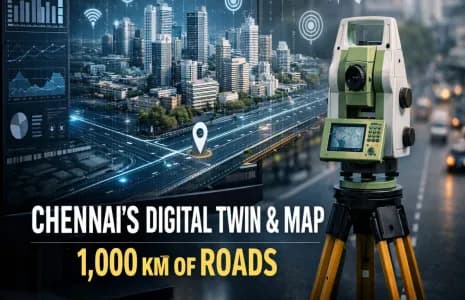
The **Greater Chennai Corporation (GCC)** launched a **pilot project** to create a **digital twin of nearly 5 square kilometers** of central Chennai. This virtual replica supports **real-time traffic management, utilities monitoring, environmental assessment**, and **disaster preparedness**. Chennai is also mapping **1,000 km of roads** via digital twin technology to improve **urban planning and maintenance**, fostering **responsive governance and citizen-centric services**.
> _Source: Chennai’s roadmap emphasizes **sustainable urban growth** through digital twin solutions._
- **Maritime Market Growth & Opportunities:**
The **maritime sector** in Asia is experiencing rapid growth in digital twin applications, projected to reach **$2.40 billion by 2032**. These solutions include **virtual replicas of ships, ports, and maritime environments**, which facilitate **predictive maintenance, navigation safety, environmental monitoring**, and **operational efficiency**. As Asia’s maritime industry faces increasing security and sustainability demands, digital twins are becoming indispensable for **mission-critical decision-making** and regional competitiveness.
- **XR and Gesture-Driven Immersive Manufacturing:**
Recent breakthroughs involve **integrating digital twins with extended reality (XR)** and **gesture control technologies**. Companies in Japan and South Korea are pioneering **XR and gesture-driven immersive environments** for **manufacturing training, remote maintenance, and complex assembly operations**. These innovations enable **workers to interact intuitively** with virtual models, reducing errors, improving safety, and expediting onboarding.
> _Industry expert comment:_
> "Combining XR and gesture controls with digital twins transforms traditional manufacturing into **immersive, interactive experiences**, elevating operational efficiency and workforce skills."
- **South Korea’s $240M Investment in AI and Green Shipbuilding:**
On **February 24**, **Asia Today** reported that **South Korea** will invest **320 billion won ($240 million)** in 2026 to **strengthen its global competitiveness**. The focus is on **AI integration and eco-friendly shipbuilding**, aligning with **green energy initiatives** and **advanced maritime technologies**. This investment underscores South Korea’s dedication to **developing digital twin solutions** for **ship design, lifecycle management, and eco-optimization**, positioning its maritime industry at the forefront of sustainable innovation.
---
## Strategic Alliances, Standardization, and Governance
Asia’s expanding digital twin ecosystem benefits from **strategic partnerships** and efforts to establish **interoperability standards**:
- **Siemens–NVIDIA Collaboration:**
Announced at **CES 2026**, Siemens and NVIDIA are jointly developing an **industrial AI operating system** designed to **improve interoperability** across digital twin platforms. Their aim is to **accelerate predictive maintenance, process optimization**, and foster **cross-sector ecosystem integration**, while supporting **international standards** for **data exchange** and **interoperability**.
- **Mergers & Acquisitions:**
- **Insights Analytics** partnered with **Beijing 51 World Digital Twin Technology** to enhance **urban geospatial analytics**.
- **Yokogawa Electric** expanded investments in **Semantum**, a Finnish firm specializing in **industrial data modeling and digital twins**, to bolster **automation and energy management solutions**.
- **May Day Vision**, a Chinese AI and digital twin enterprise, recently listed on the **Hong Kong Stock Exchange**. Its platform, **“Clone Earth”**, aims to develop a **planetary-scale virtual replica**, integrating urban, environmental, and resource data into a **global digital twin ecosystem**.
### Cross-Cutting Priorities: Security, Standards, and Sustainability
The growth of Asia’s digital twin ecosystem hinges on **robust data infrastructure**, **interoperability standards**, and **governance frameworks**:
- **Data Sovereignty & Governance:**
Countries like **Singapore** are pioneering **comprehensive data privacy and security policies** to foster **trust and resilience**. Recent research highlights **cyber-attacks targeting time synchronization** in smart factories, which could **disrupt operations or cause misinformation**. These vulnerabilities underscore the need for **resilient security architectures** and **strict governance protocols** to protect critical infrastructure.
- **Cybersecurity Resilience:**
Protecting digital twin systems from **cyber threats** remains a top priority. This involves **advanced threat detection, resilient architectures**, and **standardized security protocols** to prevent operational disruptions and misinformation.
- **Interoperability & Industry Standards:**
Alliances like Siemens–NVIDIA work toward **common frameworks** to enable **seamless data exchange** across platforms and sectors, reducing fragmentation and fostering **interoperable ecosystems**.
- **Sustainability & Circular Economy:**
Digital twins increasingly support **waste management, environmental conservation, and resource recovery**, aligning with **climate goals** and **sustainable development**.
---
## Workforce and Skills Development: Building a Digital Twin Talent Ecosystem
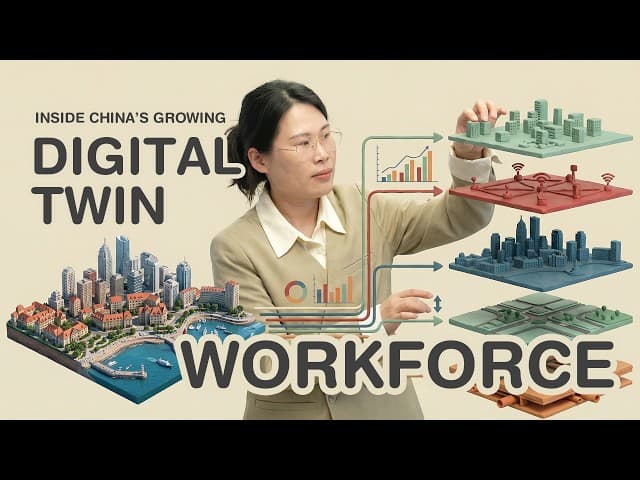
A key driver behind Asia’s digital twin expansion is **building a skilled workforce** capable of designing, deploying, and maintaining these sophisticated systems. Recent reports highlight **emerging job roles** such as **digital twin engineers, data scientists, AI specialists, and urban planners**. Countries like **China** are investing heavily in **training programs** to cultivate a **digital twin workforce**, featuring **industry-academia collaborations, specialized training centers, and government incentives**.
> _New report: "Jobs 2.0: Inside China's Growing Digital Twin Workforce"_ (YouTube, 3:40 min, 1,451 views, 67 likes) explores how China is fostering **a new generation of professionals** equipped for the digital age, emphasizing **industry-academia partnerships, specialized training**, and **government support**.
---
## The Telecom and 6G Frontier: Nokia’s Digital Twin for Next-Generation Networks
One of the most recent and noteworthy developments is the expansion of digital twin applications into the **telecommunications sector**, specifically **6G network planning and management**. **Nokia** has launched its **Nokia RAN Digital Twin**, designed to **simulate and optimize next-generation radio access networks**. Powered by **NVIDIA’s Aerial Omniverse Digital Twin platform**, this solution enables **AI-native network design, real-time performance monitoring, and predictive maintenance**.
> _Content: "Nokia launches Nokia RAN Digital Twin to turbo‑charge AI-native 6G,"_
> **Nokia's new platform** leverages **digital twin technology** to create **virtual replicas of network infrastructure**, enabling operators to **test configurations, troubleshoot issues**, and **predict future network demands** with high precision.
> This development marks a **paradigm shift** where **digital twins become integral to telecom infrastructure**, facilitating **adaptive, intelligent, and resilient wireless networks** capable of supporting the **high data rates, ultra-low latency, and massive connectivity** envisioned for **6G**.
This integration exemplifies how **digital twin technology is expanding beyond physical infrastructure** to **virtualize and optimize complex digital ecosystems**, positioning **Asia as a leader in next-generation network innovation**.
---
## Current Status and Future Outlook
Today, **AI-driven digital twins** form the core of Asia’s vision for **sustainable urbanization, industrial modernization, and regional security**. Landmark projects like **Varanasi’s urban twin**, **Chennai’s road mapping**, **Ho Chi Minh City’s data centers**, and **South Korea’s green shipbuilding investments** demonstrate a **region-wide momentum fueled by substantial investments**—notably **Reliance Industries’ ₹10 lakh crore (USD 1.2 trillion)** and **Adani–Reliance’s $210 billion** plans. These initiatives aim to **accelerate digital twin deployment, foster interoperability, and strengthen security**.
The focus on **infrastructure development, cybersecurity, governance, and standards** is creating a **resilient, scalable ecosystem** poised to **transform sectors and societies**. The recent inclusion of **telecom and 6G network digital twins**—like Nokia’s RAN platform—illustrates the **broadening scope** and **strategic importance** of these virtual models.
As these technologies mature, Asia’s digital twin landscape promises to **drive smarter cities, more efficient industries, and sustainable resource management**, ultimately fostering **regional competitiveness, environmental stewardship, and societal well-being**.
---
## Supporting Infrastructure and Connectivity
Enabling these advancements are **network and multi-cloud expansions**, with initiatives like **Forward Networks** targeting **Japan’s digital infrastructure**. Such efforts aim to support **scalable, real-time digital twin operations** by providing **robust connectivity, disaster recovery solutions**, and **powerful software-defined wide-area networks**. These foundational investments are critical for **ensuring resilience, security, and interoperability** across diverse sectors and geographies.
---
## **Implications and Final Thoughts**
Asia’s digital twin revolution is not merely a technological upgrade but a **comprehensive transformation of how societies innovate, govern, and grow** in the digital age. The region’s strategic investments, collaborative alliances, and workforce development initiatives are setting the stage for **a future where virtual and physical worlds seamlessly converge**—driving **smarter cities, sustainable industries, and resilient infrastructures**.
The recent deployment of **telecom-specific digital twins**, exemplified by Nokia’s **RAN Digital Twin for 6G**, underscores the **broadening scope and strategic importance** of these virtual ecosystems. As these platforms evolve, they will **shape policies, optimize networks**, and **enable new services**—further reinforcing Asia’s leadership in **digital innovation**.
Ultimately, these developments pave the way toward **a more connected, intelligent, and sustainable future**, positioning Asia at the forefront of **global digital transformation**.
*This ongoing evolution underscores that digital twins are no longer experimental but essential tools driving the policies, industries, and lives of millions across Asia.*