# Restoring Civic Virtues in a Digital Age: New Developments and Continuing Challenges
In an era characterized by rapid technological innovation, pervasive misinformation, social fragmentation, and evolving political landscapes, the foundational virtues that uphold resilient communities—**trust**, **empathy**, **moral integrity**, and **public-spiritedness**—are more vital and more threatened than ever. These virtues are not static qualities but **dynamic practices** that require **active cultivation** to sustain healthy societies. Recent developments across scholarly research, civic initiatives, and policy debates underscore the urgent need to **reclaim and reinforce** these virtues amid complex modern challenges.
---
## The Historical Roots of Individualism and Public Responsibility
### Classical Foundations: From Greece to Stoicism
The **concept of civic virtue** has deep historical origins that continue to influence contemporary discussions. In **ancient Greece**, the idea of *arete*—meaning **excellence**—embodied the conviction that **personal achievement** should serve the **common good**. Achieving *arete* involved **responsible participation** in societal roles and fostering **interconnectedness** between **individual virtue** and **social harmony**. The **Romans** extended this tradition with virtues like *virtus*—**courage, justice, temperance, strength**—highlighting that **moral integrity** is essential for **state resilience**.
**Stoic philosophy** further amplified these ideas by advocating for **living in accordance with reason and virtue**. Stoics emphasized **moral integrity**, **rational self-control**, and **ethical living**—principles that **continue to influence** **emotional resilience** and **ethical responsibility** today. Modern research underscores that **moral cultivation**, including **empathy**, **moral imagination**, and **perception**, remains **crucial for social cohesion**.
### The Enlightenment Shift: Rights, Autonomy, and a New Virtue Paradigm
The **Enlightenment** revolutionized notions of **individuality**, emphasizing **rights** and **personal sovereignty**. Thinkers like **John Locke** promoted **liberty as freedom from interference**, elevating **self-determination** and **autonomous agency** as core virtues. This **paradigm shift** **redefined virtue** into **rights** and **personal autonomy**, fueling a move away from traditional communal responsibilities. While this fostered **modern democracies** and **individual freedoms**, it also **created tensions**—notably, the **erosion of shared responsibility** and **social trust**.
Today’s debates over **free speech**, **property rights**, and **reproductive freedoms** echo ongoing struggles to **balance individual liberty** with **civic duties**. Critics warn that **excessive focus on autonomy** risks **weakening social bonds** and **undermining collective cohesion**.
### Mid-20th Century: Linking Liberty with Responsibility
A pivotal moment came with **John F. Kennedy’s** call: **"Ask what you can do for your country."** This **reframing of patriotism** **linked liberty with responsibility**, emphasizing that **true freedom** entails **active civic participation** and **moral obligation**. Kennedy’s message **transformed civic identity** into **a moral project**, asserting that **personal liberty** is **most meaningful** when **aligned with collective well-being**.
This **paradigm shift** **inspired generations** to see **citizenship** not merely as **a set of rights**, but as **a moral duty rooted in shared responsibility**. These ideas **continue to underpin** **modern civic engagement**, reinforcing that **individual freedom** gains significance when **connected to societal good**.
### Virtue Ethics and Moral Character
Rooted in **Aristotle**, **Stoics**, and **Confucians**, **virtue ethics** emphasizes that **moral virtues**—such as **courage**, **justice**, **temperance**, and **wisdom**—are **the foundation of a good life and a just society**. Developing **moral character**, including **integrity**, **empathy**, and **perceptiveness**, is **crucial for social harmony**.
**Stoicism**, in particular, endures as a **practical guide**—promoting that **virtue is the highest good**, and that **living rationally and ethically** aligns individuals with **their moral duties**. Cultivating **moral virtues** remains **both personal development** and **a social imperative** for **building resilient communities**.
---
## Recent Movements: Reclaiming Virtue and Responsibility
In recent years, a **renewed emphasis** has emerged across **academia**, **civil society**, and **educational institutions** on **restoring virtues** of **moral character**, **care**, and **shared responsibility**. Scholars and civic leaders argue that **moral and emotional intelligence**—including **empathy**, **moral imagination**, and **shared care**—are **crucial complements** to **rational analysis**.
**Educational programs** and **community initiatives** increasingly focus on **civic virtues** that **strengthen social bonds** and **restore trust**. These efforts highlight that **reinvigorating a civic language**—emphasizing **liberty** **while reinforcing responsibility**—is **key** to **counteracting social fragmentation** and **polarization**.
---
## Addressing Disinformation, Data Overload, and Ideological Manipulation
### The Peril of Data Overload and Misinformation
A significant challenge is **the proliferation of misinformation** and **disinformation campaigns** that **erode public trust**. Critics like **Jason Blakely** warn that **overreliance on empirical data and technocratic solutions** can **neglect moral and human dimensions**—such as **moral imagination** and **communal care**—which are **vital for authentic social progress**. In his work **"In the Land of the Data Blind,"** Blakely advocates for a **holistic approach** that **integrates virtue ethics** into policymaking, ensuring that **scientific insights** **serve** **human values** rather than **replace** them.
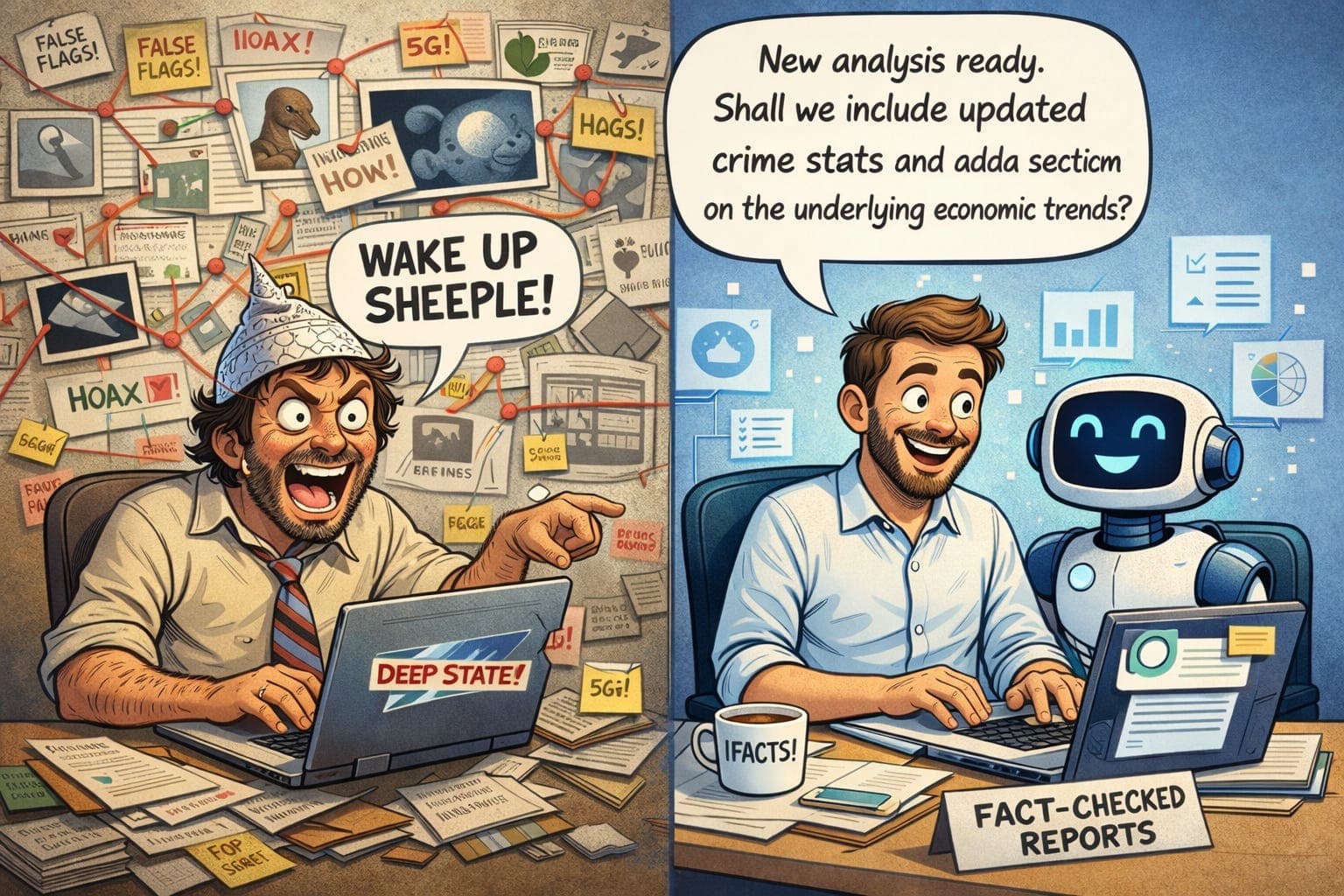
Recent scholarship, such as **"The Mainstreaming of Climate Doubt,"** exposes how **misinformation campaigns**—particularly around **climate change**—are **embedded into public narratives**, **undermining trust** and **paralyzing civic action**. Journalist **Lucy Biggers** documents how **doubt campaigns** are **strategically crafted** to **sow confusion** and **resist policy change**—a form of **moral manipulation** that **weakens public-spiritedness**. Addressing this **requires resilience**: promoting **media literacy**, **critical thinking**, and **resistance to formulaic reasoning**—principles reinforced by works such as **"How NOT to Think Like a Bot."**
### The Role of Perception and Empathy in Civic Cohesion
Research emphasizes that **moral cultivation** involves **perception** and **empathy**. For example, **"Understanding Scientific Knowledge"** highlights that **scientific understanding**, when **woven with moral and emotional awareness**, **becomes more impactful**. Society’s vulnerabilities—such as **biases**, **illusions**, and **manipulation**—demand **training in emotional intelligence** and **perceptual openness**.
Initiatives like **"Mind Sharing" podcasts** demonstrate how **shared mental states** and **"mind reading"** foster **social cohesion**, especially amid **deep polarization**. Civic virtue encompasses **not only rational discourse** but also **emotional attunement**, **patience**, and **humility**—all vital for **trust-building**.
---
## The Neurodiversity and Mental Health Paradigm Shift
### Recognizing Neurodiversity’s Civic Significance
A **notable recent development** is the increased focus on **mental health** and **neurodiversity**, particularly among **autistic adults**. Traditional therapies like **Cognitive Behavioral Therapy (CBT)** have been standard; however, **emerging insights** emphasize **limitations**—notably because **autistic individuals** often experience **sensory sensitivities**, **distinct communication styles**, and **emotional regulation differences** that **standard protocols** may overlook.
### Rethinking Therapy and Civic Engagement
**"Becoming an Autistic Person With a Regulated Nervous System"** underscores that many autistic individuals **perceive themselves** as **"just a dysregulated person."** Years of **overwhelm**, **shutdown**, and **sensory overload** often lead to **self-perceptions** that **limit participation**. Recognizing **perceptual differences** and **emotional processing** urges civic and therapeutic systems to **adopt more inclusive approaches**—respecting **neurodiversity** and **fostering mutual understanding**.
This broader perspective **redefines moral virtue** by emphasizing **empathy** and **patience** as **core civic virtues** that **transcend normative emotional norms**. Valuing **neurodiversity** fosters **more inclusive dialogue**, **mutual respect**, and **shared responsibilities**—all of which **strengthen societal resilience**.
---
## The Influence of AI, Disinformation, and Institutional Betrayal
### Science Drowning in AI-Generated Content
**"Science Is Drowning in AI Slop"** highlights that **the proliferation of AI-generated content**, often **lacking rigorous peer review**, **clutters scientific and public discourse**. This **information overload** hampers **public** and **policy-makers’** ability to **distinguish credible science** from **misinformation**, **eroding trust** in **scientific institutions**. The **fragility of evidence-based civic decision-making** underscores the **urgent need** for **media literacy** and **critical engagement**.
### The Far-Right and the Search for Belonging
**"Dreams of the Far Right"** explores how **young Europeans** gravitate toward **far-right movements**, driven by **grievance** but fundamentally fueled by **a yearning for belonging**. These narratives **exploit emotional needs**, offering **identity** and **community** amid **economic uncertainty** and **social upheaval**. Recognizing and **counteracting** these **appeals** requires **civic resilience** rooted in **empathy**, **inclusion**, and **shared purpose**.
### Trust in Democratic Institutions: The “Five-Alarm Fire”
Recent reports have sounded the alarm over **trust in American elections**, describing it as **"a five-alarm fire."** The article **"‘It’s a Five-Alarm Fire’"** details how **veterans of federal law enforcement** and **election officials** confront **domestic disinformation**, **violent threats**, and **systemic attempts** to **undermine electoral legitimacy**.
> "This week, veterans of federal law enforcement were forced to look on as the integrity of American elections was attacked from within, with threats of violence and widespread disinformation threatening to erode the very foundations of democracy."
This crisis underscores that **trust in democratic institutions** must be **actively nurtured** through **transparency**, **accountability**, and **moral responsibility**, rather than assumed. Restoring this trust is **a moral imperative** that requires **collective effort**.
---
## Ethical Dimensions of Emerging Technologies
### Trust and Safety in Biomedical Innovation
**"The Role of Safety Arguments in the Gene Editing Debate"** emphasizes that **public trust** in **biomedical advancements** hinges on **perceived safety** and **ethical governance**. As **germline gene editing** approaches **clinical reality**, societal debates center on **long-term risks**, **moral implications**, and **regulatory oversight**. **Inclusive, transparent public engagement** is essential to **align technological progress** with **shared moral values**.
### Historical Narratives as Trust Builders
**"A Brief History of the History of Science"** explores how **transparent, inclusive narratives** about scientific development **demystify** **scientific processes**, **counteract skepticism**, and **foster civic participation**. Recognizing the **social context** of scientific progress **builds trust** and **encourages informed dialogue**.
---
## Cultivating Moral and Emotional Competence
The importance of **perception**, **empathy**, and **emotional intelligence** remains central to **moral cultivation**. Initiatives like **"Mind Sharing" podcasts** exemplify efforts to **foster social cohesion** through **shared mental states** and **empathy-building exercises**, which are especially vital **amid polarization**. **Trust** is **not solely rational** but **deeply emotional**, requiring **patience**, **humility**, and **mutual understanding**.
---
## Policy and Cultural Strategies for a Resilient Society
To **navigate these multifaceted challenges**, a **comprehensive, virtue-centered approach** is essential:
- **Embed virtue ethics** into **education systems** to promote **moral cultivation**, **empathy**, and **shared responsibility**.
- **Redesign information environments** to **support critical thinking** and **media literacy**, reducing susceptibility to **AI-generated misinformation**.
- **Ensure transparent, ethically aligned AI and biomedical governance** with **public oversight**.
- **Adopt emotionally resonant communication strategies** that **foster social cohesion**.
- **Develop inclusive civic programs** that **respect neurodiversity** and **marginalized voices**.
- **Incorporate cultural foresight** to **align societal narratives** with **shared human values**, strengthening **collective resilience**.
---
## Recognizing Power, Betrayal, and the Psychology of Collusion
### Insights from the Epstein Network
Recent revelations about **Jeffrey Epstein’s network** reveal how **powerful institutions** can foster **systemic collusion** and **moral decay**. The entanglements with **elite figures** exemplify **how institutional complicity** erodes **public trust**. Understanding the **psychology of betrayal** underscores the importance of **transparency**, **accountability**, and **moral vigilance** in **safeguarding democratic integrity**.
### Race, Citizenship, and Self-Censorship
**"Is 'Race' Over? Citizenship, Backlash, and The Quiet Politics of Self-Censorship"** examines how **racial politics** and **social backlash** influence **public discourse**. Communities often resort to **self-censorship** to **avoid conflict**, which diminishes **civic dialogue** and **mutual understanding**. Promoting **respectful, inclusive conversations** is vital to **restoring trust** and **fostering a shared civic identity**.
---
## Current Status and Implications
The **civic landscape** remains **fluid and contested**, confronting **technological upheavals**, **social divisions**, and **global uncertainties**. A core challenge is **active moral cultivation**—embodying virtues like **humility**, **patience**, **empathy**, and **shared responsibility**—to **navigate crises** and **build resilient communities**.
**Progress depends on**:
- **Embedding virtue ethics** deeply within **education** and **civic culture**.
- **Promoting media and information literacy** to **resist misinformation**.
- **Ensuring transparent governance** for **AI** and **biomedical innovations**.
- **Cultivating inclusive civic environments** that **respect neurodiversity**.
- **Using cultural foresight** to **align societal narratives** with **shared human values**.
---
## The Path Forward: Preventing Societal Collapse
Drawing on **Joseph Tainter’s** insights on **societal complexity**, neglecting **trust** and **moral integrity** risks **systemic collapse**, especially amid **climate change**, **technological disruptions**, and **political instability**. The **erosion of these foundational virtues** can accelerate societal disintegration.
**Active virtue cultivation**—through **education**, **policy reform**, and **public discourse**—is **crucial**. Only by **renewing commitments** to **trust**, **justice**, **empathy**, and **shared responsibility** can societies **navigate the uncertainties of the 21st century**.
---
## **In Summary**
The ongoing **digital revolution** and **social upheavals** reaffirm an enduring truth: **trust** and **moral virtues** are **not given** but **must be actively cultivated**. Their **sustenance** requires **moral vigilance**, **inclusive dialogue**, and **collective effort**.
**Building resilient, just communities** depends on **embodying** virtues such as **humility**, **patience**, **empathy**, and **shared responsibility**—a **perpetual moral enterprise**. Only through **persistent moral cultivation** can societies **foster trust**, **justice**, and **solidarity** in facing today’s complexities.
---
*Virtue is a living practice—a moral enterprise essential for shaping resilient, equitable societies capable of confronting tomorrow’s challenges with humility, patience, and shared purpose.*
---
## **New Articles and Insights**
### **Why Science Communication Fails: How to Break Down Misleading Arguments and Inoculate Against Misinformation**
Humans are **not inherently rational**. Instead, we **rely on emotional cues**, **cognitive biases**, and **heuristics**. Effective **science communication** must **go beyond just presenting data**; it should **address psychological resistance**, **counteract misinformation**, and **build trust** through **empathetic engagement**. Strategies include **storytelling**, **relatable narratives**, and **pre-emptive inoculation**—methods that **build resilience** against falsehoods.
### **The Moral Ecology of Community**
**Joseph Varon** and **Reverend John F. Naugle** emphasize that **communities are moral ecologies**, where **virtues**, **values**, and **relationships** **interact dynamically**. Building **trust** and **cohesion** requires **nurturing shared moral frameworks**, fostering **empathy**, and **supporting moral development** at all levels. Recognizing **interdependence** and **mutual care** creates a **robust moral fabric** that withstands crises and **reinforces civic virtues**.
---
## Final Reflection
The **current challenges**—from **technological disinformation** to **social polarization**—highlight that **virtue cultivation** is **more vital than ever**. Societies that **prioritize moral virtues**, **embrace inclusive dialogue**, and **foster emotional intelligence** are better equipped to **navigate uncertainties** and **prevent collapse**.
**Only through collective effort**, moral vigilance, and **renewed commitment to shared human values** can we **build resilient, just communities** prepared to face the future with **humility**, **patience**, and **empathy**. The **moral enterprise** of fostering **trust** and **virtue** remains **the heart of civic renewal** in the digital age.