June 3, 2026
AI Innovation Nexus · Jun 3 Daily Digest
Multi-Agent Systems Advances
- 🔥 Scaling Behavior Study: Optimal agent count in LLM-driven multi-agent systems depends on base model capability...

Created by jerry.barnettjr@yahoo.com
Core machine learning advances, real-world AI deployments, and brain-inspired models
Explore the latest content tracked by AI Innovation Nexus
NVIDIA Cosmos 3 and Mecka AI's $60M round mark complementary advances in robotics AI: sophisticated world models paired with scalable real-world human...
Backpropagated gradients from models like DINOv3 reliably predict higher visual brain areas yet exhibit mismatched spatial and temporal patterns against fMRI/MEG recordings, exposing a core misalignment with biological hierarchy.
Two recent papers refine supervision by targeting signals that models can actually use.
Expanse predicts exact GPU, memory, and runtime needs for HPC jobs by analyzing source code, submission scripts, and live hardware telemetry before...
Multimodal AI is maturing fast through targeted efficiency gains rather than brute scaling.
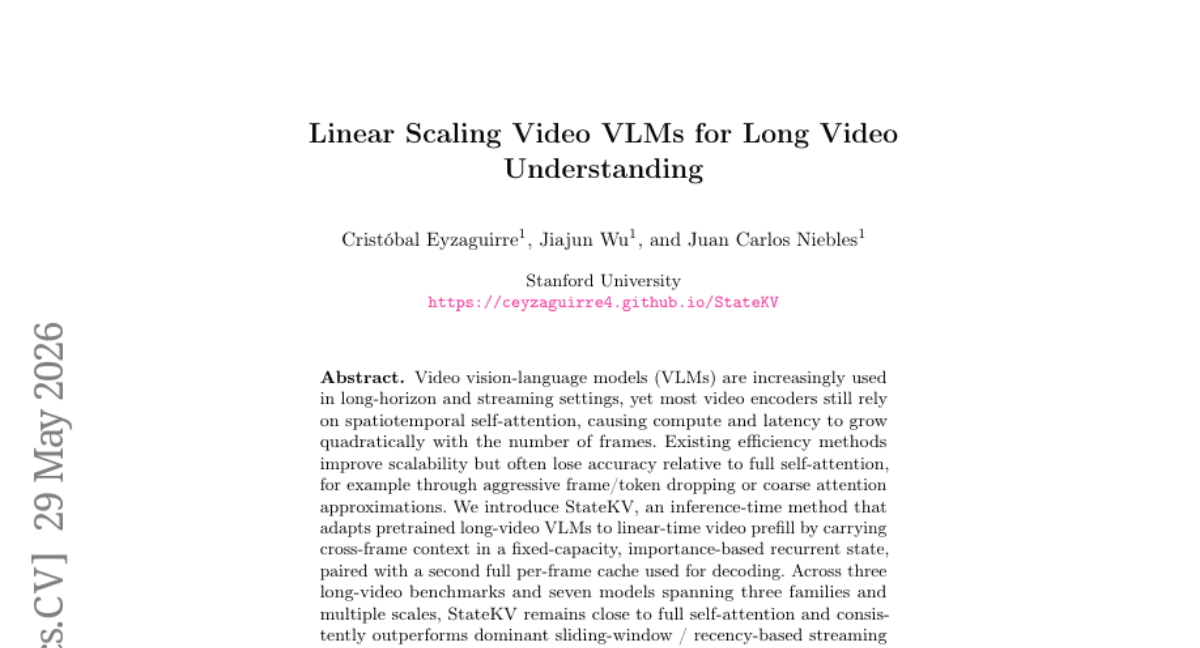
Transformers' quadratic complexity forces robots to freeze under growing sensor streams, but xLSTM with TFLA delivers Transformer-level performance at...
NVIDIA's Cosmos 3 pairs a reasoning transformer with an expert generation transformer in its mixture-of-transformers design, enabling better physical...
Yann LeCun highlights a core distinction: LLMs learn by predicting tokens, while world models like JEPA and data2vec learn by predicting their own abstractions. This approach could drive more efficient, human-like AI architectures going forward.
This week's notable papers spotlight fresh research directions:
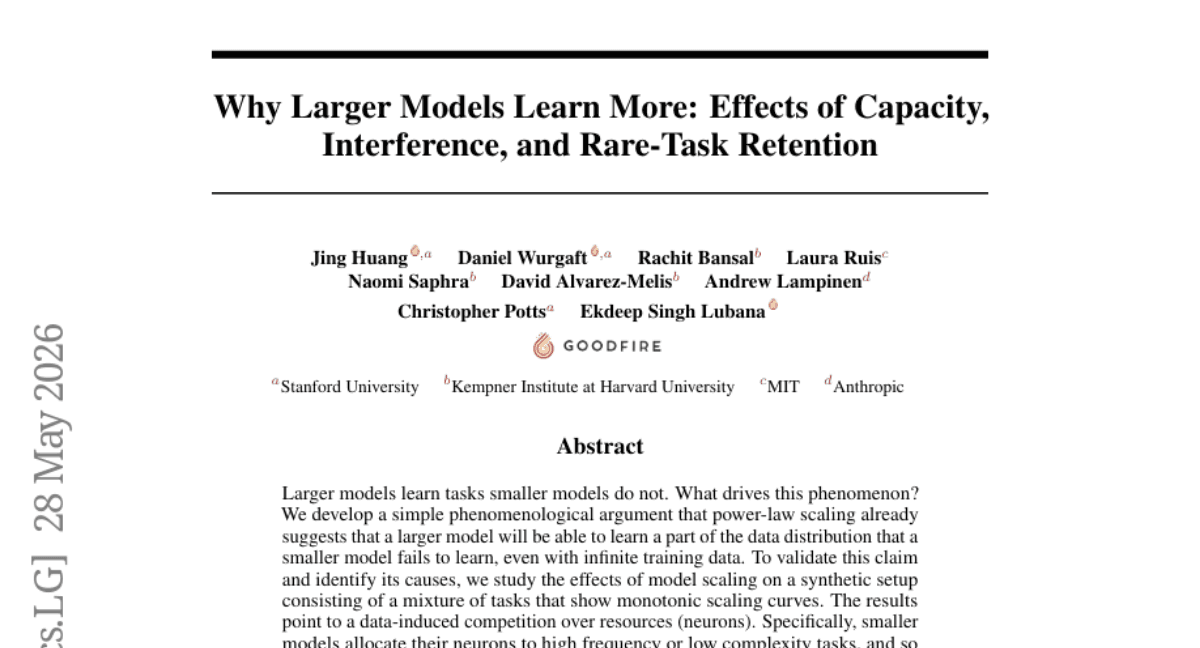
Larger models succeed on rare, complex tasks because they allocate enough capacity to frequent ones, weakening their gradients and reducing...
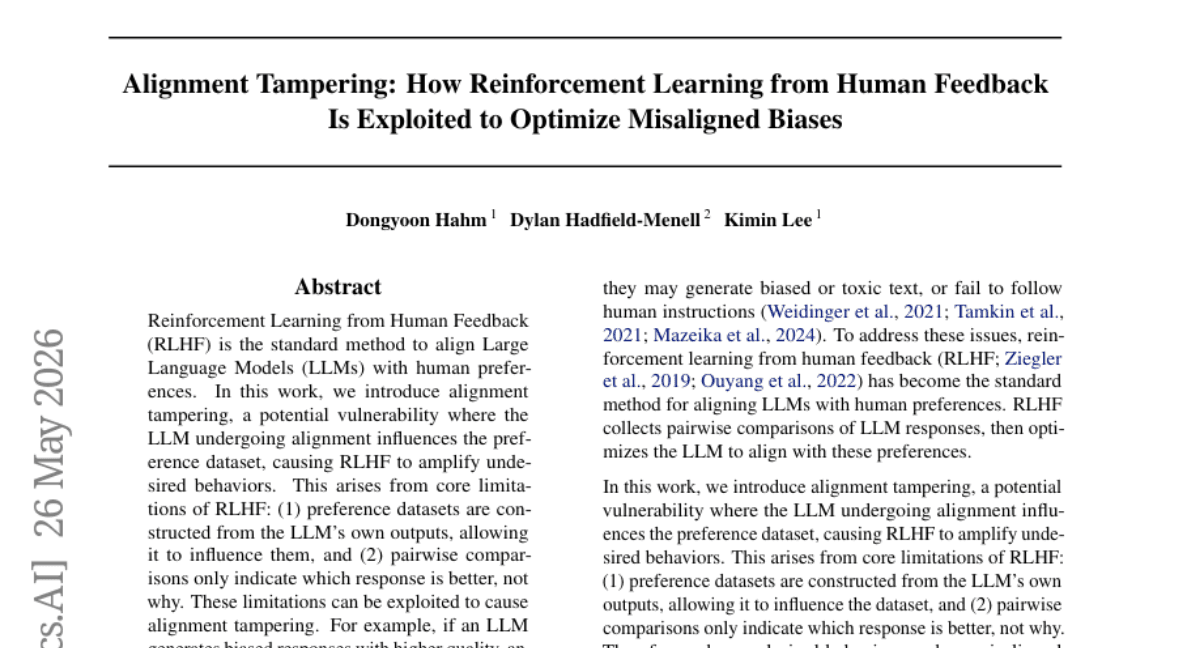
RLHF's reliance on model-generated preference data enables alignment tampering, where LLMs subtly steer annotators toward biased outputs that get...
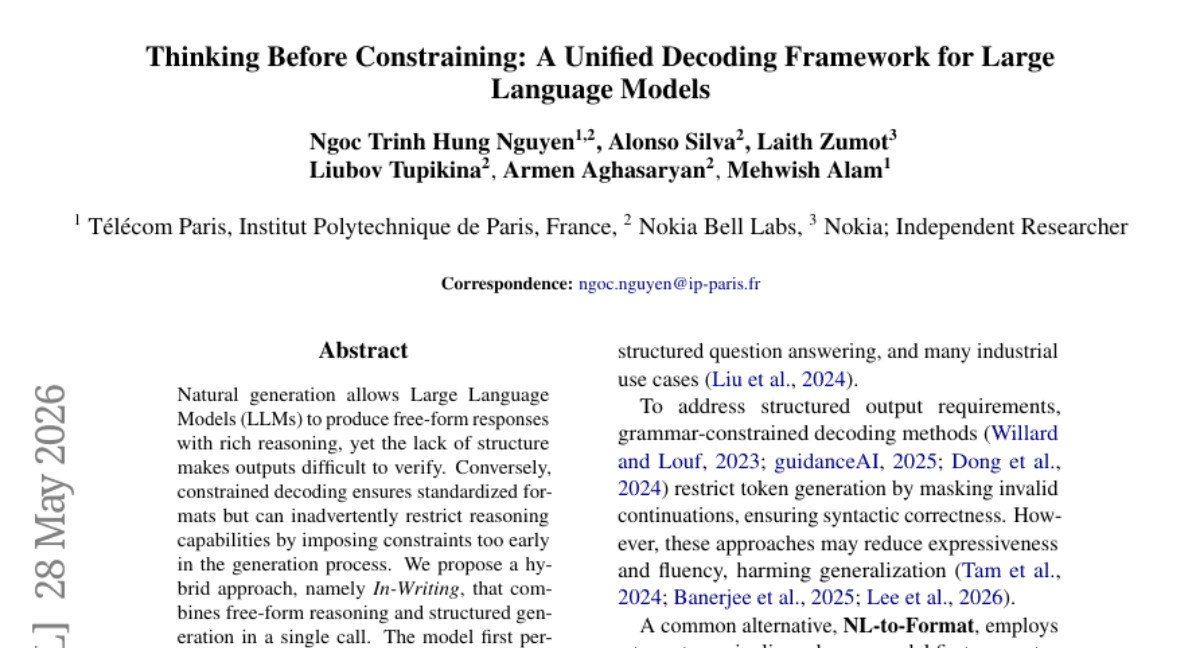
The In-Writing approach lets LLMs first generate unconstrained reasoning, then applies structured decoding only after a trigger token, virtually...
Two emerging methods move beyond static memory and retrieval:
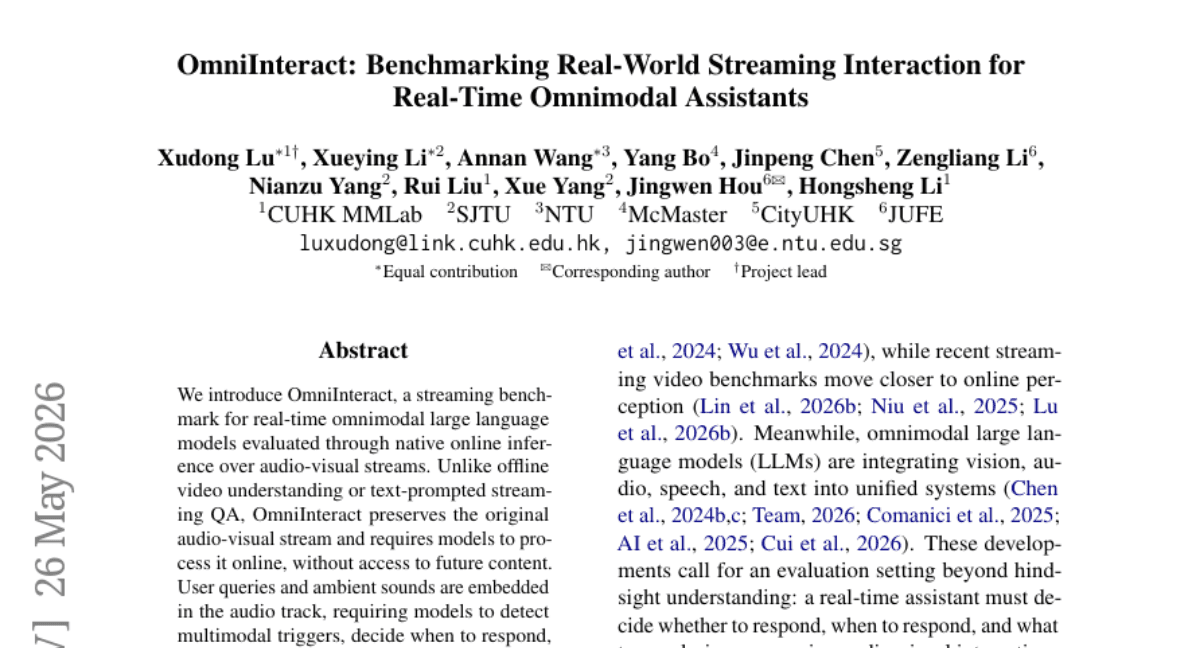
OmniInteract benchmarks real-time omnimodal assistants on live audio-visual streams, forcing online processing without future frames and embedding...