# How AI Continues to Supercharge Product Management, Organizational Design, and Growth in 2026: The Latest Developments
In 2026, the enterprise landscape is experiencing a profound transformation driven by the relentless integration of artificial intelligence (AI). No longer confined to experimental pilots or niche support roles, AI has become the **strategic core** of organizations—permeating every aspect of product innovation, organizational restructuring, and scalable growth. This seismic shift is not merely incremental; it is **redefining workflows, talent roles, governance frameworks**, and competitive strategies, creating a new enterprise paradigm where AI is woven into the very fabric of operational DNA.
Building upon foundational trends from earlier in the year, recent developments have further underscored AI’s transformative power, shedding light on critical areas of evolution—ranging from advanced tooling and governance to autonomous agents and leadership models.
---
## AI as the Strategic Core: From Pilot to Enterprise-Wide Engine
The transition from isolated pilot projects to comprehensive, enterprise-wide AI adoption has accelerated at an unprecedented pace. Companies are demonstrating how embedding AI deeply into organizational structures can unlock rapid growth:
- **Lovable** exemplifies this shift through a **comprehensive organizational overhaul** centered on AI expertise. Their strategic reorientation empowered teams to **accelerate product innovation** and **expand market reach**, culminating in an impressive **$200 million ARR within just a year**. This underscores that **AI-native organizational design acts as a catalyst for rapid scaling**.
- **Anthropic** exemplifies agility by leveraging **internal AI tools like Claude Cowork** to **ship features in less than two weeks**. Such rapid iteration cycles, powered by AI, have become **critical competitive differentiators** in today's fast-moving markets.
Supporting data reveals that **AI visibility scores**—which measure how deeply AI is integrated into workflows—have **climbed from as low as 2 to between 47 and 51** across industries. This sharp increase indicates **widespread, deepening adoption** of **prompt engineering, workflow automation, and governance protocols**, making AI **inseparable from strategic planning and daily decision-making**.
---
## AI as the “Second Brain” for Product Managers
One of the most striking developments of 2026 is **AI’s evolution into a “second brain” for product managers (PMs)**. Acting as **cognitive partners**, AI **amplifies decision-making**, **streamlines workflows**, and **liberates PMs** to focus on **high-impact, strategic initiatives**.
Tools such as **ChatGPT, Perplexity, Google’s Gemini**, and **Claude’s latest features** now **synthesize customer feedback**, **generate user stories**, **automate backlog grooming**, and **summarize meetings**. These capabilities **drastically reduce cognitive load**, empowering PMs to dedicate more time to **vision setting, team alignment, and long-term roadmaps**.
Recent insights from **Claude Code leadership** highlight that **post-coding workflows**—including **reviewing, testing, deploying, and maintaining AI code**—are **more efficient** thanks to **integrated tooling and automation pipelines**. This **speeds up product cycles** and **improves quality**, fostering a **collaborative environment** where **human creativity pairs seamlessly with AI-driven insights**.
A notable **Claude Skills: Build Your First AI Employee From Scratch** tutorial demonstrates how organizations are **learning to develop AI-driven functions** that **operate as autonomous team members**. The **Notion design team** exemplifies this by **rapidly prototyping features** using **Claude Code**, streamlining early-stage product development.
**Lenny Rachitsky** emphasizes the importance of **context management**:
> “Maintaining coherence across AI outputs and project goals is crucial. Effective context management ensures AI remains relevant and aligned, unlocking its full potential.”
Organizations are **actively enhancing AI visibility** through **prompt engineering, workflow integration, and team training**. This transformation elevates AI from a tactical assistant to a **strategic partner** that **drives agility, informed decision-making**, and **scalable workflows**. This cultural shift fosters an environment of **experimentation and continuous learning**, enabling **faster product iterations** and **more agile responses to market shifts**—creating a **new paradigm where AI amplifies human strategic thinking**.
---
## Organizational Transformation: Building AI-Native, Resilient Teams
AI’s influence extends beyond individual tasks into **fundamental organizational redesigns**. The trend toward **AI-native teams**—comprising **embedded AI expertise, integrated tools, and AI-centric thinking**—has become standard practice. These **self-managing, cross-disciplinary units** are designed for **rapid iteration, innovation, and resilience**.
**Lovable’s** success vividly illustrates this shift: their **AI-native restructuring** played a **key role** in achieving **$200 million ARR**, demonstrating that **reorienting teams around AI capabilities** is a **powerful engine for growth**.
Fostering an **AI-first culture** involves **upskilling teams** in **data literacy, experimentation methodologies**, and **agility**. These teams perceive AI **not merely as a tool**, but as a **strategic partner** capable of **transforming decision-making, collaboration**, and **problem-solving**.
Frameworks like **Molly Graham’s “Leading through Chaos, Change, and Scale”** emphasize traits such as **trust, transparency, and agility** as vital for thriving amid AI-driven change. Additionally, **multi-product portfolio governance models**, discussed in **"Why Multi Product Portfolio Governance Is So Difficult,"** are increasingly adopted to **manage the complexity of AI initiatives**, ensuring **strategic alignment, resource efficiency**, and **risk mitigation**.
The talent landscape continues to evolve rapidly, with **new roles** emerging—**“Full-Stack/Professional Vibe Coders”** and **interdisciplinary AI specialists**—reflecting the **interwoven technical and human-centric skills** necessary to build impactful AI products. This signifies a shift toward **integrating technical mastery with cultural insight**.
---
## Governance & Risk: From Constraints to Strategic Enablers
As AI becomes ubiquitous, **governance and risk management** have transitioned from mere compliance tasks to **strategic enablers**. The **A3 Model (Assist, Automate, Avoid)** exemplifies frameworks supporting **responsible AI deployment**, addressing **bias mitigation, privacy safeguards**, and **misuse prevention**—all while **accelerating innovation** through **clear deployment protocols**.
An influential article, **"Why effective AI governance is becoming a growth strategy, not a constraint,"** emphasizes that **trust and reliability** are **crucial for long-term competitiveness**. Organizations embedding governance as a **strategic pillar** are better positioned to **scale AI responsibly** and **maintain stakeholder confidence**.
Insights from **"From Data Governance to AI Outcomes at Scale"** reveal that **integrating governance with operational outcomes** ensures **AI investments translate into business value**. This involves **robust data policies**, **transparency measures**, and **outcome-driven metrics**—all vital for **sustainable AI scaling**.
Recent demonstrations, such as **Claude Code’s rapid prototyping system**, exemplify how **deployment governance** can be seamlessly embedded into development pipelines, allowing **engineers to deploy SaaS products in under an hour** while maintaining **rigorous oversight**. This integration illustrates how **governance frameworks** are now **built into operational workflows**, enabling **speed without sacrificing responsibility**.
With **autonomous AI agents** and **complex AI systems**, **trustworthiness and ethical standards** are **non-negotiable**—preventing unintended consequences and ensuring **ethical deployment**.
---
## Scaling AI Operationally: Playbooks, Talent, and Practical Tactics
To **scale AI from prototypes to enterprise solutions**, organizations are adopting **structured frameworks** and **operational playbooks**:
- **Aman Kahn’s “From Prototype to Production”** offers **practical guidance** on **evaluation, testing, deployment**, and **monitoring** of AI systems at scale. The emphasis is on **iterative testing, clear evaluation metrics**, and **deployment protocols** to **ensure quality and reliability**.
- Leaders like **Zapier’s CEO** advocate for **integrated AI toolsets** that **streamline decision-making** and **maximize operational efficiency**.
**Talent development** remains pivotal. Focus areas include **prompt engineering**, **data literacy**, **experimentation methodologies**, and **cross-disciplinary collaboration**. A recent paradigm—**"context as code"**—has gained prominence; it involves **building structured, reproducible prompts and workflows** that **capture context systematically**. This approach **reduces variability**, **improves reproducibility**, and **strengthens governance**.
Managing **AI-related technical debt** is increasingly prioritized. Insights from **"I Read the Secret Instructions Behind Claude Code & Cursor"** demonstrate how **deep integration of AI tools** accelerates velocity while **maintaining code quality, maintainability, and documentation**.
Recent case studies—such as **Notion’s AI-powered prototypes** and **Claude Code tutorials**—show how organizations embed AI into workflows effectively. For example, **Claude Code** enables teams to **build AI functions from scratch** that **operate as autonomous employees**, capable of **performing complex tasks with minimal human oversight**. These **hands-on tutorials** demonstrate **rapid, reliable AI deployment** within established pipelines.
---
## The Frontier: Autonomous Agents and Their Risks
A cornerstone trend in 2026 is **agentic AI**—**autonomous, intelligent agents** managing workflows, orchestrating systems, and **making decisions independently**. The **ScaleUp:AI '25** conference highlighted milestones where **agentic AI** is **reengineering enterprise operations**, leading to **more autonomous and resilient organizations**.
A recent **YouTube presentation titled "ScaleUp:AI '25 | How Agentic AI is Rearchitecting Enterprise Workflows"** showcases how **agents orchestrate tasks**, **manage data flows**, and **optimize decision-making** at an unprecedented scale.
**However**, these advances introduce significant risks. Experiments, such as **"SkillsBench: Do 'Agent Skills' Actually Work? (The Results Are Weird),"** reveal that:
> “In this video, we break down the performance of various agent skills. The results are weird—some skills perform well, others are inconsistent or produce bizarre outcomes. This underscores that **agent capabilities are still highly variable** and require **rigorous testing, guardrails, and oversight**.”
This highlights a critical reality: **agent performance remains uneven**. While some excel narrowly, **many produce unpredictable or unintended results**, emphasizing the need for **robust evaluation, fail-safes, and governance**. The **risks associated with autonomous decision-making**—especially in sensitive environments—demand **strict oversight** and **rigorous testing protocols** before large-scale deployment.
---
## Market Dynamics, Accessibility, and Ethical Considerations
The competitive landscape remains vibrant, with **tool choices like Opus versus Codex** sparking ongoing debate. The article **"🎙️ This week on How I AI: AI for Accessibility — and the Opus vs. Codex Showdown"** explores how **tool selection impacts** **user inclusivity**, **UX**, and **governance**. Ensuring **AI tools are accessible** to **diverse user groups**, including those with disabilities, has become a **strategic imperative**. Prioritizing **inclusive design principles** expands **market reach** and **upholds ethical standards**.
On the investment front, the **funding landscape remains robust**. The article **"Inside AI’s $10B+ Capital Flywheel — Martin Casado & Sarah Wang of a16z"** details how **venture capital, corporate investments**, and **strategic funding** are fueling an **accelerating cycle** of innovation. The **a16z** fund alone has invested **over $10 billion** into enterprise AI startups, drastically **reducing entry barriers**, **fueling rapid product development**, and **expanding market influence**.
---
## Anti-Patterns, Metrics, and Cultivating AI Product Sense
Despite AI’s promising potential, many organizations encounter **anti-patterns** that impede progress:
- Overhyping AI capabilities **without proper governance**.
- Pursuing **hype-driven projects** disconnected from strategic goals.
- Creating **silos** that fragment efforts.
- Neglecting **organizational change management**.
- Overlooking **ethical and bias considerations**, risking **trust issues** and **regulatory penalties**.
To **avoid these pitfalls**, organizations should **regularly evaluate AI initiatives**, foster **cross-functional transparency**, and define **clear metrics** for **success and failure**. Developing **AI product sense**—the ability to **translate technical AI capabilities into user-centric, strategic products**—is essential. As **Lenny Rachitsky** notes:
> “Developing a strong AI product sense means understanding AI’s strengths and limitations, mastering prompt engineering, and aligning features with real customer needs. It’s a key driver of impactful AI innovation.”
---
## Rapid Prototyping & Governance: The New Normal
Recent examples, such as **Claude Code’s ability to produce a SaaS product in under an hour**, exemplify how **governance systems** are now **integrated into rapid prototyping workflows**. These frameworks enable teams to **deploy solutions swiftly while maintaining oversight**, ensuring **speed does not compromise responsibility**.
A **paradigm shift** has emerged: **"Stop Prompting, Start Engineering,"** emphasizing **"context as code."** This involves **structuring prompts, workflows, and context systematically**, making them **reproducible, manageable, and governable**. Recent videos explore how **building structured, reusable prompts and workflows** reduces variability, enhances **traceability**, and **strengthens compliance**.
---
## The New Leadership Paradigm: AI as a Strategic Partner
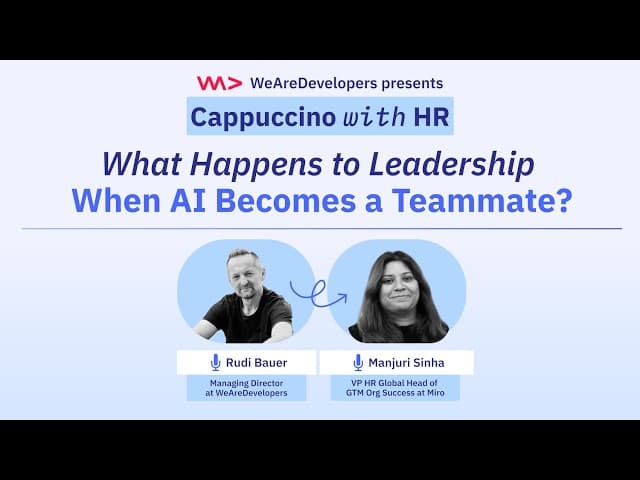
As AI becomes deeply embedded within enterprise operations, **leadership models are evolving**. Articles like **"AI is critical for humanity’s survival: Cisco President on the AI revolution | Jeetu Patel"** and **"What Happens to Leadership When AI Becomes a Teammate?"** explore this transformation.
**Jeetu Patel** emphasizes that **AI’s role is existential**—it’s **not optional** but **central to future resilience**. Leaders must **embrace AI as a strategic enabler**, fostering **trust, transparency**, and **agility**.
Meanwhile, discussions such as **"What Happens to Leadership When AI Becomes a Teammate?"** highlight that **leadership is shifting from traditional authority to stewardship**—overseeing AI-driven teams, autonomous systems, and navigating ethical challenges with a **human-centered approach**. The role of **visionary leadership** now involves **cultivating AI literacy**, **establishing governance standards**, and **building cultures of experimentation and responsibility**.
---
## Current Status and Future Outlook
The developments of 2026 confirm that **AI is no longer a distant vision but an immediate strategic imperative**. Organizations that **deeply embed AI into their products, workflows, and cultures** are **driving innovation, resilience, and market influence**. The trajectory points toward **more autonomous systems**, **AI-native teams**, and **sophisticated governance frameworks**—all aimed at **scaling responsibly and ethically**.
**Key implications include:**
- The increasing sophistication and variability of **autonomous agents** necessitate **rigorous testing, guardrails, and oversight**.
- Building **AI-native organizations** with **interdisciplinary roles** like **Full-Stack Vibe Coders** will be critical.
- **Governance frameworks** such as the **A3 Model** will evolve to **balance speed with responsibility**.
- **Leadership** will need to **manage AI as a teammate**, fostering **trust and strategic alignment**.
- The focus on **accessible, inclusive tools** and **robust capital inflows** will further accelerate innovation.
In sum, **the future of enterprise in 2026 is one where AI is embedded at every level—driving growth, fostering resilience, and enabling responsible innovation**. Organizations that recognize this shift and act with strategic foresight will shape the next era of **technological and business evolution—transforming challenges into opportunities for unprecedented impact**.