# The New Era of Orbital Space: Launches, Infrastructure, and Autonomous Technologies in 2026
The orbital domain in 2026 is undergoing an unprecedented transformation, fueled by a relentless surge in launch activity, strategic infrastructural investments, and technological breakthroughs. This convergence is propelling space from a realm of isolated missions into a dense, resilient, and industrialized environment—laying the groundwork for sustained human and robotic presence beyond Earth. Recent developments underscore how orbit is becoming increasingly autonomous, resilient, and central to global economic and scientific endeavors.
## Continued High-Cadence Launches and Vehicle Innovation
The pace of launch operations this year reflects both capacity expansion and a focus on next-generation vehicles capable of rapid, flexible deployment:
- **Rocket Lab’s Hypersonic Test**: Rocket Lab achieved a significant milestone by successfully conducting a hypersonic vehicle test. This innovation showcases their commitment to high-speed, rapid-response launch capabilities, crucial for defense, emergency response, and commercial payload delivery. Such hypersonic systems could revolutionize how we deploy assets in orbit, enabling near-instantaneous deployment of satellites and instruments.
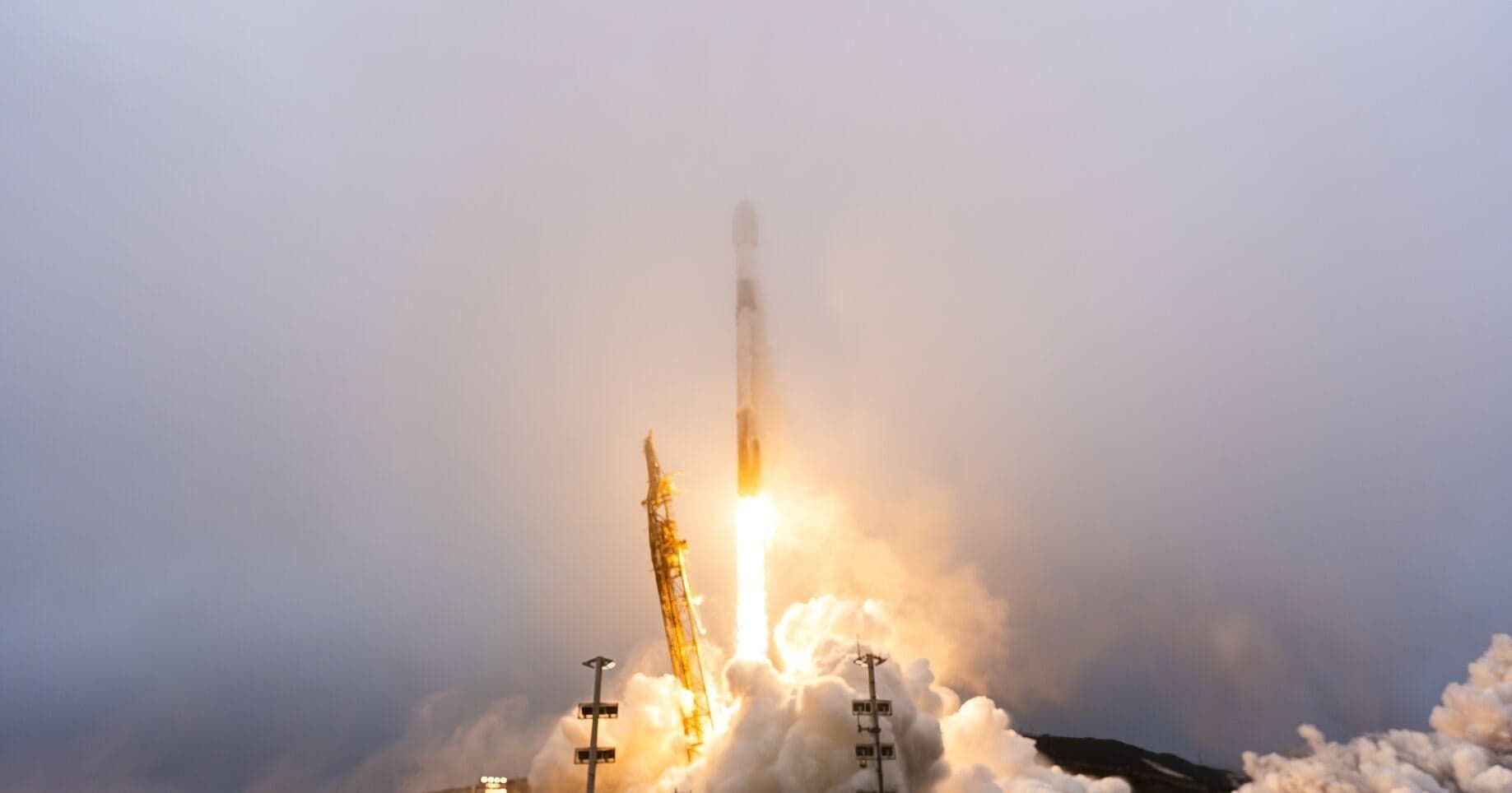
- **SpaceX Falcon 9 Starlink Deployments**: SpaceX maintained its prolific launch schedule, deploying **29 additional Starlink satellites** on a recent mission. This continuous expansion is steadily increasing global broadband coverage, especially in underserved regions, and bolsters the resilience of the satellite internet infrastructure. The reliability and reusability of Falcon 9 rockets have become benchmarks, ensuring cost-effective, frequent launches that underpin the broader vision of an interconnected orbital ecosystem.
- **NASA’s Spaceplane Upgrades**: Recent reports highlight NASA’s advancements in spaceplane reentry technology, notably the upgrade of heat shields that have addressed previous challenges. A notable example is NASA's new space plane, which recently "solved what Elon Musk called 'impossible'"—a reference to the successful development of an advanced, durable heat shield capable of withstanding extreme reentry conditions. This breakthrough not only enhances spacecraft reusability but also opens new horizons for crewed and cargo missions with improved safety and turnaround times.
These launch and vehicle innovations are foundational, supporting a dense orbital infrastructure capable of hosting more complex, persistent missions.
## Growing Investment in On-Orbit Infrastructure and Habitats
The transition from orbital staging ground to a destination itself is accelerating through strategic investments:
- **Voyager’s Investment in Max Space**: Voyager announced a multi-million-dollar investment in Max Space’s innovative expandable habitat technology. These habitats are modular, scalable, and designed for crewed operations, research, and manufacturing in cis-lunar space. They promise more durable and cost-effective solutions compared to traditional rigid structures, facilitating long-term human presence in orbit and beyond.
- **NASA’s Cis-Lunar Habitat Strategy**: Building on lunar exploration ambitions, NASA’s updated roadmap emphasizes establishing sustainable habitats on the Moon and in its vicinity. The upcoming Artemis missions aim to construct a lunar Gateway and surface bases that will serve as testbeds for in-space resource utilization and extended habitation. These infrastructures are critical stepping stones toward deep-space exploration, including Mars, and will support scientific research, manufacturing, and commercial activities in cis-lunar space.
The focus on orbital infrastructure underscores a paradigm shift: orbit is increasingly viewed as a hub for industry, science, and human activity—an extension of terrestrial civilization.
## Hardware and Technology Maturation Enabling Deeper-Space Capabilities
Technological innovation continues to push the boundaries of what’s possible in orbit:
- **ESA’s HydroGNSS Low-Noise Amplifiers**: The European Space Agency (ESA) has developed next-generation low-noise amplifiers (LNAs) for its HydroGNSS climate mission. These LNAs significantly enhance signal sensitivity, enabling more precise Earth observation, climate monitoring, and oceanographic data collection from orbit. Such improvements are vital for understanding climate change and managing natural resources.
- **Funding for Next-Generation X-ray Astronomy**: A recent boost of **$3.2 million** in funding supports the development of advanced X-ray telescopes. These instruments aim to unlock new insights into high-energy astrophysical phenomena—such as black holes, neutron stars, and supernovae—expanding humanity’s understanding of the universe from space-based observatories.
- **In-Space Assembly and Servicing (ISAM)**: Advances in in-space manufacturing and robotic servicing are making the assembly of large, complex structures in orbit increasingly feasible. Innovations include self-repairing spacecraft capable of diagnosing and autonomously fixing issues, which promise to extend asset lifespans dramatically and reduce operational costs.
These technological advancements are creating a robust foundation for deeper-space exploration and more autonomous orbital operations, reducing dependence on Earth-based logistics.
## Emerging Capabilities: Autonomy, Resilience, and Manufacturing
The integration of autonomous systems and resilient hardware is redefining what is possible in orbit:
- **Self-Repairing Spacecraft**: Developments in autonomous diagnostics and repair enable spacecraft to operate longer and more reliably. Such capabilities are essential for deep-space gateways, large habitats, and scientific instruments, minimizing ground intervention and ensuring continuous operation.
- **In-Orbit Manufacturing and Servicing (ISAM)**: The maturation of ISAM technologies is opening pathways to construct large-scale structures—such as space stations, space telescopes, and solar power arrays—directly in orbit. This approach minimizes launch mass constraints, accelerates deployment timelines, and offers scalable infrastructure for scientific, commercial, and exploration purposes.
- **Metal Servicing and Recycling**: Techniques for in-space metal repair, servicing, and recycling are becoming more sophisticated. These methods foster a sustainable, circular approach to orbital hardware, reducing costs and enhancing resilience against wear and damage.
## Current Status and Future Outlook
As of early 2026, the orbital environment is rapidly evolving into a dense, autonomous, and resilient domain. The confluence of high-frequency launches, strategic infrastructure investments, and technological breakthroughs is laying the foundation for a new era of space activity.
**The implications are profound:**
- **Orbit as a Commercial and Scientific Hub**: The dense, industrialized orbital ecosystem will support scientific research, resource utilization, and commercial enterprises—making orbit an extension of terrestrial industry.
- **Enhanced Human Presence**: Modular habitats and autonomous systems will facilitate longer, more sustainable human missions in orbit and cis-lunar space, serving as precursors to Mars exploration.
- **Deeper Space Readiness**: Upgrades in spacecraft reentry technology, in-space manufacturing, and autonomous servicing are preparing humanity for more ambitious deep-space endeavors, with orbit acting as a vital staging and resupply domain.
**In summary**, the rapid convergence of launch innovation, infrastructural development, and advanced hardware is transforming orbital space into a resilient, autonomous, and industrialized environment. The coming years will likely see orbit evolve from a transient zone to a permanent, thriving extension of human civilization—supporting exploration, scientific discovery, and commerce on an unprecedented scale.