# Guides to Buying, Maintaining, and Securing Electric Scooters in 2026: The Latest Developments
As urban mobility continues its rapid transformation in 2026, electric scooters (e-scooters) remain a pivotal element of sustainable, flexible transportation worldwide. With millions of riders relying on them daily for commuting, errands, and recreation, the industry is experiencing unprecedented technological innovations, enhanced safety standards, and advanced cybersecurity measures. This comprehensive update synthesizes the latest developments—empowering owners, buyers, and enthusiasts to navigate the dynamic landscape of e-mobility with confidence.
---
## The 2026 Market Landscape: An Expanding Spectrum of Advanced E-Mobility Options
### Diverse Models for Every Need
The e-scooter market has seen remarkable diversification, offering tailored options suited to various rider profiles, terrains, and budgets:
- **Urban Commuters:** Compact, lightweight models such as the **Xiaomi Mi Electric Scooter 4** and **Segway Ninebot ES2 Plus** continue to dominate, prized for their portability, rapid acceleration, and agility amidst city congestion. Their folding mechanisms and minimal weight facilitate seamless last-mile connections and multimodal transit integration.
- **Foldable and Multi-Modal Designs:** Innovations like the **Evolve GTX** incorporate rapid-fold systems and multi-modal capabilities—allowing effortless transitions between scooter and public transit—thus optimizing last-mile connectivity and alleviating urban congestion.
- **High-Performance Dual-Motor Scooters:** Enthusiasts increasingly favor rugged models such as the **Ampere Magnus G Max** and **GT Force Drive Pro**, featuring **48V 750W controllers** supporting speeds up to **28 mph**. These models come equipped with **off-road tires**, **sturdy frames**, and **extended-range batteries**, making them suitable for outdoor adventures and challenging terrains.
- **Electric Trikes and Heavy-Duty Variants:** Larger batteries and reinforced frames have propelled electric trikes into both commercial fleets and personal use. The **E-Trike Max**, with its **10 kWh battery**, exemplifies durability and capacity, making it popular among delivery services and long-distance riders.
### Industry Trends and Components
The industry emphasizes **48V 750W controllers** for their efficiency, thermal management, and power delivery. **Modular controller designs** now enable owners to upgrade or replace components like **motors**, **hall sensors**, and **stators**, fostering customization and extending lifespan—details elaborated in guides such as "*How to Choose Electric Scooter Motor Parts*." Compatibility regarding **winding configurations** remains a critical consideration.
Models like the **Ultraviolette Tesseract**—boasting a **6 kWh battery** and **15 kW output**—support an **IDC range of approximately 261 km**, ideal for long-distance commuting and off-road adventures. Similarly, the **Ather Rizta** has surpassed **500 km** of reliable performance, earning high owner satisfaction for urban agility.
The trend toward **larger batteries** and **extended-range capabilities** persists, especially within commercial sectors prioritizing durability and capacity.
---
## Breakthroughs in Battery Technologies & Diagnostics
### Safer, Longer-Lasting Batteries
Battery innovation remains a cornerstone of 2026's advancements:
- **Enhanced Lithium-Ion Batteries:** Now supporting **800–1000 charge cycles**, these batteries promise **3 to 5 years** of dependable service, substantially reducing replacement costs and boosting rider confidence.
- **Safety Breakthroughs from Michigan State University (MSU):** Researchers have developed a **novel battery material** that **dramatically reduces thermal runaway risks**—a primary safety concern with lithium-ion batteries. MSU states:
> *"Using novel materials, we've developed batteries that drastically reduce thermal runaway risks, making electric scooters safer for everyday use."*
This addresses longstanding fire hazards linked to overheating, setting new safety standards industry-wide.
### Emerging Battery Chemistries: Solid-State, Calcium, and Sodium-Ion
Innovative chemistries continue to shape the energy landscape:
- **Solid-State Batteries:** Offering **higher energy density**, **faster charging**, and **thermal stability**, solid-state batteries are poised to revolutionize e-scooter design—delivering **more durable** and **safer** performance.
- **Calcium Batteries:** Recent reports, including popular YouTube documentaries like "**Hong Kong Scientists Crack Calcium Battery Code - Lithium Alternative**," highlight calcium chemistries as promising solutions for **fire safety** and **environmental sustainability**.
- **Sodium-Ion Batteries:** Breakthroughs in **fast-charging sodium-ion batteries** reveal they **match or surpass lithium-ion** in charging speed while providing **superior thermal stability**. Articles such as "*Days numbered for ‘risky’ lithium-ion batteries, scientists say, after fast-charging breakthrough in sodium-ion alternative*" underscore their transformative potential.
### 4680 and Bharat Cell Developments
Recent advancements include the deployment of **4680-format cells**, popularized by Tesla, and **Bharat (Indian) battery cells**, designed to **reduce costs** and **improve supply resilience**. For example, **Ola's 4680 Bharat Cells** are engineered for **higher volumetric energy density**, **better thermal management**, and **longer cycle life**, potentially **alleviating supply constraints** and boosting performance for mass-produced scooters.
Additionally, the longstanding **18650** cells—known for their cylindrical design—remain relevant, especially in retrofit projects and niche applications, due to their mature technology and widespread availability.
---
## Diagnostics, AI-powered BMS, and Firmware/Security Best Practices
### Modern Diagnostic Tools and AI Integration
Contemporary e-scooters increasingly feature **smart diagnostic tools** accessible via companion apps, providing real-time data on:
- **Cell health and voltage**
- **State of Charge (SoC)**
- **Thermal profiles**
Owners are encouraged to monitor **battery aging indicators**, such as:
- Unexpected **shutdowns**
- Reduced **range** (up to **50%** compared to initial performance)
- **Slower charging times**, signaling cell degradation or wiring issues
Routine maintenance should include:
- Inspecting **battery contacts** and **wiring** for corrosion or damage
- Using **manufacturer-approved chargers**
- Storing scooters **in cool, dry environments**
- Performing **firmware updates**, as many models now feature **fault detection** and **thermal regulation** to prevent hazards like **thermal runaway**
### Handling Large Packs and Electric Trikes
For **larger battery packs** and **electric trikes**, maintenance routines have evolved:
- **Battery balancing** during charging to ensure uniform cell health
- **Terminal inspections** for corrosion
- **Thermal monitoring** during extended rides to prevent overheating
### Cold Weather Challenges and Solutions
Cold temperatures impair battery performance, reducing range by **20% or more**. Owners can mitigate this by:
- Storing scooters indoors during extreme cold
- Using **thermal management accessories** or **insulation wraps**
- Wearing warm gear during high-speed rides
### Retrofits and Upgrades: Embracing LiFePO4
Owners are increasingly retrofitting traditional lithium-ion packs with **LiFePO4 batteries**, known for **longer cycle life** and **improved thermal safety**. YouTube demonstrations like "*J’ai transformé ce vieux scooter électrique : batterie LiFePO4, autonomie et fiabilité | Épisode 2*" showcase substantial gains in **reliability** and **range**.
### Firmware & Security Best Practices
- Always **update firmware** via official apps to benefit from **security patches** and **performance improvements**.
- Use **strong, unique passwords** for connected accounts.
- Enable **remote tracking** and **alarm notifications**.
- Disable Bluetooth when not in use to prevent hacking attempts.
---
## Fire Prevention, Storage, and Long-Term Maintenance
### Preventative Measures
Although battery fires are rare, they can be severe. Owners should observe safety practices:
- Always use **manufacturer-approved chargers**.
- Avoid **overcharging** or leaving batteries plugged in unattended.
- Store scooters **away from flammable materials** and in **cool, dry places**.
- Regularly **inspect battery contacts** and wiring for corrosion or damage.
- Replace batteries exhibiting **swelling**, **overheating**, or **degradation**.
- Avoid exposure to **extreme temperatures** or water.
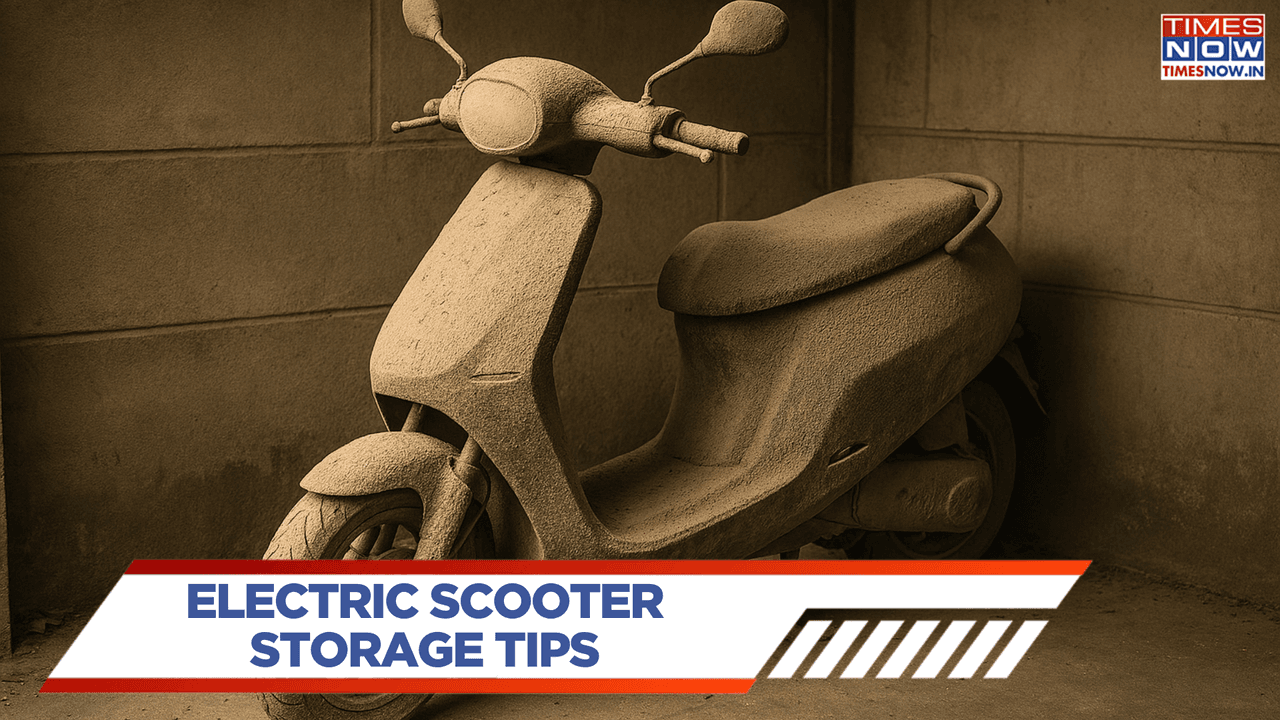
### Storage and Discharge Behavior
For long-term storage:
- Fully **discharge batteries to around 50%** before storing, avoiding **completely drained** or **fully charged** states for extended periods.
- Store in **cool, dry environments** to preserve battery health.
- Periodically **recharge** to maintain optimal voltage levels—at least once every 3–6 months.
### Industry Initiatives
Organizations are launching **webinars** like **"Designing Safer E-Mobility Battery Packs—Materials and Testing Insights,"** emphasizing **material selection** and **rigorous testing**. Collaborations between EV manufacturers and research institutes aim to **train technicians** and **educate owners** on **battery safety protocols**, reducing fire risks.
---
## Securing Your E-Scooter: Connectivity, Cybersecurity, and Best Practices
### The Cybersecurity Landscape
As connectivity via Bluetooth, GPS, and companion apps becomes ubiquitous, vulnerabilities have increased:
- **Weak Bluetooth encryption** can allow malicious actors to **disable scooters** or **access personal data**.
- Outdated firmware opens avenues for **remote hijacking** and **data breaches**.
- High-profile incidents of **remote control attacks** highlight the importance of robust security measures.
### Industry Responses
Manufacturers are adopting **advanced encryption standards** such as **AES-256** for Bluetooth and **end-to-end encryption** for data transfer. Features like **kill switches**, **tamper alarms**, and **anti-theft locking systems** have become standard, significantly enhancing security.
### Owner Best Practices
- Regularly **update firmware** through official apps.
- Use **strong, unique passwords** for connected accounts.
- Disable Bluetooth when not in use.
- Choose models with **built-in anti-theft features**.
- Enable **remote tracking** and **alarm notifications**.
### The Future: AI-Driven BMS and Secure Ecosystems
The integration of **AI-powered Battery Management Systems (BMS) 2.0** is transforming safety and cybersecurity:
- **Fault detection** and **predictive maintenance** help prevent failures.
- **Thermal regulation** and **cell balancing** reduce overheating risks.
- **Anomaly detection** can identify and thwart hacking attempts, protecting rider data and hardware.
Industry literature such as "*Why Is Battery Management System Technology So Critical for Future Electric Vehicles*" emphasizes that **AI-enhanced BMS** will further improve **fault diagnosis**, **cybersecurity**, and **asset longevity**, creating an **intelligent, connected ecosystem** safeguarding both rider information and hardware integrity.
---
## First-Charge Guidelines for New Batteries
A crucial yet often overlooked step for new e-scooter batteries is the **first charge**. Properly executing this can significantly extend battery lifespan and optimize performance:
- **Wait at least 30 minutes before your first ride** to allow initial battery conditioning.
- **Perform a short test ride** to check battery performance and ensure all systems operate smoothly.
- **Charge the battery fully to 100%** before first use, but avoid leaving it plugged in for extended periods afterward.
- **Avoid frequent shallow charges**; aim for full charges when possible.
- **Use manufacturer-recommended chargers** to prevent damage.
Following these steps helps establish optimal cell balance and prevents early capacity loss, setting the foundation for reliable long-term operation.
---
## Current Status and Future Outlook
In 2026, the electric scooter industry stands on the cusp of transformative change. Breakthroughs in **battery chemistry**, **safety standards**, and **cybersecurity**, coupled with groundbreaking collaborations and innovations, are creating an ecosystem that is **safer**, **smarter**, and **more reliable** than ever before.
Riders and owners who stay informed about these developments—adhering to best practices for maintenance, security, and safety—can enjoy a seamless, confident e-mobility experience now and into the future. The momentum of technological progress signals a vibrant, sustainable, and secure urban transportation landscape for years to come.