# The 2026 Revolution in Autonomous AI Agents: Cutting-Edge Models, Hardware Acceleration, and Context Engineering
The year 2026 marks an unprecedented milestone in the evolution of autonomous AI agents. Building upon prior breakthroughs, this year has seen a convergence of **next-generation multi-modal large language models (LLMs)**, **hardware-software co-design**, and **advanced context engineering techniques**—all working synergistically to redefine the capabilities, security, and accessibility of intelligent systems. These innovations are not merely incremental; they are fundamentally transforming how organizations develop, deploy, and trust autonomous agents across industries.
## The Rise of Next-Generation Models and Recursive Reasoning
At the core of this revolution are **powerful, multi-modal LLMs** that push the boundaries of **autonomous reasoning** and **adaptive behavior**:
- **GPT-5.3-Codex-Spark**: Supported by **Cerebras accelerators**, this model exemplifies a leap in **multi-turn reasoning** and **structured output generation**. Its **near-instant inference speeds** enable **offline operation**, meeting enterprise demands for **secure, low-latency responses**. Remarkably, its architecture allows agents to **autonomously develop, test, and refine software**, dramatically accelerating development pipelines with minimal human intervention.
- **Claude Opus 4.6**: As **Anthropic’s latest flagship**, this model excels in **multi-modal understanding** and **dialogue management**, enabling **more natural, context-aware interactions**. Its refined capabilities are vital for **client-facing AI systems** and complex conversational workflows, especially in high-stakes environments.
- **Gemini 3.1 Pro** from DeepMind has set new standards in **analytical reasoning** and **decision-making**, broadening the horizon for **autonomous reasoning** in real-world, high-stakes scenarios.
### Recursive Language Models (RLMs): Self-Improving, Dynamic Agents
A transformative development is the advent of **Recursive Language Models (RLMs)**. Unlike traditional models confined to predefined toolsets, **RLMs** enable agents to **reason recursively**, **self-improve**, and **dynamically invoke specific tools** based on evolving context. This flexibility allows AI agents to **solve complex, multi-layered problems** in real time, adjusting their reasoning strategies and resource utilization on the fly.
Recent discussions, including insights from **"We've Been Building AI Agents Wrong. Here Are 4 Techniques That Fix It,"** emphasize that **RLMs** **address fundamental limitations** by supporting **multi-level reasoning**, **on-demand tool invocation**, and **self-refinement**—culminating in **more robust, adaptable autonomous systems** capable of handling increasingly complex tasks.
## Hardware-Software Co-Design: Accelerating Inference and Enabling Offline Security
The performance and resilience of these sophisticated models are greatly enhanced through **hardware-software co-design**:
- **Specialized hardware accelerators** such as **Cerebras chips** facilitate **low-latency, high-throughput inference**, enabling **real-time** and **offline deployment** that secures sensitive data within organizational infrastructure.
- **Hardware-aware modes**—like **Anthropic’s fast mode**—tailor models specifically to hardware architectures, drastically reducing inference latency and enabling **near-instant responses** without reliance on cloud services.
- **Local stacks** such as **Foundry Local**, **Ollama**, and **Strands** support **on-premises hosting** of models, ensuring **security**, **privacy**, and **resilience**—crucial for industries handling sensitive information.
Complementing hardware advances are **cost-reduction tools** like **AgentReady proxies**, which **cut token costs by 40-60%**, making **large-scale inference** more accessible and economical. These innovations are pivotal in **democratizing AI deployment** across sectors, from startups to enterprise-scale operations.
## Advances in Context Engineering: Building Smarter, More Reliable Agents
**Context engineering** remains a foundational pillar for robust autonomous agents:
- **Prompt Caching**: Systems such as **Claude Code** utilize **prompt caching** to **store and reuse prompts**, drastically **reducing inference costs** and **response times**, especially in **long-running sessions** requiring **context coherence**. This approach ensures efficiency without sacrificing performance.
- **Structured Memory & Retrieval-Augmented Generation (RAG)**: Combining **structured memory architectures** with **dynamic retrieval mechanisms** allows agents to **access relevant information on demand**, leading to **more accurate**, **goal-aligned outputs**—crucial for **multi-step reasoning** and **complex project management**.
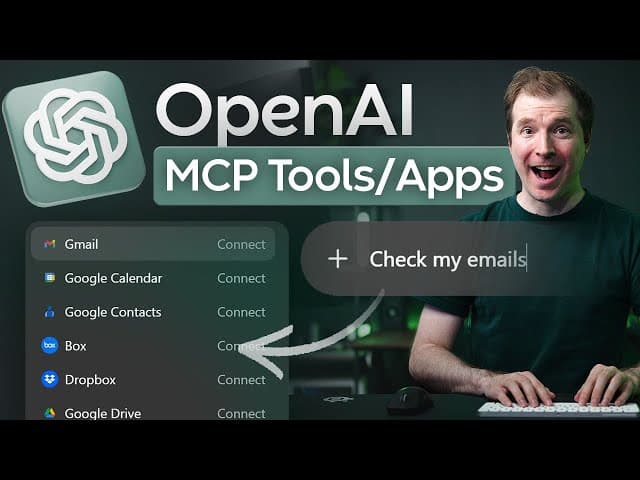
- **Multi-Modal SDKs**: Frameworks like **LangGraph** and **Miro MCP** now support **multi-modal reasoning**, enabling agents to interpret **visual data**, **diagrams**, and other **multi-modal inputs**. This capability is essential in domains such as **healthcare diagnostics** and **industrial automation**.
- **Persistent Workspaces**: Tools such as **Claude Cowork** provide **long-term, persistent workspaces** that allow agents and users to **maintain ongoing projects**, **archive files**, and **manage workflows**—fostering **long-term productivity** and **deep contextual memory**.
Recent literature, exemplified by **"Effective Context Engineering to Build Better AI Agents,"** underscores that **smarter prompts**, **structured memory**, and **dynamic retrieval strategies** are **key enablers** for **scalable**, **reliable**, and **context-aware agents** capable of **multi-step, complex tasks**.
## Production Practices and Tooling: From Development to Deployment
The maturation of AI agent frameworks is evident in **deterministic multi-agent pipelines**, **CLI tooling**, and **enterprise security measures**:
- **Code Sovereignty & Security**: As AI-generated code becomes integral to operational workflows, **security concerns**—such as **security debt** and **code sovereignty**—have risen. The **"Code Sovereignty Paradox"** highlights risks of rapid AI-driven development. Solutions like **StepSecurity** provide **comprehensive security** for AI-generated code, reducing vulnerabilities and attack surfaces.
- **Agent Orchestration & Tool Invocation**: Frameworks now support **dynamic, context-aware orchestration**, exemplified by **ZuckerBot**, which **automates Meta/Facebook ad campaigns** via APIs and **agent harnesses**—demonstrating **enterprise automation at scale**.
- **CLI Tools & Integration**: Utilities such as **GitHub Copilot CLI** and similar tools embed **AI capabilities directly within developer workflows**, streamlining **coding**, **debugging**, and **deployment** processes.
## Community & Tooling: Sharing Skills, Resources, and Best Practices
The **AI agent community** continues to flourish, fostering **collaborative growth**:
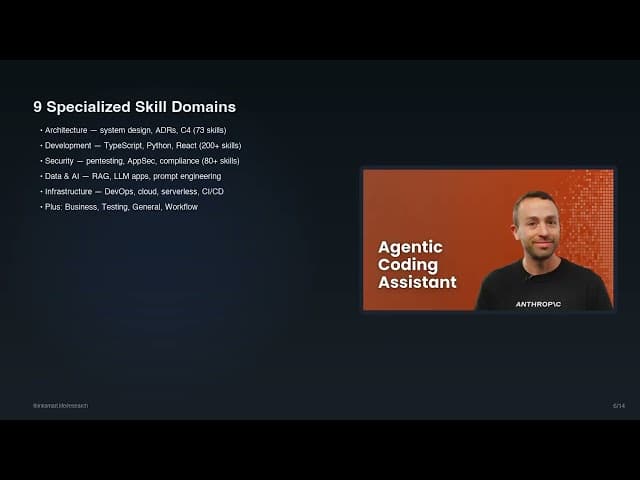
- Large collections of **agentic skills**—like the **946+ agentic skills for Claude Code, Cursor & More** from the **Antigravity Collection**—provide **ready-to-use capabilities**, accelerating development.
- **Shared repositories of system prompts**, **second brain** context layers, and **toolkits** such as **MCP** and **Docker-based frameworks** facilitate **building, deploying, and scaling agentic applications**.
- Best practices for **token economy** and **efficiency**, championed by thought leaders like **Ivan Kutuzov**, emphasize **cost-effective AI usage**, ensuring sustainable scaling.
## Current Status and Broader Implications
In 2026, the **convergence** of **advanced models**, **hardware breakthroughs**, and **engineering innovations** has enabled the deployment of **highly autonomous, secure, and scalable agents** that operate **offline** within organizational infrastructure. These agents:
- **Invoke tools dynamically** based on **real-time context**, enhancing **flexibility**.
- Maintain **long-term coherence** through **prompt caching**, **structured memory**, and **persistent workspaces**.
- Interpret **multi-modal data** across diverse domains—**visual diagnostics**, **textual reasoning**, and beyond.
### **Recent Highlights Include:**
- The emergence of **"second brain"** strategies, exemplified by @alliekmiller, who **built layered context architectures** to enhance AI reasoning.
- The widespread adoption of **GitHub Copilot CLI**, empowering **developer-centric AI workflows**.
- The proliferation of **system-prompts repositories** and **agent skills libraries** on platforms like GitHub, fostering **standardization** and **community-driven improvements**.
- Insights from experts such as **Ivan Kutuzov** on **making AI more efficient**, emphasizing **token economy** and **agent-based architectures**.
## **Implications for the Future**
The trajectory of 2026 indicates that **powerful, secure, and accessible autonomous agents** will become **ubiquitous across industries**. Critical implications include:
- The **rise of secure offline agents** that **operate within organizational infrastructure**, reducing reliance on cloud services.
- The ability for **agents to invoke tools dynamically**, **maintain long-term context**, and **adapt to complex tasks** with minimal human oversight.
- The **democratization of AI capabilities**, enabling smaller organizations and individual developers to harness **state-of-the-art models** affordably and securely.
- The ongoing evolution of **governance and security practices**, ensuring **trustworthy** deployment of increasingly autonomous systems.
### **In conclusion**, 2026 embodies a **transformational year** where **technological innovation** and **community effort** converge, creating **more capable, secure, and accessible autonomous AI agents**. These systems are poised to **reshape automation**, **accelerate decision-making**, and **drive sustainable innovation** across all sectors, heralding a new era of **trustworthy, long-term artificial intelligence**.