# 2024: The Year of Digital Sovereignty and Strategic AI Infrastructure — New Developments Reshape the Geopolitical Landscape
As 2024 unfolds, the global technological and geopolitical terrain is undergoing profound transformation. Building on prior trends of increased regulation, strategic investments, and efforts toward digital sovereignty, recent developments underscore a shift toward controlling AI ecosystems, critical infrastructure, and digital assets as central to national security and influence. This year marks a decisive intensification of strategies that embed sovereignty into digital and AI architectures, while geopolitical rivalries deepen in cyberspace, resource security, and strategic alliances.
---
## Escalating Regulatory Measures and the Fragmentation of Digital Ecosystems
Governments worldwide are deploying increasingly aggressive regulatory frameworks aimed at curbing security threats, market dominance, and foreign influence, leading to a more siloed and fractured digital landscape:
- **Restrictions on Chinese Digital Platforms:**
Following earlier bans, countries such as the US, EU, and Canada have **expanded restrictions on TikTok, WeChat, and ByteDance**, citing **security concerns**. Recent declassified intelligence reports reveal **ByteDance’s intensified data collection practices**, including **precise location tracking within US operations**—further fueling fears of **espionage and foreign influence**. These disclosures have prompted policymakers to **curtail Chinese tech giants’ global reach**, accelerating digital fragmentation along geopolitical fault lines.
- **Enhanced Antitrust and Privacy Enforcement:**
Agencies like the UK's ICO and the EU’s European Commission are **accelerating investigations into Meta**, focusing on **WhatsApp’s data sharing practices** and **user transparency**. Simultaneously, **antitrust actions against Google** are scrutinizing **monopolistic control of AI training data**, with regulators emphasizing that **control over data and AI assets** is crucial for **maintaining sovereignty**. These measures are reshaping digital dominance and aiming to **integrate sovereignty into AI development pathways**.
- **The Rise of ‘Token Factories’ and Sovereign AI Ecosystems:**
At Davos 2024, Microsoft CEO Satya Nadella introduced the **‘token factory’ paradigm**—a concept involving **large-scale, domestically controlled AI infrastructure hubs** responsible for **creating and managing AI tokens**. These tokens **represent models, datasets, and compute resources**, functioning as **digital building blocks** that **embody control, verification, and security**. Nadella emphasized that such **‘token factories’ are strategic nodes**—**embedding sovereignty into AI ecosystems** and **reducing reliance on foreign suppliers like Nvidia**. This signals a **paradigm shift toward sovereign AI ecosystems**, where **digital assets become critical strategic commodities** reinforcing **digital sovereignty**.
- **Massive Capital Flows and Supply Chain Diversification:**
Leading firms such as **Oracle** are **raising up to $50 billion in 2024** to **expand AI hardware manufacturing, cloud services, and cybersecurity**. These investments aim to **strengthen domestic supply chains**, diminishing vulnerabilities from geopolitical tensions. Concurrently, **AI hardware manufacturers and cloud providers** are **diversifying sourcing strategies**, illustrating a **concerted movement toward sovereignty in critical infrastructure**.
---
## Rising Cyber Threats and Infrastructure Vulnerabilities
Cybersecurity threats are escalating dramatically, exposing vulnerabilities with potentially catastrophic consequences:
- **Digital Blackouts as Geopolitical Tools:**
UN reports indicate that **over 54 countries employed digital blackouts in 2024**, more than doubling the previous year. These outages often serve as **geopolitical instruments**, disrupting communications, impeding emergency responses, and curtailing digital rights. For example, **Moldova experienced a nationwide blackout** caused by **automated energy grid disconnection**, exemplifying how **cyber vulnerabilities** can cascade into broader crises during regional conflicts.
- **Escalation of Critical Infrastructure Attacks:**
Over **300 incidents targeting power grids, communication networks, and financial systems** have been documented globally in 2024. Many are linked to ongoing conflicts such as in Ukraine and rising tensions in Eastern Europe, underscoring the **urgent necessity for international cooperation** on **cyber defense** and **resilience-building**.
- **AI-Enabled Financial Crime and Sanctions Evasion:**
The financial sector faces a surge in **cryptocurrency fraud, deepfake scams, money laundering, and sanctions-evasion tactics** driven by **AI-powered tools**. The **ACAMS 2026 forecast** warns that these threats will **intensify**, requiring **robust cyber defenses** and **international regulatory coordination**. Additionally, resource sanctions—such as **fuel embargoes against Cuba**—are exacerbating energy shortages and regional instability, demonstrating how sanctions can have destabilizing unintended effects.
---
## Strategic Investments and the ‘Token Factory’ Paradigm in AI Hardware
Amid escalating geopolitical competition, nations and corporations are executing **bold strategies** to **secure AI dominance**:
- **Microsoft’s ‘Token Factory’ and Secure AI Ecosystems:**
Microsoft is deploying **second-generation AI chips** designed for **enhanced security and efficiency**. The **‘token factory’** concept involves **large-scale, domestically controlled AI hubs** that **generate and manage AI tokens**—**digital assets** representing models, datasets, and compute resources. These tokens **embody control, verification, and security**, enabling **sovereign AI ecosystems** resilient against external pressures. Nadella underscores that these factories are **‘strategic nodes’** in **digital sovereignty efforts**, **reducing dependence on foreign hardware and cloud providers**, and **embedding sovereignty into AI infrastructure**.
- **Capital Flows and Supply Chain Sovereignty:**
Major players like **Oracle** are **raising up to $50 billion** in 2024 to **expand AI infrastructure, cloud capacity, and semiconductor manufacturing**, fostering **resilient, sovereign supply chains** less vulnerable to geopolitical shocks. These investments aim to **foster autonomous AI ecosystems** and **secure critical resources**.
- **The ‘Token Factory’ as a Paradigm Shift:**
These **infrastructure hubs** exemplify a **fundamental transformation**—shifting from reliance on **foreign commercial dominance** to **state-controlled digital assets**. By **embedding sovereignty into AI models, datasets, and compute resources**, nations seek to **secure resilience against external manipulation and sanctions**. This strategic move underscores the importance of **control over digital resources** as a **core element of modern geopolitics**.
- **Cloud Providers as Geopolitical Actors:**
Firms like **CoreWeave** are **expanding global AI infrastructure**, positioning themselves as **key nodes** in **domestic and international AI ecosystems**. Their role highlights the **critical importance of sovereign cloud and compute infrastructure** in the broader geopolitical contest.
---
## Geopolitical Rebalancing and Regional Alliances
Major powers are **reshaping alliances** and **regional strategies** to **secure influence and resource access**:
- **Russia’s Support for China on Taiwan:**
Russian Security Council Secretary Sergei Shoigu reaffirmed **Moscow’s support for China’s stance on Taiwan**, signaling a **deepening alliance** aimed at **countering Western influence** in the Indo-Pacific.
- **China’s Arctic Outreach and Diplomatic Initiatives:**
Despite ongoing border disputes, China persists in **diplomatic engagement**—including with the **Organization of Islamic Cooperation (OIC)**—and advances its **“Polar Silk Road”** initiative. This strategy aims to **establish a strategic presence** in Arctic shipping routes and resource-rich regions, challenging Western dominance amid environmental and territorial tensions.
- **Turkey’s Balancing Act and Regional Diplomacy:**
Leveraging its **geographical position**, Turkey maintains **regional influence** by balancing NATO commitments with **independent diplomatic initiatives**, shaping Middle Eastern and Eurasian geopolitics.
- **Russia-China Military Cooperation:**
The two nations are **deepening joint military exercises** and strategic dialogues to **counter Western alliances** and promote **multipolarity**, reinforcing shared geopolitical objectives.
- **European Strategic Autonomy:**
French President Emmanuel Macron has called for **Europe to become a geopolitical power**, emphasizing **strategic independence** from US dominance and fostering **autonomous security and technological ecosystems**.
- **Arctic Regional Collaboration:**
Recent joint conferences involving **Canadian, Danish, and Greenlandic officials** highlight **regional efforts** to **manage Arctic sovereignty and resources**, especially as climate change opens new shipping lanes and resource opportunities.
---
## Resource Security, Energy, and Maritime Risks
Resource scarcity and energy security remain at the core of geopolitical tensions:
- **EU Raw Material Diversification:**
To mitigate shortages of critical raw materials for **energy transition** and **technological development**, the EU is **diversifying sources**, **stockpiling strategic reserves**, and pursuing **international resource agreements**.
- **US Manufacturing and Energy Resilience:**
The US reports **its first growth in manufacturing in January 2024**, driven by **inventory rebuilding** and **new orders**, signaling efforts to **reduce dependency on foreign-critical sectors** like semiconductors and AI hardware.
- **Renewable Energy Expansion:**
Investment in **domestic renewable energy** accelerates, aiming for **energy independence** amid geopolitical shocks such as the Russia-Ukraine conflict.
- **Maritime Chokepoints and Strategic Security:**
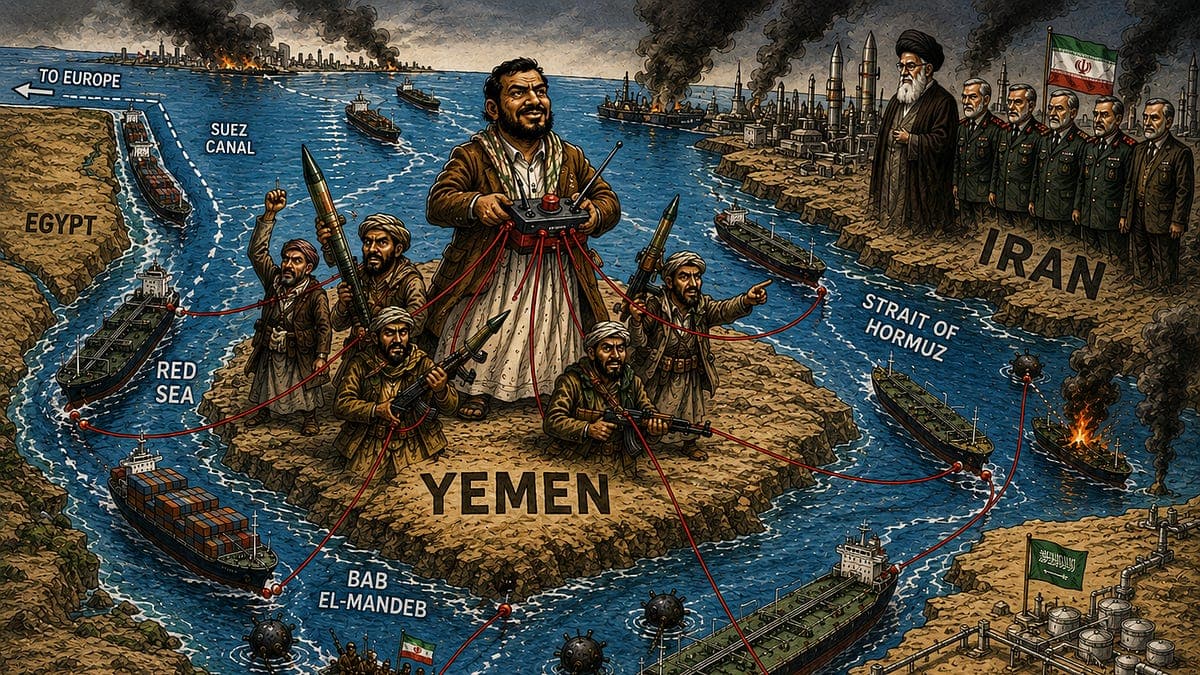
Critical chokepoints—including the **Strait of Hormuz**, **Bab el-Mandeb**, and **Strait of Malacca**—remain focal points of tension. The **2026 Geopolitical Risks at the Strait of Hormuz** report warns that disruptions here could **cripple global energy supplies**, triggering **price shocks** and **economic instability**.
- **Energy Sanctions and Instability:**
Sanctions against countries like Cuba, compounded by **fuel embargoes**, exacerbate energy shortages and regional instability. Investors are **rallying into gold, USD, and other safe assets** as hedges against **market volatility**. The UBS analysis projects that **gold is poised for a rally** amid rising geopolitical tensions and energy uncertainties.
---
## Recent Developments: Signals and Escalations
Two pivotal recent events highlight the heightened geopolitical and strategic tensions:
- **UN Calls for a Renewed Security Architecture:**
In early 2024, UN Secretary-General António Guterres issued a stark warning that the **current global security framework is inadequate** to manage **chaos and rapid change**. His call for **a renewed international security architecture** underscores the urgency of **collective resilience**, especially as nations bolster **digital defenses** and **sovereign AI strategies** to counter hybrid threats, cyberattacks, and military provocations.
- **Potential Russian Nuclear Escalation:**
Russian President Vladimir Putin, during his holiday address, **pledged a significant boost to Russia’s nuclear triad**, hinting at **expanded strategic deterrence** amid ongoing geopolitical tensions. This signals a possible **nuclear posturing escalation**, adding complexity to the security landscape and emphasizing the importance of **resilient, sovereign infrastructure** capable of withstanding crises.
---
## The Intersection of Geopolitics, AI, and Energy: A New Supercycle
One of the most consequential developments in 2024 is the **resurgence of nuclear energy as a geopolitically strategic resource**. Recent diplomatic reports reveal that **Russia is actively marketing and offering nuclear power infrastructure** to various nations, fueling what some analysts now describe as a **‘nuclear supercycle’**. This renewed focus on nuclear technology aligns with the **accelerating race for energy independence**, **climate ambitions**, and **technological sovereignty**.
### **Radioactive Returns: Geopolitics and AI Fuel a Nuclear Supercycle**
Recent diplomatic disclosures indicate that **Russia is actively promoting nuclear power projects** across Asia, Africa, and Latin America. These initiatives are linked to **strategic partnerships** and **economic influence**, with Russia positioning itself as a **leader in nuclear infrastructure exports**. The **nuclear supercycle** is partly driven by **AI-powered advancements in reactor safety and efficiency**, which further enhances nuclear energy’s appeal as a **clean, reliable energy source** amid the energy transition.
The push for nuclear technology is also intertwined with **geopolitical ambitions**—strengthening alliances, securing resource access, and asserting influence in regions where energy security is paramount. This **nuclear resurgence** is expected to **reshape the global energy map**, with implications for **climate policy**, **security alliances**, and **technological sovereignty**.
---
## Current Status and Broader Implications
2024 is emerging as a **pivotal year** in shaping the **digital, geopolitical, and energy order**:
- **Regulatory environments are tightening**, with a focus on **digital sovereignty**, **market dominance**, and **data control**.
- **Regional alliances** are evolving rapidly, aligned with **resource access**, **military cooperation**, and **diplomatic initiatives**.
- **Massive investments** are fueling the development of **sovereign AI hardware**, **digital assets**, and **cyber resilience**, aiming to **embed sovereignty into AI ecosystems**—epitomized by the **‘token factory’** paradigm.
- The **resurgence of nuclear energy** and the **nuclear supercycle** reflect a broader **geopolitical shift toward resource security and technological independence**.
### **Implications for the Future**
Control over **data**, **AI models**, and **compute infrastructure** has become synonymous with **national security and geopolitical influence**. Success depends on **strategic foresight**, **international cooperation**, and **robust policy frameworks**. As tensions escalate, nations and corporations that **prioritize sovereignty**, **cyber resilience**, and **technological independence** will be better positioned to **shape the multipolar digital and energy future**.
---
## The ‘Token Factory’ Paradigm: A Strategic Innovation
The **‘token factory’** model exemplifies a **paradigm shift**—large-scale, **domestically controlled AI infrastructure hubs** responsible for **creating and managing digital tokens** representing models, datasets, and compute resources. These tokens **embody control, verification, and security**, serving as **digital building blocks** for **resilient AI ecosystems** capable of **withstanding external pressures**. Embedding **sovereignty into digital assets** redefines **AI hardware and software** as **strategic national resources**, transforming the landscape of **AI competition** into a contest over **digital resource control**—a defining feature of 2024’s geopolitical arena.
---
## Conclusion
**2024** is poised to be a **watershed year** where **regulatory crackdowns**, **strategic infrastructure investments**, and **technological innovations** converge to **reshape global power dynamics**. The emergence of **sovereign AI ecosystems**—embodied in the **‘token factory’** approach—represents a **fundamental transformation**, moving away from **foreign commercial dependence** toward **state-led control of digital assets**. Success hinges on **resilient policies**, **international norms**, and **strategic investments**—the new frontlines of a **multipolar geopolitical contest** that will determine the future of **digital sovereignty**, **energy security**, and **technological dominance**.